F1 Driver Transfers and Betting: How Seat Swaps Move the Markets
 Available in US
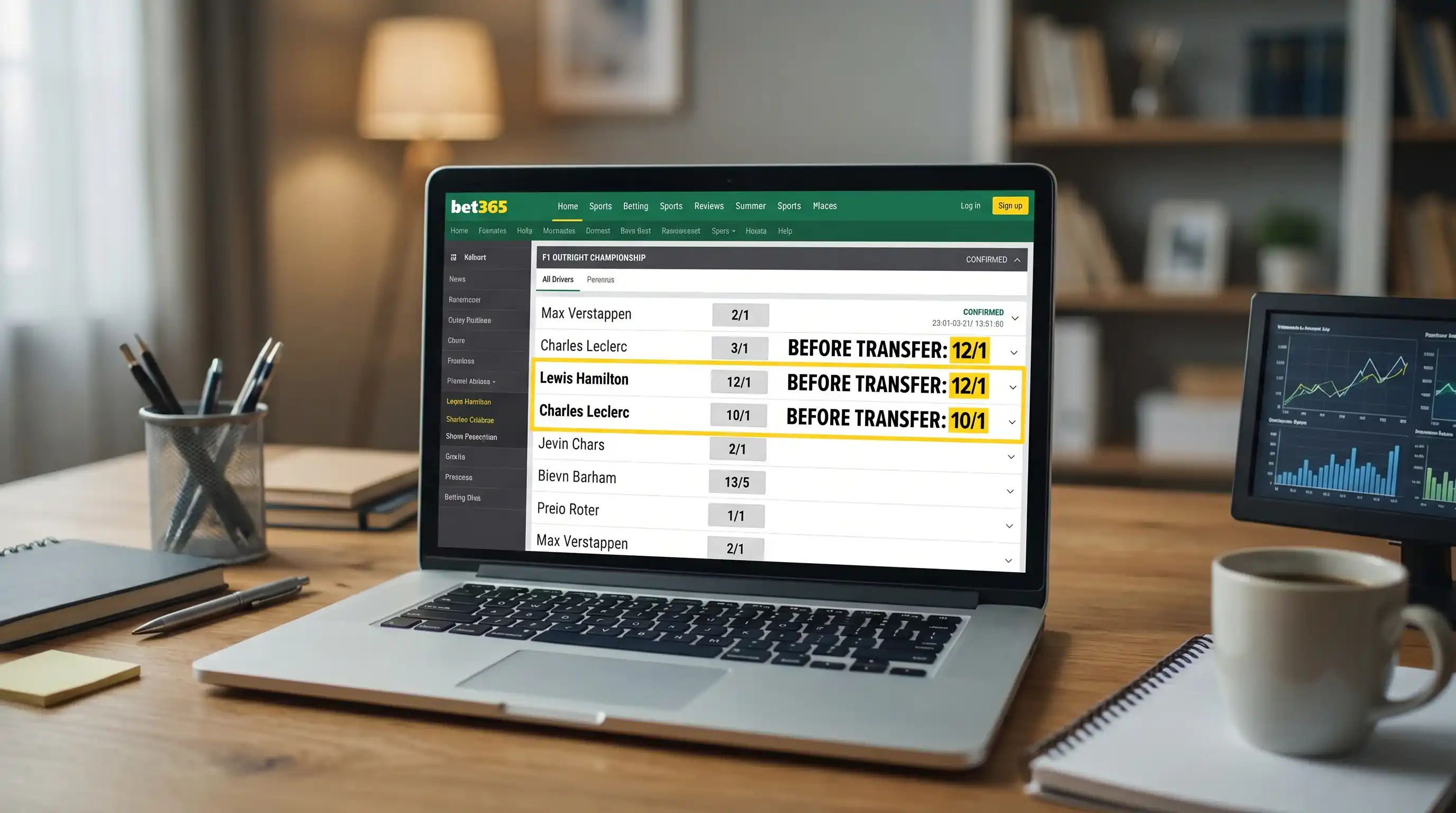
When Carlos Sainz’s move from Ferrari was confirmed in 2024, the outright championship markets shifted within minutes. Sainz’s odds at his new team reflected a completely different performance expectation, while the driver replacing him at Ferrari saw their price shorten dramatically. I’d been tracking the rumour for weeks and had pre-positioned in the outright market at better prices. Driver transfers are the tectonic plates of F1 betting – they shift slowly, signal loudly, and by the time the market fully adjusts, the best value has already gone.

F1’s driver market moves in annual cycles. Contracts expire, performance triggers activate, and teams make decisions that reshape the competitive order. The 2026 season brings the most dramatic regulatory change in a decade – new engine formula, new aerodynamic rules – which has triggered an unusually active transfer market as teams recalibrate for a new era. Every confirmed or rumoured move carries implications for betting markets spanning individual race odds, championship outrights, and constructor standings.

Pre-Announcement Rumours and Early Market Moves
The value in driver transfer betting lives in the rumour phase, not the confirmation phase. By the time a move is officially announced, the market has absorbed the information. The odds on a driver at their new team already reflect the new competitive picture. But during the rumour phase – when reliable F1 journalists report that negotiations are advanced but no contract is signed – the market is uncertain, and uncertainty creates mispricing.
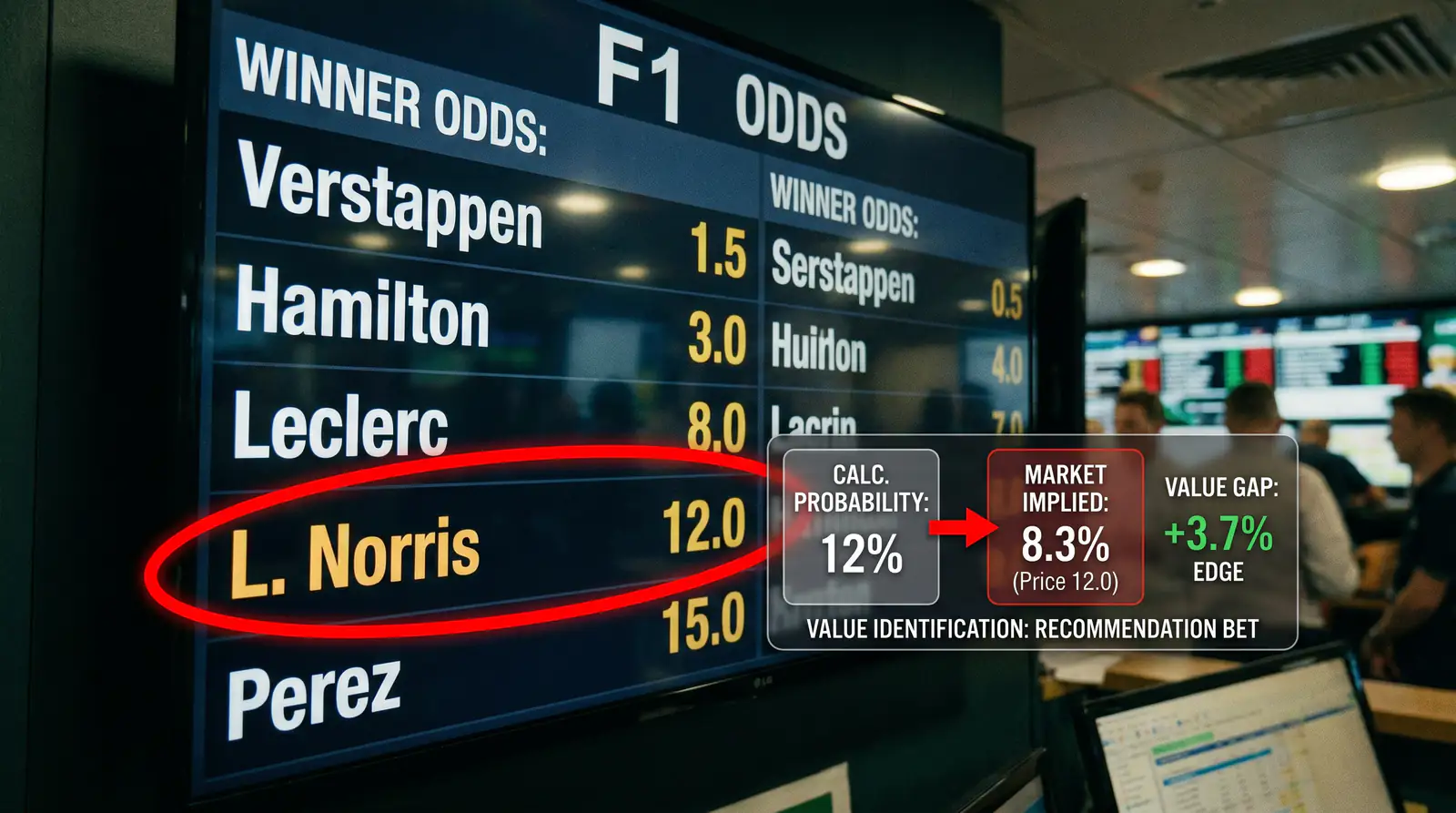
I follow three or four established F1 journalists whose track record on transfer rumours is strong. When multiple credible sources converge on the same driver-team combination, the probability of the move is much higher than the market’s current pricing suggests. A driver rumoured to be joining a top team might see their outright championship odds at 25/1, while the true probability – accounting for the move being 80% likely and the new car being competitive – justifies odds closer to 12/1. The gap between the rumour-adjusted probability and the market price is where I place my bets.

F1 reaches 827 million fans globally, and the transfer rumour mill generates enormous engagement across social media and specialist press. That attention creates noise – false rumours, speculation, clickbait – that the market sometimes prices as signal. The discipline is separating credible reports from speculation. Credible reports come from journalists with a history of accurate transfer scoops. Speculation comes from fan accounts, aggregator sites, and pundits filling airtime. I weight the former heavily and ignore the latter entirely.
How a Team Change Alters a Driver’s Betting Profile
A driver’s odds are a composite of their personal ability and their car’s performance. In F1, the car accounts for roughly 70-80% of lap time performance, with the driver’s skill contributing the remainder. When a driver moves from a backmarker team to a front-running team, their odds shorten dramatically – not because they’ve become a better driver overnight, but because the car underneath them has transformed their competitive position.
The market tends to overshoot in both directions during team changes. A driver moving to a top team sees their odds shorten too aggressively in the initial excitement, especially if the fan base is large and enthusiastic. A driver moving to a weaker team sees their odds drift too far, because the market assumes the car will limit them entirely, ignoring the possibility that a talented driver can extract more from an inferior package than their predecessor did.
I look at the driver’s qualifying performance relative to their teammate at the previous team as the best predictor of their impact at the new one. A driver who consistently outqualified their teammate by three tenths at a midfield team will likely maintain a similar advantage at their new outfit. If the new team’s car is competitive, that three-tenths translates into higher grid positions and better race results. The head-to-head betting markets within a team often reveal mispricing before the outright markets do, because the new driver’s expected gap to their teammate is where the analytical detail lives.
Mid-Season Driver Replacements and In-Season Moves
Not all transfers happen between seasons. Mid-season driver swaps – where a team replaces an underperforming driver during the calendar year – create sudden market adjustments with less time for the bookmaker to calibrate. These replacements typically involve a reserve driver or junior team driver stepping up, and the market is often unsure how to price a driver with limited F1 experience in a competitive car.
The recent precedent is instructive. When teams have promoted junior drivers mid-season, the initial odds have been generous because the market defaults to the “inexperienced driver equals low probability” framework. But junior drivers who’ve been testing the car, running simulator sessions, and competing at a high level in feeder series often adapt faster than the market expects. The first three races after a mid-season replacement are where I’ve found the most consistent mispricing – the market is still calibrating while the driver is already up to speed.
Retirement announcements create a different dynamic. When a veteran driver announces their retirement, the outright market removes them as a contender, and their race-by-race odds drift to reflect reduced motivation or team support. But retiring drivers sometimes deliver their best performances in the final races, motivated by the occasion and running without pressure. The 28% of F1 fans who bet online create significant market volume around retirement seasons, and the sentiment often overshoots in both directions – creating opportunities for contrarian positions.
Regulation Changes and the Transfer Market’s Compound Effect
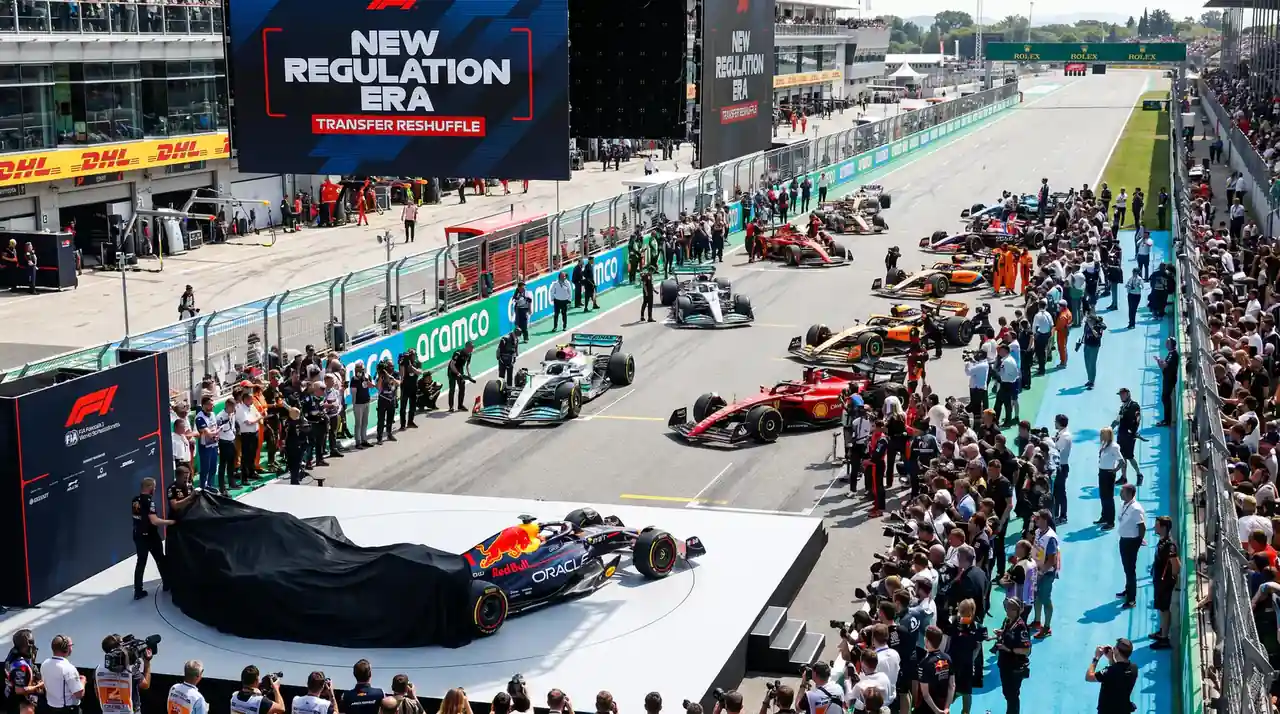
The 2026 regulations introduce new power units and aerodynamic concepts that will reshuffle the competitive order. Teams that have invested early in the new rules may leap ahead; those that prioritised the final years of the current regulations may fall behind. Driver transfers happening against this backdrop carry double uncertainty: the driver’s ability is one variable, and the team’s new-regulation competitiveness is another.
When both variables are uncertain, the market’s pricing is at its least confident – and least efficient. A driver moving to a team widely expected to be strong under the 2026 rules might be priced at reasonable odds, but if the team underperforms, those odds were far too short. Conversely, a driver at a team nobody expects to challenge might benefit from a breakthrough in the new formula. The expected 58% of motorsport bettors aged 18-34 are engaging with a market that’s fundamentally more uncertain in a regulation-change year, and that uncertainty is the environment where analytical preparation pays the highest dividend.
When is the best time to bet on a driver who is changing F1 teams?
The best value appears during the rumour phase, before the move is officially confirmed. Once a transfer is announced, the market adjusts quickly and most of the pricing edge disappears. Following credible F1 journalists during the rumour period gives you the earliest reliable signal.
How much does the car matter compared to the driver in F1 betting?
The car accounts for roughly 70-80% of lap time performance. A driver’s skill matters, but it’s secondary to the machinery. When evaluating a driver transfer, the new team’s car performance is a larger factor than the driver’s individual talent in determining whether their odds represent value.
Published by the f1 Betting team.