F1 Betting in the UK: Markets, Odds and Where to Bet in 2026
Data-driven analysis of every F1 betting market available to UK punters, from race winner odds to in-play strategy.
By F1 Betting Analyst
 Available in US
Seven years ago, when I started analysing F1 betting markets professionally, the average punter’s toolkit was a gut feeling about who looked fastest in qualifying and maybe a glance at the weather forecast. The sport had a passionate following but a thin betting product — a race winner market, a championship outright, and not much else worth your time. That has changed so dramatically that I barely recognise the landscape I walked into.
Formula 1 now commands a global fan base of 827 million people, with 16.7 million of those in the United Kingdom alone. The sport’s audience has grown 63% since 2018, driven by younger demographics who watch, stream, scroll and — increasingly — bet. Yet here is the number that matters most to anyone reading this guide: F1 accounts for just 0.4% of the global betting handle. A sport watched by hundreds of millions, generating more real-time data than almost any other competition on the planet, and it barely registers on the bookmaker’s balance sheet. That gap between the size of the audience and the size of the market is precisely why F1 betting is the most interesting space I have worked in.
This guide is the resource I wish existed when I started. It covers how F1 markets actually work, how to read and interpret odds beyond the basics, what separates a decent motorsport bookmaker from one that just bolted an F1 tab onto a football platform, and how to approach race weekends with a strategy grounded in data rather than hope. I have written it for UK punters specifically — which means UKGC licensing, fractional odds as the default display, and the regulatory reforms that landed in 2025 are all woven into the fabric of every section. Whether you placed your first F1 bet last weekend or you have been punting on Grand Prix weekends for years, the goal is the same: sharper thinking, better decisions, more informed engagement with a sport that rewards those who do the homework.
Table of Contents
- The Numbers and Moves That Define F1 Betting Right Now
- Why F1 Betting Is Growing Faster Than the Sport Itself
- Core F1 Betting Markets Explained
- How F1 Odds Work: Fractional, Decimal and Implied Probability
- What to Look for in a UKGC-Licensed F1 Bookmaker
- Live Betting on F1: How In-Play Markets Respond to the Race
- Building a Data-Driven F1 Betting Strategy
- UK Regulation and the 2025–2026 Reforms That Affect F1 Punters
- Responsible Gambling: Limits, Tools and Where to Get Help
- F1 Betting FAQ
The Numbers and Moves That Define F1 Betting Right Now

- F1’s 827-million fan base has the highest betting propensity of any major sport — 28% bet online — yet motorsport captures just 0.4% of the global handle, signalling massive room for growth.
- The 2026 season introduces F1’s first Official Betting Operator and new on-track regulations, creating market uncertainty that rewards data-driven punters.
- UK punters have access to dozens of markets per Grand Prix — race winner, podium, fastest lap, safety car, sprint — across UKGC-licensed platforms with live in-play options.
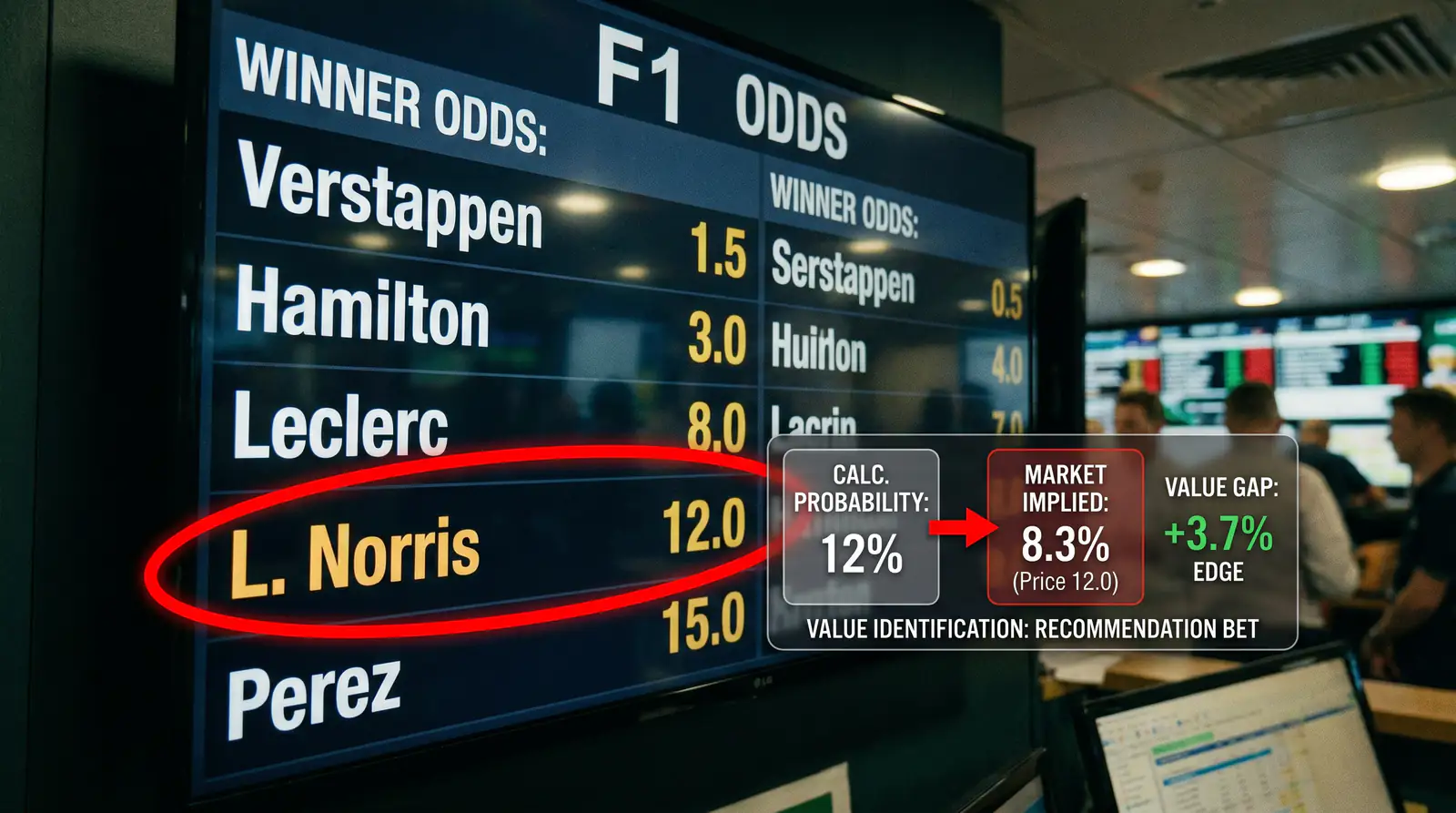
- Converting odds to implied probability is the single most important skill for identifying value: compare the bookmaker’s price to your own estimate, bet only when the gap favours you.
- 2025 regulatory reforms — including a statutory levy and enhanced affordability checks — make responsible bankroll management more relevant than ever.
Why F1 Betting Is Growing Faster Than the Sport Itself
827 million
Global F1 fan base in 2025 — up 63% from 2018
28%
F1 fans who placed an online sports bet in the past 12 months — highest of any major league
0.4%
F1’s share of the global betting handle despite its massive audience
58%
Motorsport bettors aged 18–34
I remember the first race weekend I spent tracking betting volumes alongside the on-track action — it was Silverstone 2019, and the gap between the size of the crowd and the activity in the F1 betting markets felt absurd. Half a million people crammed into the circuit over three days, millions more watching at home, and the motorsport handle looked like a rounding error next to a mid-table Premier League fixture. That contrast has not fully resolved, but the forces pushing it toward correction are now impossible to ignore.
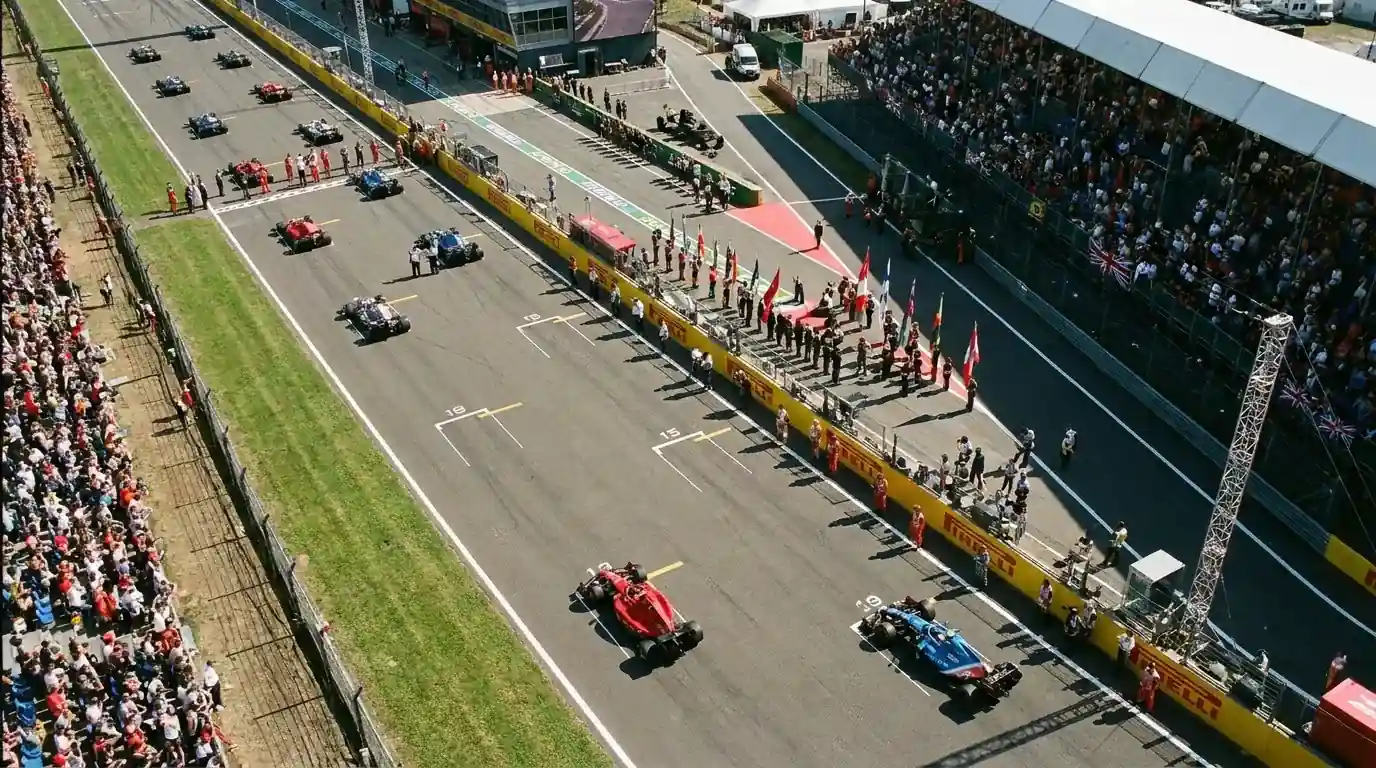
Start with the raw audience numbers. The 2025 season drew a cumulative television audience of 1.83 billion viewers, a five-year peak and a 6.8% jump year on year. Live race viewership climbed 19.8%, qualifying audiences rose 22.8%, and even practice sessions — the Friday content most casual fans skip — pulled 24.9% more eyeballs than the previous year. Total attendance across the 24-race calendar hit a record 6.7 million, with 19 of those rounds selling out entirely. The British Grand Prix alone packed 500,000 spectators into the Silverstone weekend. These are not figures from a sport in maintenance mode. This is expansion.

The demographic profile of that expanding audience matters enormously for betting operators. 43% of F1 fans are under 35, and the sport added 51 million new fans in that age bracket during 2025 alone. Nearly half of all new fans last year were women — 43 million — reshaping an audience that was once overwhelmingly male. Younger, more digitally native, more comfortable with mobile platforms: this is the profile that betting companies have been chasing across every sport.
Here is where the data gets particularly interesting for anyone in my line of work. YouGov’s global gambling profiles show that 28% of F1 fans made an online sports bet within the past 12 months — the highest propensity to bet among fans of any major sports league worldwide. Football fans, tennis fans, cricket fans: none match that number. Yet only 22% of those F1 fans who do bet actually wagered on motorsport. Mark Wrigley, F1’s Head of Betting, put it directly when he said that fans do bet on sport, but they do not bet on F1 because the product has not been there — and that the goal is to facilitate betting from a product perspective rather than push anyone who does not want to participate.
That product gap is closing. The 2026 season brings the first Official Betting Operator partnership in Formula 1 history, a structural shift that signals the sport’s intention to treat betting as a core engagement vertical rather than an afterthought. The timing coincides with major regulation changes on track — new car designs, revised aerodynamic rules — which inject uncertainty into every market. Uncertainty is the raw material of betting value. When the established order gets disrupted, bookmaker models lag behind real-world performance, and alert punters find edges that do not exist in stable seasons.
The 2025 F1 season set an all-time attendance record of 6.7 million across 24 races — up from 4.2 million in 2019. That is roughly the population of Denmark showing up trackside in a single season.
What I find most compelling about the current moment is the convergence: a huge, young, bet-inclined audience; a sport actively building better betting infrastructure; a regulatory environment in the UK that is tightening standards while keeping the market accessible; and a season of on-track upheaval that creates the kind of market inefficiencies data-driven punters live for. The conditions have never been better for F1 betting to mature into something that matches the scale of the sport itself.
Core F1 Betting Markets Explained
The first time I opened an F1 betting market and saw more than five options, I knew the sport had turned a corner. For years, the menu was short: pick a race winner, maybe an outright championship bet, and that was it. Now a single Grand Prix weekend can generate dozens of distinct markets spanning qualifying, the race, individual driver matchups and granular propositions like first pit stop and safety car deployment. Each car on the grid produces roughly 700 data points per second during a session — tyre pressures, fuel load, sector splits, DRS activation, brake temperatures — and that telemetry torrent is starting to flow into betting products that reflect the complexity of the sport itself.
F1 betting markets split into three broad categories: pre-race markets that close before lights out, in-play markets that stay live during the Grand Prix, and season-long outrights that run from pre-season testing through to the final round. Understanding which category a market belongs to determines when you can place your bet and how the odds will behave.
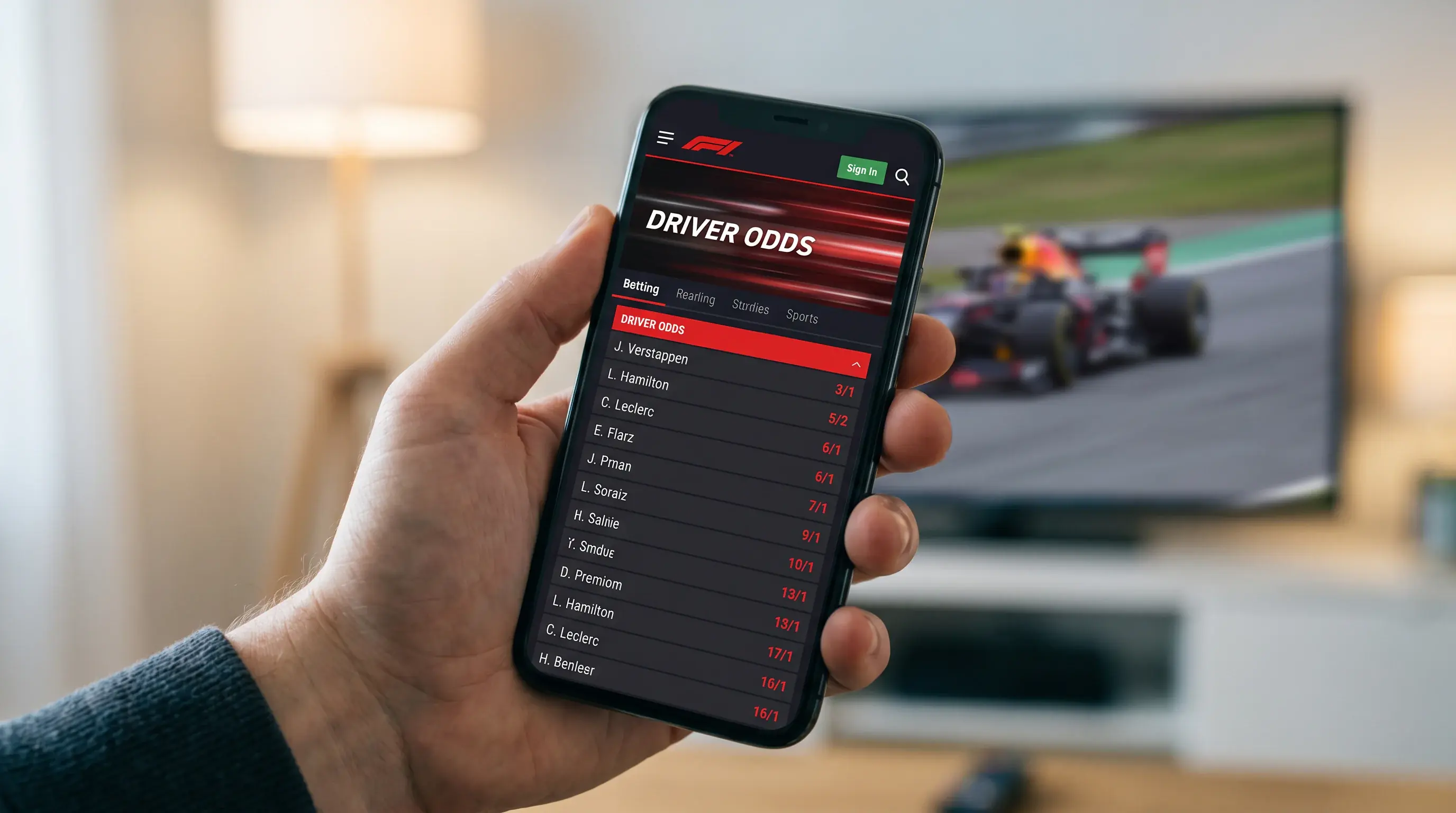
What follows is an overview of the core market types available to UK punters. For a deep dive into every individual market — including niche propositions you will not find at every bookmaker — I have written a dedicated guide to F1 betting markets that goes further than I can here.
Race Winner, Podium Finish and Points Scoring
Race winner market — a bet on which driver will cross the finish line first (or be classified first after any post-race penalties, depending on the bookmaker’s settlement rules).
The race winner market is the one most punters start with, and for good reason — it maps directly onto the question you are already asking yourself when you watch a Grand Prix. You pick a driver, the odds reflect the bookmaker’s assessment of their chances, and if your driver wins you collect. Simple in concept, but the pricing carries real nuance. A dominant car in a dominant era can be priced as short as 1/5, which offers almost no return for the risk. The value tends to live further down the grid, in the 10/1 to 25/1 range, where qualifying pace, strategic flexibility and race-day chaos create genuine opportunities.
Podium finish bets lower the bar — your driver needs to finish in the top three rather than win outright. Points-scoring markets push that threshold to the top ten. The trade-off is obvious: higher probability of winning, shorter odds. But the expected value calculation is not always worse. I have found some of my best long-term returns in podium markets for midfield drivers at circuits where attrition rates are historically high.
Example: Suppose a driver is priced at 12/1 to win (implied probability around 7.7%) and 5/2 for a podium finish (implied probability around 28.6%). Your analysis puts their true win chance at 10% and their true podium chance at 40%. Both bets show positive expected value, but the gap between your estimate and the bookmaker’s price is wider on the podium market — 40% versus 28.6% — making it the stronger play even though the payout per unit is lower.

Championship Outrights and Season Futures
Outright markets let you bet on the Drivers’ Championship or Constructors’ Championship winner before or during the season. These are long-duration positions — your money is tied up for months — but they offer something race-day markets cannot: the ability to lock in a price before the market has fully absorbed new information. Pre-season testing, regulation changes, driver transfers and early-season form shifts all create windows where outright odds are slower to adjust than race-by-race prices. The 2026 regulation overhaul makes this particularly relevant: every team is starting from a different baseline, and the pre-season order will almost certainly not hold through the first five rounds.
Constructors’ outrights add a layer of complexity because you are betting on the combined performance of two drivers. A team with one elite driver and one inconsistent teammate will price differently than a team with two reliable points scorers, even if their car pace is identical. That two-driver dynamic is where analytical edge often hides in the constructors’ market.
Qualifying, Fastest Lap and Sprint Markets
Qualifying markets have grown substantially over the past three seasons. Pole position is the headline bet, but you can now find markets on Q1 eliminations, qualifying head-to-heads between teammates, and top-three qualifying positions at most major UK bookmakers. Fastest lap markets carry a unique wrinkle: the championship point awarded for the fastest lap (provided the driver finishes in the top ten) has changed driver behaviour, meaning the final laps of a race now regularly feature deliberate pit stops for fresh tyres from drivers chasing that point. That behavioural shift has made fastest lap betting more predictable than it was before the rule change — and more interesting.
Sprint race markets appear on weekends that feature the shortened Saturday format. These are distinct from Sunday race markets: fewer laps, no mandatory pit stop, a compressed field where starting position matters even more than usual. I treat sprint markets as an entirely separate betting exercise, and I would encourage you to do the same.
How F1 Odds Work: Fractional, Decimal and Implied Probability
I once sat next to a punter at a Silverstone hospitality suite who had been betting on F1 for three seasons and had never heard the term “implied probability.” He picked drivers the way you pick horses at the Grand National — names he liked, colours he fancied, a hunch from the paddock. He was not stupid. He was just operating without the single most important conceptual tool in a bettor’s kit. Odds are not just numbers attached to a name. They are a translation of probability into price, and if you cannot reverse that translation, you are flying blind.
Fractional odds — the traditional UK format, expressed as a fraction (e.g. 5/1, 11/4). The first number represents potential profit, the second represents the stake required.
UK bookmakers default to fractional odds: 5/1 means you win five pounds for every one pound staked, plus your stake back. 11/4 means you win eleven pounds for every four staked. The format is intuitive for simple prices — 2/1, 5/1, 10/1 — but gets harder to parse at odd fractions like 11/8 or 15/8. Most platforms let you toggle to decimal odds with a single click, and I recommend doing so if mental arithmetic is not your strong suit. Decimal odds express the total return including stake: 5/1 fractional becomes 6.00 decimal, 11/4 becomes 3.75. Multiply your stake by the decimal price to get your total payout. Clean, quick, less room for confusion.
But neither format tells you what you actually need to know, which is: what probability is this price implying? That is where a proper understanding of F1 betting odds becomes essential.
Converting odds to implied probability
Step 1: Take fractional odds of 7/2.
Step 2: The formula is: Stake / (Profit + Stake) = Implied Probability. So: 2 / (7 + 2) = 2/9 = 0.222.
Step 3: Multiply by 100 to get a percentage: 22.2%.
Step 4: This means the bookmaker’s price implies a 22.2% chance of the outcome occurring.
Step 5: If your own analysis says the true probability is 30%, you have a value bet. If your analysis says 15%, the odds are not in your favour.

That fifth step is where the real work happens. Converting odds to percentages is just arithmetic. Estimating the true probability of a driver winning, finishing on the podium, or setting the fastest lap — that requires analysis, and it is the foundation of every profitable betting approach. I spend most of my pre-race preparation building my own probability estimates for the top ten finishers, then comparing them to the bookmaker’s implied probabilities. Where the gap is large enough, I have a bet. Where it is not, I leave the market alone.
Example: Suppose a driver is offered at 4/1 (decimal 5.00) for a race win. The implied probability is 20%. You study qualifying pace, long-run data from practice, the weather forecast and historical performance at this circuit, and you estimate the driver’s true win probability at 28%. The gap between 28% and 20% suggests positive expected value — the bookmaker is underestimating this outcome relative to your model.
One more concept worth embedding early: the overround. Bookmakers do not price a market so that all implied probabilities add up to 100%. They add a margin — the overround — which ensures they profit regardless of the outcome. In a 20-driver F1 race winner market, the total implied probability might sum to 115% or 120%. That extra 15–20% is the bookmaker’s built-in edge. Understanding overround helps you assess which bookmakers offer tighter margins on F1 (and therefore better value per bet), and it explains why two different sites can offer noticeably different prices on the same driver for the same race. The lower the overround, the closer the odds are to the true probabilities — and the less you are paying for the privilege of placing a bet.
What to Look for in a UKGC-Licensed F1 Bookmaker
Last season I opened accounts with four different UK bookmakers specifically to compare their F1 offerings side by side. Same race, same weekend, same markets — and the differences were striking. One had 35 distinct F1 markets for the Australian Grand Prix. Another had nine. The odds on race winner varied by as much as two full points on midfield drivers. Live betting on one platform updated every few seconds; on another, the in-play markets for F1 were functionally dead by lap five. The bookmaker you choose is not a neutral container for your bets — it shapes what you can bet on, at what price, and with what tools.
For a thorough walkthrough of how to evaluate platforms specifically for motorsport, I have put together a comparison framework for UK F1 betting sites that covers every criterion below in greater detail.
The non-negotiable starting point is a UK Gambling Commission licence. The UK’s remote gambling sector is worth billions in annual gross gambling yield, and every operator taking bets from UK customers must hold a valid UKGC licence. This is not a quality badge or a marketing claim — it is a legal requirement that guarantees regulatory oversight, dispute resolution mechanisms and mandatory responsible gambling tools. If a site does not display its UKGC licence number, walk away.
| Criterion | General Sports Bookmaker | F1-Focused Bookmaker |
|---|---|---|
| Number of race-day markets | 5–10 per Grand Prix | 25–50+ per Grand Prix |
| In-play F1 coverage | Race winner only, slow updates | Multiple live markets, faster feeds |
| Qualifying markets | Pole position only | Pole, Q1/Q2 elimination, session H2H |
| Sprint race markets | Often absent | Dedicated sprint markets on sprint weekends |
| F1 promotions | Rare, generic | Race-specific enhanced odds, F1 free bets |
| Data integration | Basic results | Telemetry-informed pricing, faster odds movement |

The 2026 season brings an additional dimension to this conversation. Formula 1 announced its first-ever Official Betting Operator partnership — a multi-year deal covering Europe, the Middle East, Africa, Canada and Mexico. The sport described it as unlocking a modern and innovative way for eligible audiences to engage with cutting-edge metrics that are accurate, consistent and official. That language matters because it signals a shift toward standardised, telemetry-fed betting products. Bookmakers with access to official data feeds will be able to price markets more accurately and offer more granular in-play options than those relying on third-party data with higher latency.
Beyond licensing and market depth, the practical details matter. How quickly can you deposit and withdraw? Does the mobile app perform well during a live race when you need to place or cash out a bet in seconds? Are the F1 markets easy to find, or buried three submenus deep behind football and horse racing? Is the bet builder — the tool that lets you combine multiple selections within a single Grand Prix into one wager — available for F1, or limited to football?
Before you open an F1 betting account, check these
- Valid UKGC licence number displayed on the site
- F1 listed as a standalone sport category, not buried under “other motorsport”
- At least 20 markets per Grand Prix race weekend
- Live in-play betting available during the race with multiple market options
- Cash-out functionality on F1 markets (full and partial)
- Bet builder or same-race multi tool that supports F1 selections
- Deposit limit and self-exclusion tools accessible from account settings
- Responsive mobile experience — test it on your device before committing funds
I have seen too many punters pick a bookmaker based on a welcome bonus and then discover the platform offers almost nothing for F1. The bonus is a one-time incentive. The market depth, the odds quality and the live betting experience are what you live with for every race weekend of the season.
Live Betting on F1: How In-Play Markets Respond to the Race
Lap 32 of the 2024 Hungarian Grand Prix. A safety car comes out after a first-corner incident at the restart, bunching the field and demolishing the three-second gap the leader had built over the previous stint. In the time it takes me to refresh my screen, the race winner market has repriced entirely — the leader’s odds lengthen from 1/8 to 4/6, and a driver running fourth is suddenly available at 3/1. That sixty-second window is the essence of live F1 betting: compressed, data-driven, and ruthlessly unforgiving if you hesitate.
Live F1 betting is the fastest-growing segment of the motorsport wagering market. Each of the 20 cars on the grid generates approximately 700 data points per second — tyre temperatures, fuel load, energy deployment, gap to the car ahead — and those data streams now feed directly into bookmaker pricing models. The result is markets that react to on-track events in near real time, creating opportunities that did not exist five years ago.
Mark Wrigley, F1’s Head of Betting, described the thinking behind the sport’s new approach to betting products by explaining they spent the best part of a year going back to basics, asking how to use the vast amounts of data the sport generates to convert it into a genuinely engaging betting proposition. That philosophy is visible in the direction of in-play markets: more micro-markets within a race, faster settlement, and odds movement that tracks the race narrative lap by lap.
Common in-play F1 markets include: next driver to retire, next safety car deployment, leader at a specific lap number, pit-stop window timing, and revised race winner odds. Not all bookmakers offer the full range — market depth during a live race is one of the clearest differentiators between a strong F1 betting platform and a weak one.
The challenge for punters is information asymmetry. The bookmaker’s pricing engine has access to the official telemetry feed with minimal delay. You, watching on a broadcast with a production delay of several seconds, are working with older information. That lag is not insurmountable — I have found consistent edges by focusing on strategic decisions (tyre compound choices, pit-stop timing, team radio messages) rather than trying to beat the algorithm on raw pace data — but it is a reality you need to account for. If you are betting in-play based on what you just saw on screen, the odds have almost certainly already moved.
For a more detailed breakdown of in-play timing, cash-out mechanics and the specific market types that stay active during a Grand Prix, I have written a full guide to F1 live betting that covers what this overview cannot.
Live betting rewards reactive thinking. But the most consistent returns come from preparation that starts days before lights out.
Building a Data-Driven F1 Betting Strategy
Here is the uncomfortable truth about most F1 betting advice you will find online: it amounts to “do your research” without ever specifying what research means in practice. I have read guides that recommend checking the weather and looking at qualifying results as if those constitute a strategy. They do not. A strategy is a repeatable process with defined inputs, decision rules and a framework for evaluating whether it is working over time. Everything else is guessing with extra steps.
The foundation of my approach — and the one I encourage any serious F1 punter to build — starts with qualifying-to-race conversion data. How often does the pole-sitter win at a given circuit? What is the average finishing position for a driver starting fifth? How frequently do drivers outside the top three on the grid end up on the podium? These numbers vary dramatically by track. On a street circuit like Monaco, pole conversion rates historically sit above 60%. At a high-speed venue with long straights and multiple overtaking opportunities, that figure can drop below 40%. If you are pricing a race winner bet without knowing the circuit-specific conversion rate, you are missing the single most predictive variable available to you.
The volume of data F1 produces during a session is staggering — far beyond what any individual can process in real time. But you do not need the full telemetry feed. Punters have access to sector times, tyre compound choices, pit-stop durations and gap data through the official F1 timing app and third-party analysis platforms. This publicly available data is sufficient to build meaningful pre-race models.
Weather is the second variable that separates informed bets from hopeful ones. A dry qualifying session followed by a wet race reshuffles the entire grid’s probabilities. Drivers and teams with strong wet-weather pedigrees suddenly become live contenders at prices that reflect their dry-weather form. I track three separate weather forecasting sources for each circuit and compare their precipitation predictions for the race window. When two out of three indicate rain, I start looking at long-shot drivers who have historically performed above their grid position in wet conditions.
Tyre degradation is the third pillar. Friday practice sessions exist partly to help teams evaluate how each tyre compound behaves on a specific track surface. High degradation means more pit stops, which means more strategic variation, which means more opportunities for the race to diverge from the qualifying order. Low degradation tends to produce processional races where grid position is destiny. I note which teams are running heavy fuel loads in long-run simulations during FP2 and compare their degradation rates — that data feeds directly into my assessment of who has the pace to overcut or undercut their way up the order.
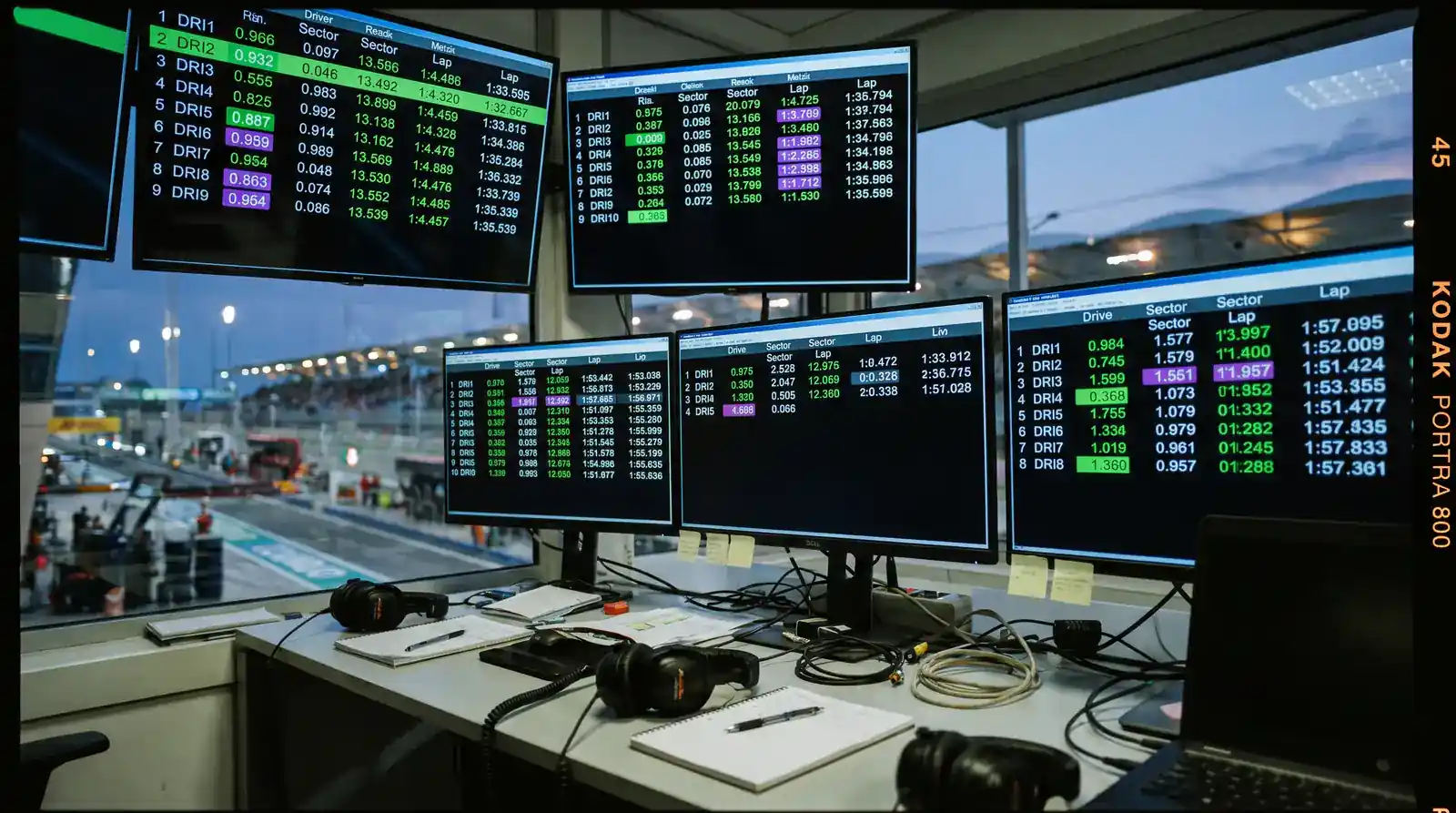
F1’s own leadership has acknowledged this data-driven direction. The biggest opportunity, according to the sport’s Head of Betting, is to grow engagement through innovative product developments that give fans a proposition they can interact with in a meaningful way. That vision aligns with a betting approach that treats each Grand Prix as a data problem rather than a lottery.
Do
- Build your own probability model using qualifying pace, long-run data and circuit history before checking bookmaker odds
- Track weather forecasts from multiple sources starting 72 hours before the race
- Compare tyre degradation data from FP2 across teams to assess strategic flexibility
- Record every bet you place with your estimated probability and the bookmaker’s implied probability — review monthly
Don’t
- Bet on race winner based on qualifying result alone without checking circuit conversion rates
- Ignore practice session data because “teams don’t show their hand on Friday” — they reveal more than you think
- Chase losses after a bad weekend by increasing stake sizes for the next race
- Treat every Grand Prix market identically — sprint weekends, street circuits and rain-affected races each demand a different analytical lens

For a complete breakdown of these methods, including worked examples from specific race weekends, my F1 betting strategy guide goes deeper into each pillar of this approach.
UK Regulation and the 2025–2026 Reforms That Affect F1 Punters
If you had asked me in 2020 whether UK gambling regulation would directly affect how I bet on a Sunday afternoon Grand Prix, I would have said no. The Gambling Act 2005 was the bedrock, the UK Gambling Commission enforced it, and the practical impact on a punter placing a tenner on race winner was minimal. That is no longer the case. The reforms that rolled out in 2025 changed the financial mechanics of betting in ways every F1 punter needs to understand — not because they restrict what you can bet on, but because they reshape the environment in which you bet.
The Gambling Act 2005 remains the primary legislation governing all forms of gambling in the United Kingdom. But the 2023 White Paper on gambling reform triggered a wave of secondary legislation that took effect in 2025, including new stake limits, enhanced affordability checks and a mandatory statutory levy on operators. These are the most significant changes to UK betting regulation in nearly two decades.
The headline reform for online punters: from 6 April 2025, a five-pound maximum stake per spin applies to online slots for players aged 25 and over, with stricter limits for those under 25. That does not directly affect F1 sports betting — there is no per-bet stake cap on sports markets — but it signals the direction of regulatory travel. The Gambling Commission’s chief executive framed the reforms as making Britain the safest and fairest place to gamble in the world, and the pattern of tightening consumer protections has not slowed.
The statutory gambling levy, introduced in October 2025, is a different kind of change. For the first time, UK operators must pay a mandatory percentage of their gross gambling yield to fund research, prevention and treatment of gambling-related harm. Previously, contributions were voluntary. The remote gambling sector — the segment that covers every online bet you place — generated GGY of 7.8 billion pounds in the year to March 2025, growing 13.1% year on year. The levy draws from that pool, and while operators absorb the cost, some industry analysts expect the expense to influence promotional spend and bonus generosity over time. In practical terms: the era of aggressively inflated welcome offers may be gradually winding down.
Enhanced affordability checks are another pillar of the 2025 reforms. Operators must now conduct financial vulnerability assessments for customers who reach certain spending thresholds. These checks can require documentation of income and may result in temporary betting restrictions. The thresholds and processes vary by operator, but every UKGC-licensed bookmaker is now required to implement them.

For F1 betting specifically, there is a regulatory dimension that sits outside the Gambling Commission’s remit: the FIA’s own betting integrity rules. All team personnel — drivers, engineers, strategists, mechanics — are prohibited from placing bets on any FIA-sanctioned event. This ban exists to protect the integrity of competition and is enforced separately from UK gambling law. As a punter, you benefit from it indirectly: the ban reduces the risk of insider-driven market manipulation, which means the odds you see are more likely to reflect genuine probability assessments rather than distorted prices.
The broader regulatory picture is one of a market that remains fully legal and accessible for UK adults, but with a framework that is becoming more structured and consumer-focused. Knowing that framework is not optional — it is part of operating as an informed bettor in a regulated environment.
Responsible Gambling: Limits, Tools and Where to Get Help
I write about finding edges, reading data and building strategy — but none of that matters if the activity itself is causing harm. 47% of UK adults participate in some form of gambling, and 10% bet on sports online. Those are large numbers, and within them sit people at every point on the spectrum from casual entertainment to serious difficulty. I have watched sharp, analytical friends lose their discipline after a bad run of results, and I have seen newcomers treat betting as a cost-free hobby until the bank statement arrives. The tools exist to keep you on the right side of that line. Using them is not a sign of weakness — it is part of the infrastructure of doing this well.
Every UKGC-licensed bookmaker is legally required to offer deposit limits, loss limits, session time reminders (reality checks) and self-exclusion options. These tools are accessible from your account settings. If you have not set a deposit limit, do it before your next F1 bet — not because I think you have a problem, but because a limit set in a calm moment protects against decisions made in a less calm one.
GAMSTOP is the UK’s national self-exclusion scheme. Registering with GAMSTOP blocks you from all UKGC-licensed online gambling sites for a period of your choosing: six months, one year, or five years. It applies across every operator — you cannot exclude yourself from one site and simply move to another. For someone who recognises that their betting has moved from entertainment to compulsion, GAMSTOP is the most effective single intervention available.

The statutory gambling levy introduced in October 2025 is specifically designed to fund support services. That money flows into organisations providing counselling, treatment and research into gambling-related harm. GamCare, the National Gambling Helpline and the NHS National Problem Gambling Clinic are all accessible to anyone in the UK who needs support — free of charge, confidential and staffed by specialists who understand the specific patterns of gambling difficulty.
My own rule, which I share with everyone who asks: set your F1 betting bankroll for the season at an amount you would be comfortable losing entirely. Not an amount that would sting. Not an amount that would require adjusting your household budget. An amount that, if it vanished overnight, would be annoying but not harmful. Divide that by 24 race weekends and you have your per-race budget. That number is your boundary, and it does not negotiate with adrenaline, frustration or a “sure thing” tip from someone online. The discipline to respect that limit is the only edge that guarantees you are still here for the next race.
F1 Betting FAQ
How does F1 betting work?
F1 betting works like any other sports betting: you select a market, choose an outcome, place a stake and receive a payout if your selection is correct. The difference is the range of markets available. A single Grand Prix weekend can offer dozens of betting options — from straightforward race winner and podium finish bets to more granular propositions like fastest lap, pole position, safety car deployment and head-to-head driver matchups. You can bet before the race (pre-race markets), during the race (in-play or live markets), or on season-long outcomes like the Drivers’ or Constructors’ Championship. All bets placed with UK bookmakers are processed through UKGC-licensed platforms, which means regulatory protections, dispute resolution mechanisms and mandatory responsible gambling tools are built into every transaction.
What are the most popular F1 betting markets?
Race winner is the most widely used market — it is simple, directly connected to the main event and available at every bookmaker. Podium finish (top three) is the second most popular, particularly among punters who want a higher strike rate than the race winner market offers. Championship outrights — betting on who will win the Drivers’ or Constructors’ title — attract significant volumes pre-season and at key inflection points during the calendar. Fastest lap, pole position and head-to-head driver matchups round out the core set. Sprint race markets and qualifying-specific bets (Q1 elimination, qualifying group bets) are newer but growing quickly. Specials like safety car deployment and number of retirements add variety for punters looking beyond the standard options.
How do F1 odds work in the UK?
UK bookmakers display F1 odds in fractional format by default. Fractional odds like 5/1 mean you win five pounds for every one pound staked, plus your original stake returned. You can switch to decimal format on most platforms — 5/1 becomes 6.00 in decimal, where you multiply your stake by the decimal number to calculate total return. The critical skill is converting odds to implied probability: divide the denominator by the sum of numerator and denominator, then multiply by 100. Odds of 7/2, for example, imply a 22.2% chance. Comparing that implied probability to your own assessment of the outcome is how you identify whether a bet offers value.
Is F1 betting legal in the UK?
F1 betting is fully legal in the United Kingdom for adults aged 18 and over. All online bookmakers accepting UK customers must hold a licence from the UK Gambling Commission under the Gambling Act 2005. This licensing framework ensures operators meet standards for fairness, player protection and responsible gambling. The 2025 regulatory reforms introduced additional measures — including a statutory gambling levy and enhanced affordability checks — but did not restrict which sports markets are available. You can bet on any F1 event through any UKGC-licensed operator without legal concern, provided you meet the age and identity verification requirements.
What is each-way betting in F1?
Each-way betting is effectively two bets in one: a win bet and a place bet. If your driver wins, both parts pay out. If the driver does not win but finishes within the bookmaker’s place terms — typically top three in F1, though some operators extend to top five or top six for standard races — the place portion pays out at a fraction of the win odds (commonly 1/4 or 1/5). Because your total stake is doubled (one unit on win, one unit on place), you need to factor that into your return calculations. Each-way betting is particularly useful when you fancy a driver at long odds who has a realistic shot at a podium even if winning the race is unlikely.
Can you bet on F1 live during a race?
Yes. Most major UK bookmakers offer in-play betting during F1 races, with markets that update in response to on-track events. The race winner market typically stays open throughout, and some platforms also offer live markets on next retirement, safety car deployment and revised podium odds. Live odds are driven by real-time data feeds — each car generates approximately 700 data points per second — so prices can shift rapidly after incidents, pit stops or safety car deployments. Cash-out options are usually available on pre-race bets during the live phase, allowing you to lock in a profit or cut a loss before the chequered flag.
What factors should I consider before placing an F1 bet?
The most impactful factors are qualifying performance relative to historical circuit conversion rates, weather conditions for race day, tyre degradation data from Friday and Saturday practice sessions, and the track layout’s characteristics (street circuit versus high-speed venue, number of overtaking opportunities, safety car likelihood). Beyond the on-track data, check whether any grid penalties apply, whether a sprint format affects the weekend schedule, and whether regulation changes have shifted the competitive order. Bankroll management also matters: set a per-race budget, stick to markets where your analysis gives you a genuine edge, and avoid betting on every race simply because the calendar is busy.
Published by the f1 Betting team.