F1 Retirement Betting: DNF Markets, Reliability Data and How Retirements Settle
 Available in US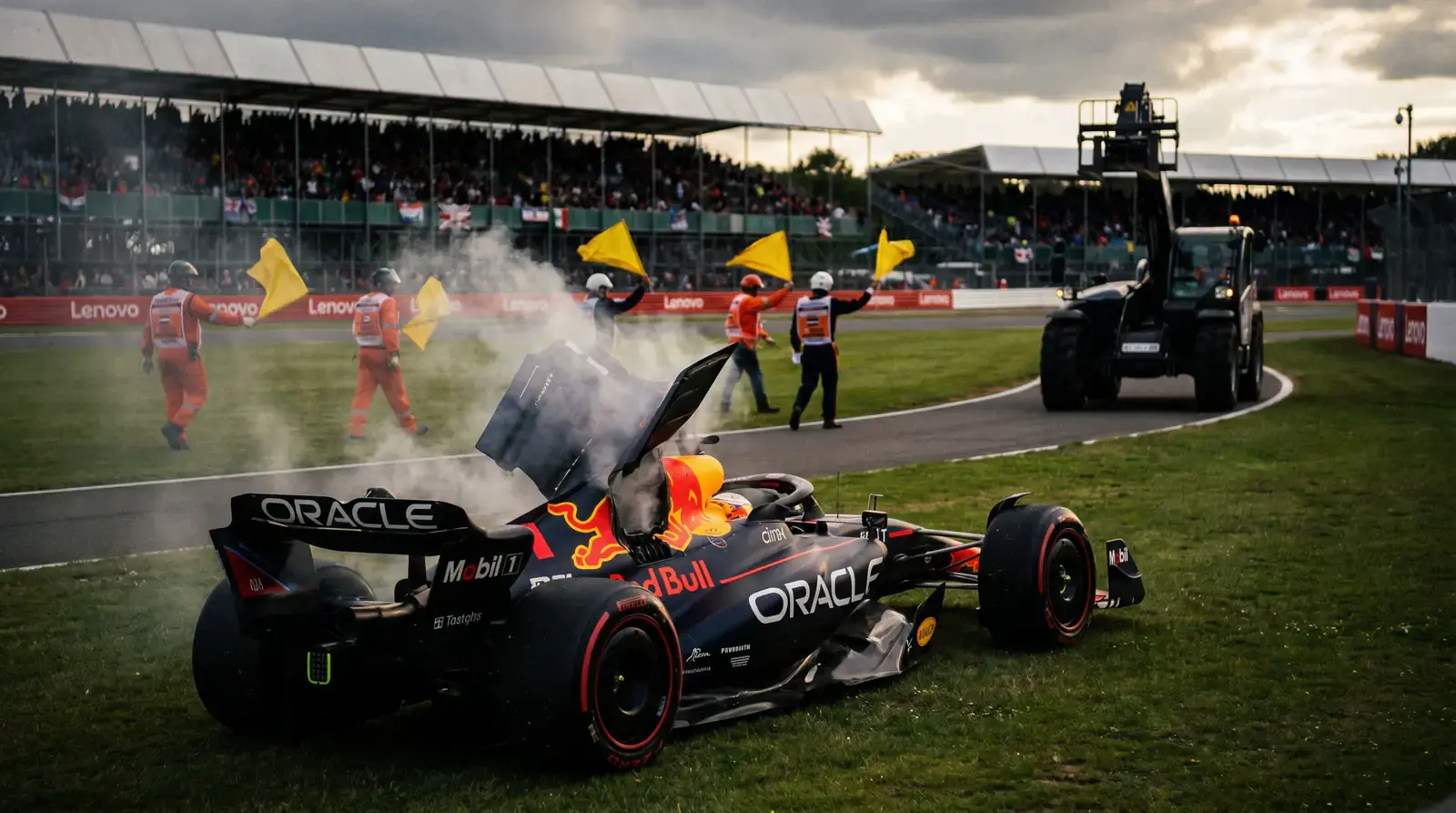
Bahrain 2022. Both Red Bulls retired from the same race with nearly identical power unit failures. I’d placed an over 2.5 retirements bet at 6/4, which landed before half distance. But I also held a head-to-head bet on Verstappen that was voided because both he and the matched driver retired. That evening summed up retirement betting perfectly: the upside can be excellent, but the knock-on effects on your other bets demand careful management.
Retirement betting covers markets related to drivers failing to finish a Grand Prix – whether through mechanical failure, collision, driver error, or any other cause. The standard markets include over/under on total retirements, a named driver to retire (DNF), and first retirement of the race. These markets sit at the intersection of reliability data, circuit characteristics, and pure racing incident probability, which makes them analytically interesting and practically profitable for punters who track the right variables.
DNF Markets: Over/Under Retirements and Named-Driver DNF Bets
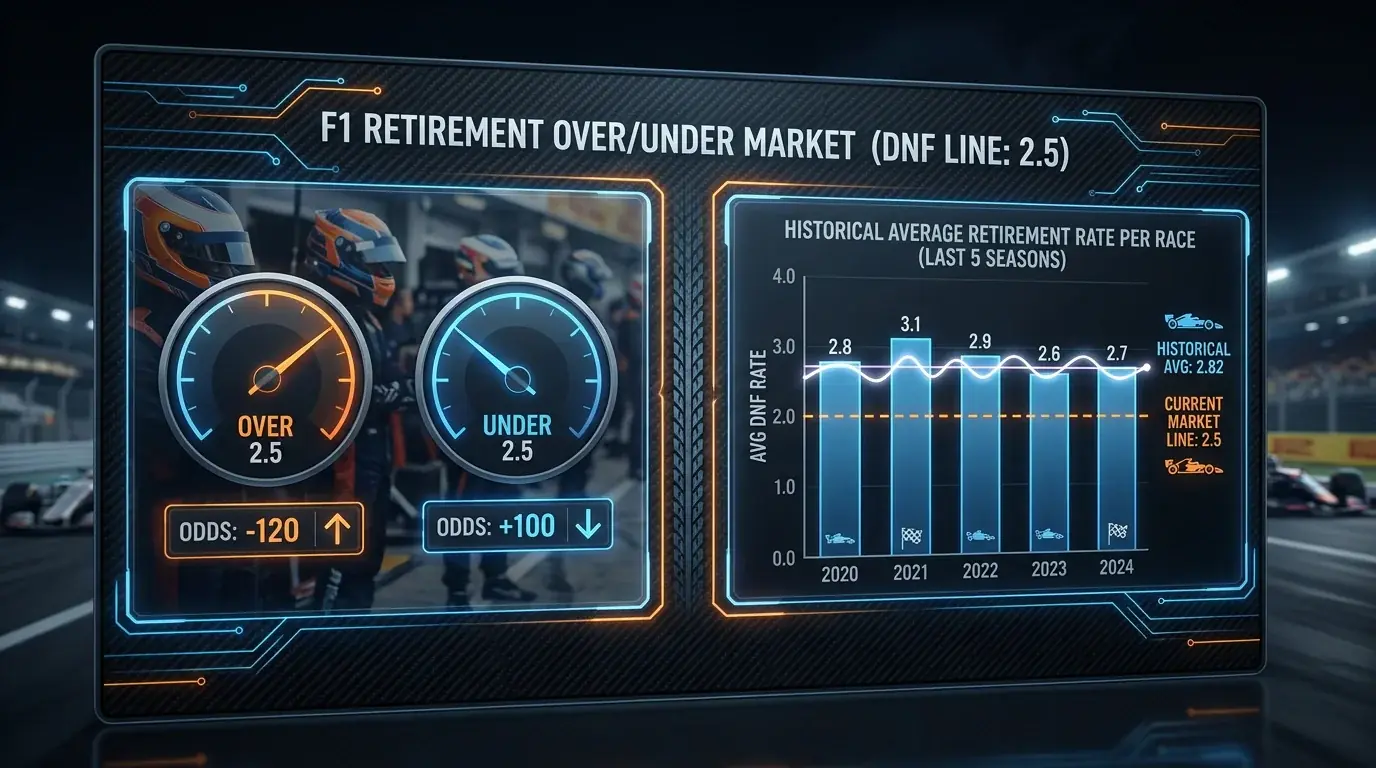
The over/under retirements market is the most accessible entry point. Bookmakers set a line – typically 1.5 or 2.5 retirements – and you bet on whether the total exceeds or falls below that number. The 2025 F1 season packed a record 6.7 million fans into 24 races, 19 of which were sold out, and the average retirement rate across a modern F1 season sits between 2.5 and 3.5 per race. That baseline helps frame the value: an over 2.5 line at even money implies a probability around 50%, but the historical data shows the actual over-2.5 rate is closer to 55-60% depending on the circuit.
Named-driver DNF bets are more specific and more volatile. You’re backing a single driver to fail to finish the race. The odds reflect both the team’s reliability record and the driver’s personal history of incidents. A driver at a team with a history of power unit failures might be priced at 5/1 to retire, while a driver at a highly reliable team could be 12/1 or longer. The challenge is that DNFs are inherently unpredictable events – even the most reliable car can be collected in a first-lap collision – which means the expected value on named-driver DNF bets is harder to assess than on over/under markets.

First retirement markets – betting on which driver will be the first to retire from the race – are offered at some operators and provide an interesting angle. These tend to be priced in a similar structure to first goalscorer markets in football, with every driver carrying a price. The value here is in identifying drivers who combine personal collision risk (aggressive first-lap behaviour, a history of wheel-to-wheel contact) with car reliability risk. A driver known for aggressive opening-lap moves in a car with known reliability concerns is the intersection where first-retirement odds can underestimate the true probability.
Team Reliability Trends and Power Unit Failure Rates
Every car on the F1 grid produces approximately 700 data points per second during a race, and the teams’ internal reliability monitoring systems are vastly more sophisticated than anything available to punters. But the public data – the DNF record by team and by power unit supplier across a season – is sufficient to identify systematic reliability risks that the betting market may not fully price.
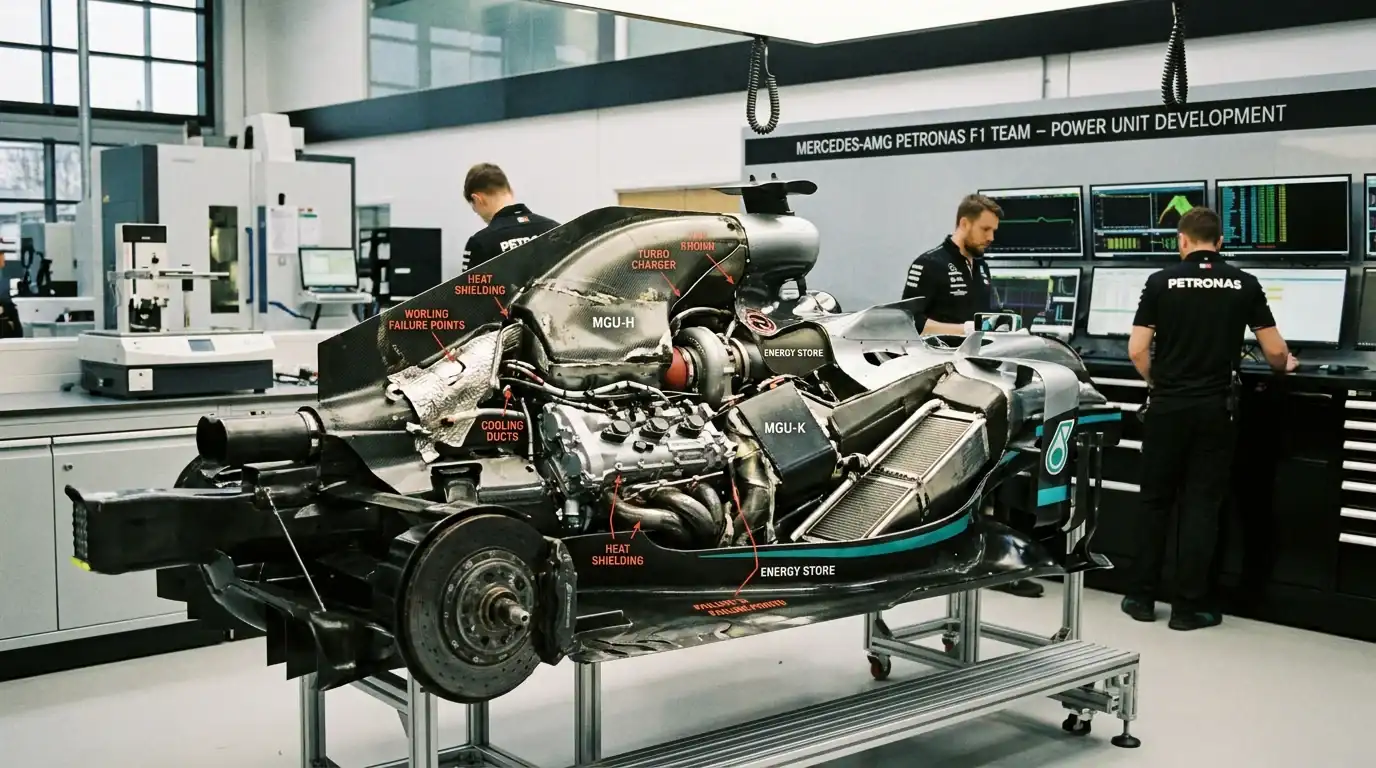
Power unit failures cluster by manufacturer. In any given season, one or two of the four power unit suppliers (Mercedes, Ferrari, Honda/Red Bull Powertrains, and Renault/Alpine) tend to have higher failure rates than the others, often due to a specific design choice that creates a weakness under certain operating conditions. High-altitude circuits, extreme heat, and races with heavy full-throttle percentages stress power units differently, and historical failure data by circuit can reveal patterns. A power unit supplier whose failures cluster at high-altitude venues is a specific risk at circuits like Mexico City and Interlagos.

I maintain a simple reliability tracking table updated after each race: team, power unit supplier, number of mechanical DNFs, and the circuit characteristics at the time of failure. Over a season, this builds into a predictive tool. By mid-season, if one team has accumulated three or more mechanical retirements, their over/under retirement rate at individual races starts to diverge from the grid average in a way that creates value in both the team’s named-driver DNF markets and the overall race retirement totals.
Settlement Quirks: Classified but Retired, Disqualified After Finish
Mark Wrigley, F1’s Head of Betting, has spoken about the sport’s commitment to building a betting proposition that is engaging and meaningful – and clean settlement is fundamental to that goal. But F1’s classification rules create edge cases in retirement betting that punters need to understand before the situation arises.
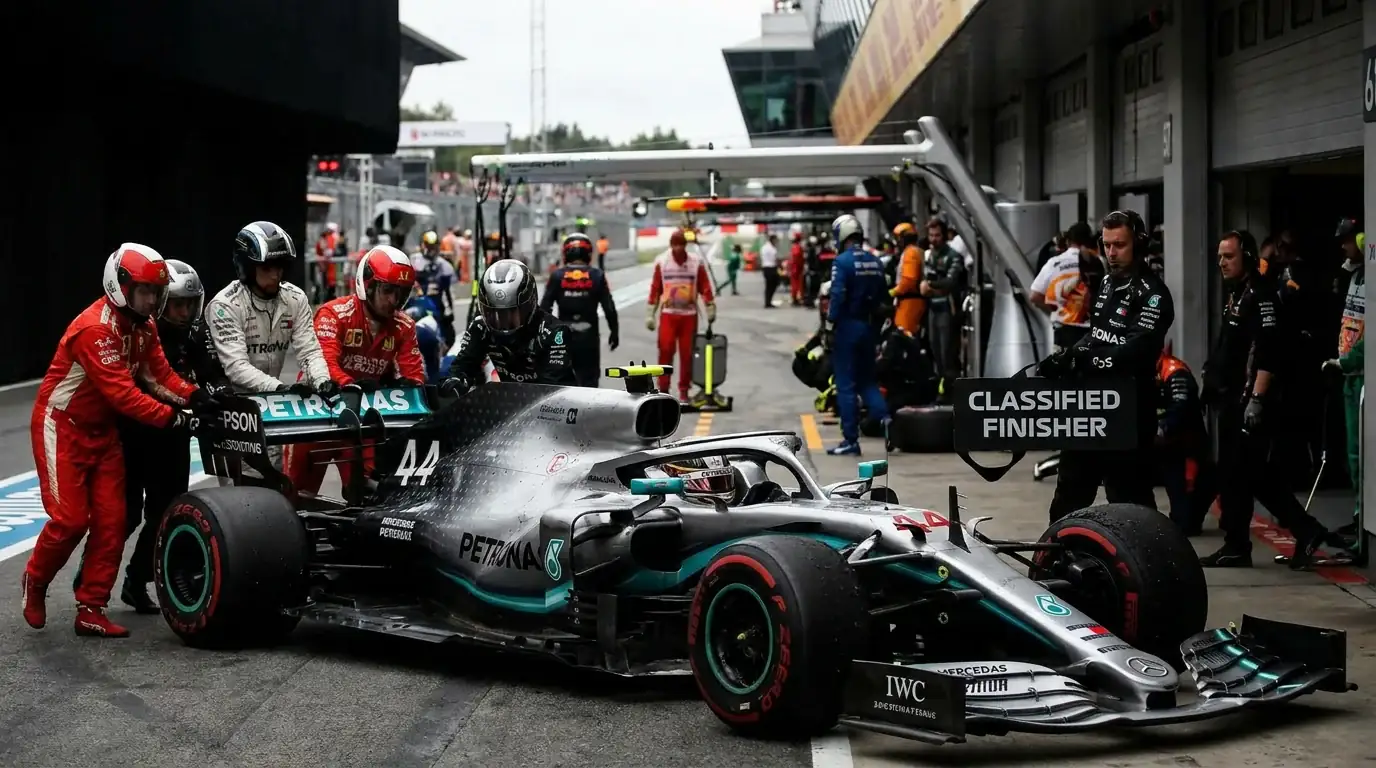
The key distinction is between “retired” and “not classified.” A driver can retire from a race – pull into the garage with a mechanical issue – but still be classified in the final results if they completed more than 90% of the race distance. A driver who retires on lap 55 of a 57-lap race will appear in the FIA classification as a finisher, albeit behind all drivers who completed the full distance. For betting purposes, this matters: some bookmakers settle retirement bets on whether the driver physically completed the race, while others settle on the official FIA classification. A driver classified despite parking the car may not count as a “retirement” for betting purposes at certain operators.
Disqualifications after the finish create another complication. If a driver completes the race but is disqualified for a technical infringement (underweight car, fuel flow irregularity, floor plank wear), most bookmakers do not treat this as a retirement. The driver finished the race; the disqualification is a post-race classification change. But the consequences flow through to other markets – head-to-head bets, podium finish bets, and points finish bets are all affected by post-race disqualifications, and the settlement depends on when the disqualification is applied relative to the bookmaker’s settlement window.
My practice is to screenshot the specific settlement rules for retirement markets at each bookmaker I use and review them before the season starts. The rules don’t change mid-season, but my memory of the specifics does fade. Having a quick-reference document saves me from placing bets that might settle differently than I expect. The broader settlement rules landscape in F1 is complex enough that dedicated study pays for itself over the course of a season.
What counts as a retirement in F1 betting – must the driver stop on track?
Not necessarily. Settlement varies by bookmaker. Some operators count any driver who doesn’t complete the full race distance as retired. Others follow the FIA classification, where a driver who completes 90% of the race distance is classified as a finisher even if they parked the car before the chequered flag. Check your operator’s specific rules.
How do bookmakers settle bets if a driver is classified despite not finishing?
Most UK bookmakers settle retirement bets based on the official FIA classification. If the FIA classifies a driver as a finisher – even if they didn’t complete every lap – the driver is typically not treated as retired for betting purposes. A few operators use their own definition of ‘finished,’ so the settlement terms are critical.
Are first-lap retirements treated differently in F1 DNF betting?
First-lap retirements count as retirements for betting purposes at virtually all UK operators. Whether they count toward named-driver DNF bets and over/under retirement totals depends on the same settlement rules that apply to retirements at any other point in the race. There is no special exemption for first-lap incidents at standard operators.
Published by the f1 Betting team.