F1 Podium Finish Betting: Why Top-Three Markets Attract Consistent Punters
 Available in US
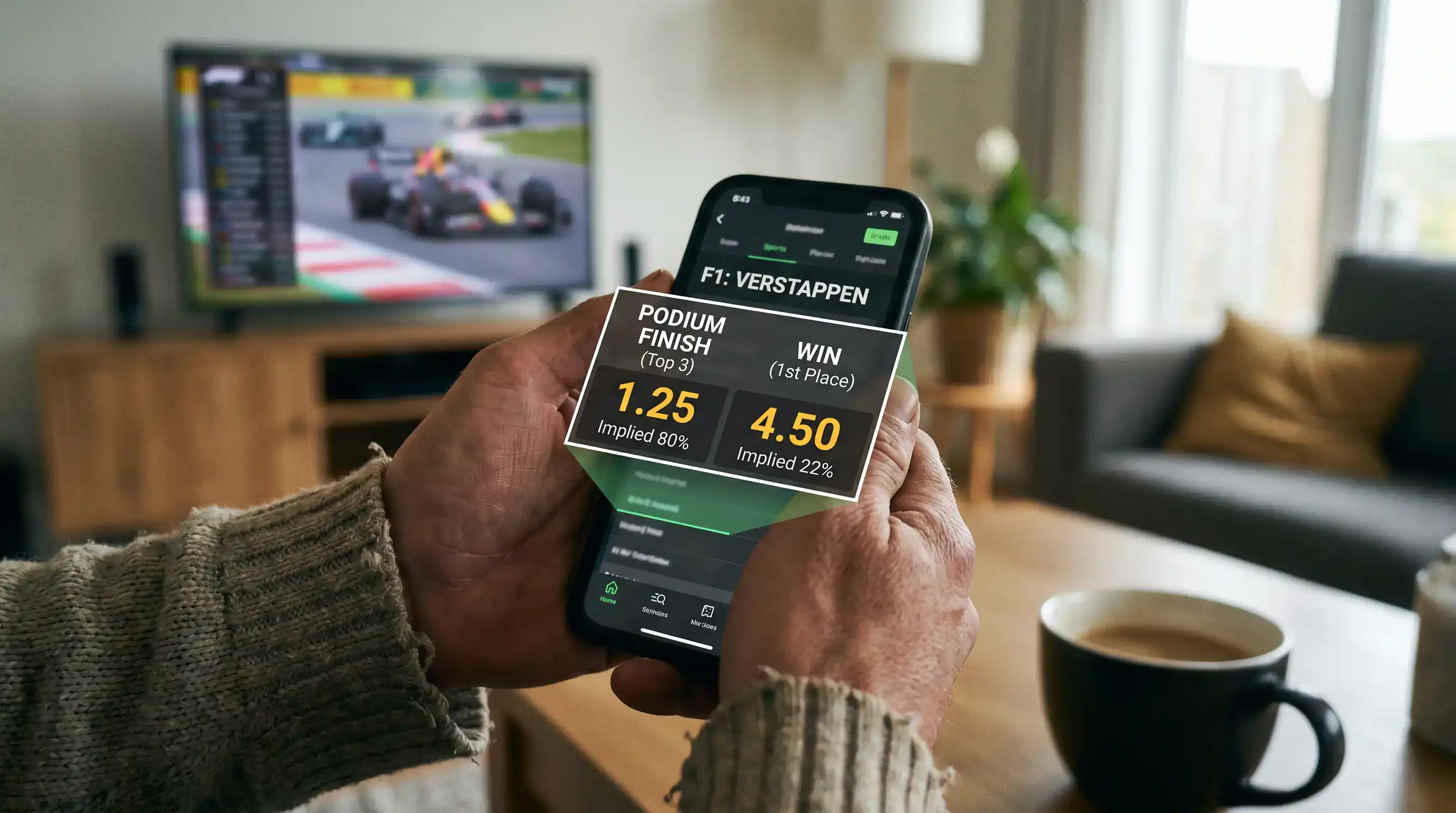
I’ve tracked every podium finish bet I’ve placed since the 2021 season. The strike rate sits at 34% across midfield selections priced between 4/1 and 12/1. My race winner strike rate over the same period? Eight percent. The numbers tell a story that most F1 punters already feel intuitively: podium finish betting offers a better balance between risk and reward than chasing outright race winners, especially when the competitive field is tight.
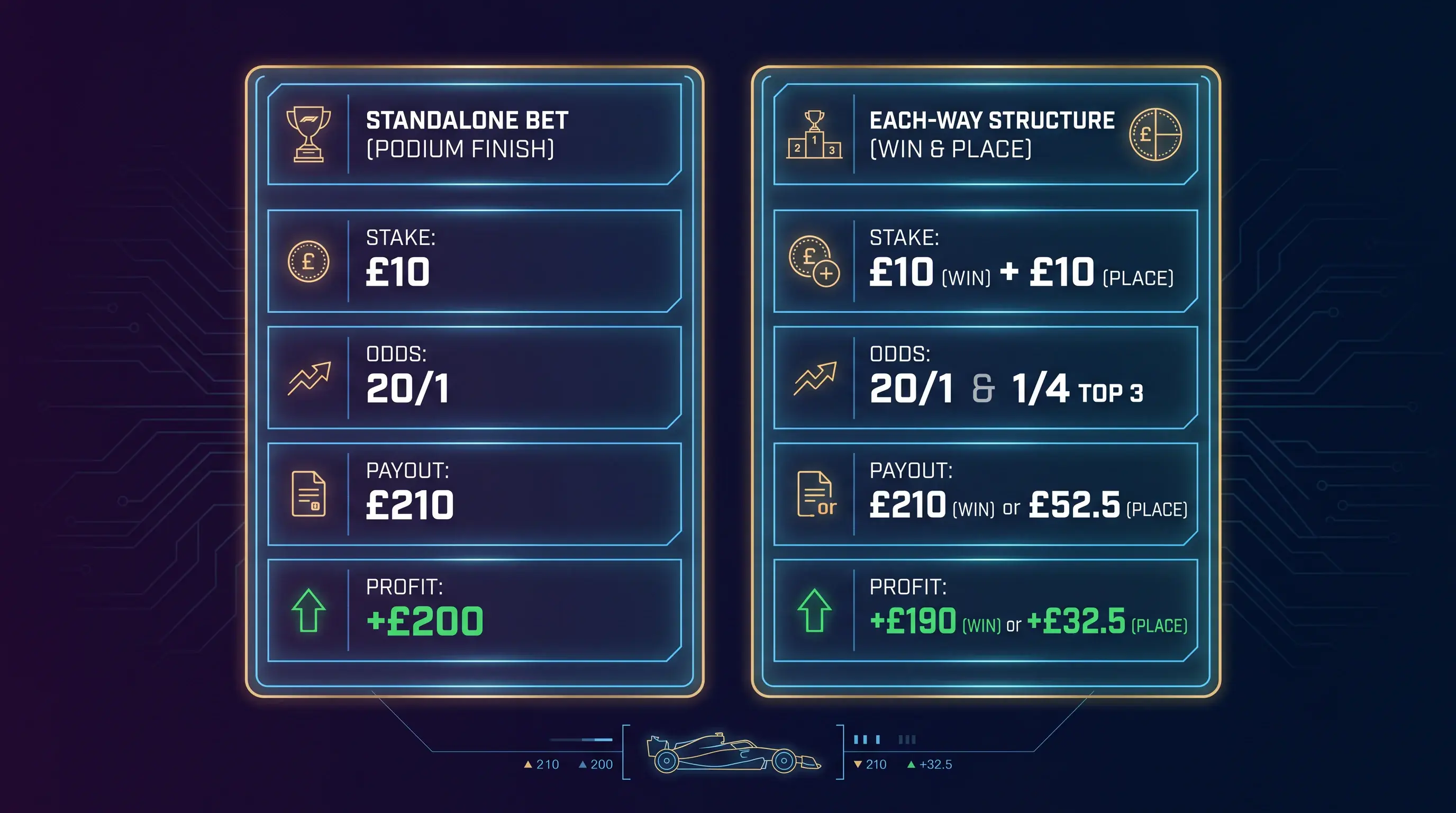
A podium finish bet backs a driver to finish in the top three of the race classification. It’s a standalone market, distinct from each-way betting, though the two are often confused. With each-way, you’re placing two bets – one on the win and one on the place. A podium finish bet is a single wager at a single price. If the driver finishes first, second, or third, you win. If they finish fourth or lower, you lose. The simplicity is what makes it effective as a long-term strategy.
How Podium Finish Bets Work and Where to Find Them
F1 still accounts for just 0.4% of the global betting handle despite an audience north of 800 million. That disparity means the podium finish market is less liquid and less efficiently priced than equivalent markets in football or tennis. For punters, less efficiency equals more opportunity – provided you do the analysis that the market hasn’t fully absorbed.
Podium finish markets are available at most major UK bookmakers, though the naming varies. Some operators list it as “top 3 finish,” others as “podium,” and a few roll it into a broader “finish position” market where you can select from a dropdown. The odds are set independently from the race winner market, which means the podium price doesn’t always align mathematically with the win price. A driver at 8/1 to win the race should, in theory, have podium odds that reflect a higher probability – but the actual podium price sometimes implies a lower or higher probability than the win price would suggest. These discrepancies are where value sits.
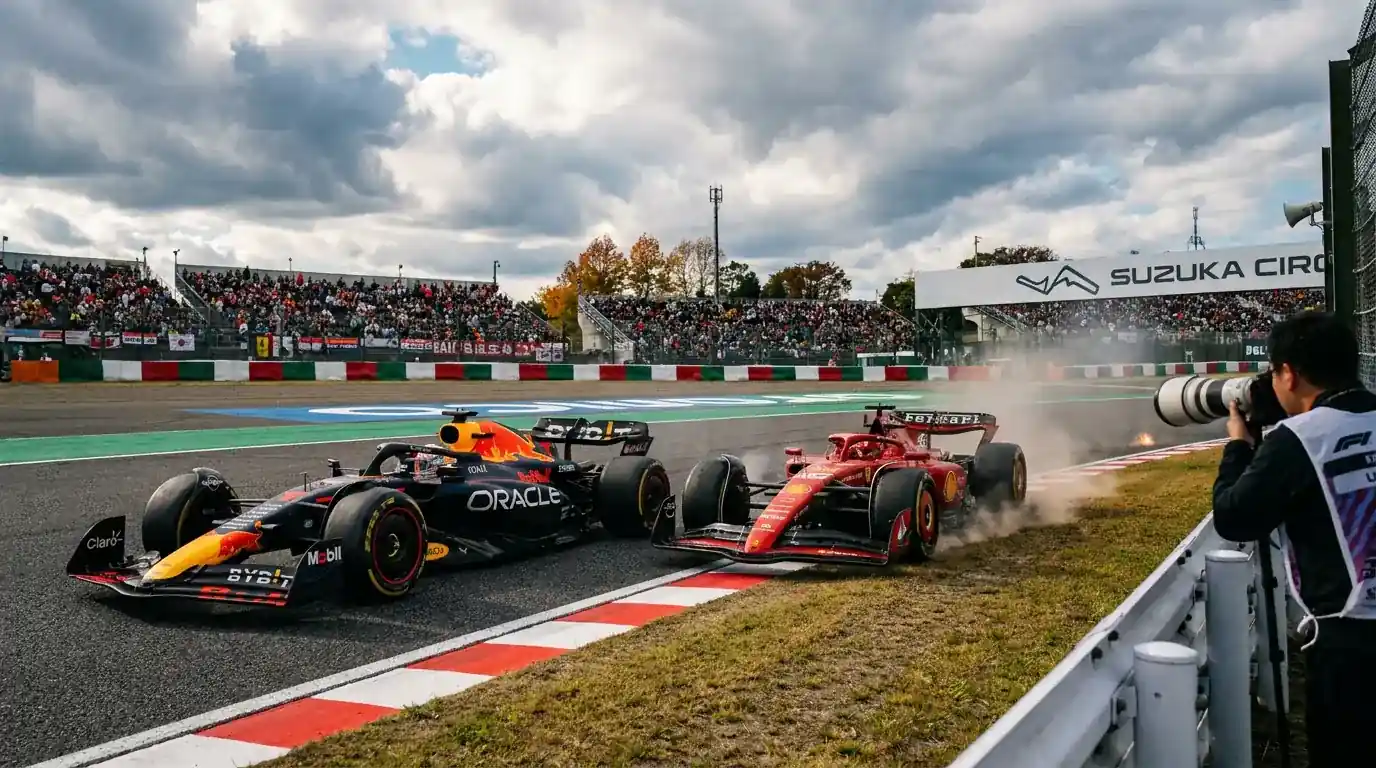
Settlement is based on the official FIA race classification, including any post-race time penalties or disqualifications applied before the results become final. If a driver crosses the line in fourth but is promoted to third by a penalty to the car ahead, your podium bet wins. Conversely, if your driver finishes third on the road but is penalised down to fourth, the bet loses. The classification that matters is the one the FIA signs off on, not what happens on the cool-down lap.
Podium Finish vs Each-Way: Which Gives Better Returns
This comparison comes up in almost every conversation I have with other F1 bettors, and the answer depends on the driver’s price and the bookmaker’s each-way terms. Twenty-eight percent of F1 fans have placed an online sports bet in the past year – the highest propensity among fans of any major sport – and many of them default to each-way without checking whether a podium finish bet would offer a better return.
Let me walk through a concrete comparison. Take a driver priced at 14/1 to win the race, with the podium finish priced at 3/1. An each-way bet at 14/1 with 1/4 odds for three places means the place leg pays 14/4 (3.5/1). So the each-way place return is slightly better than the standalone podium price – but you’re also paying double the stake because each-way is two bets. A ten-pound each-way bet costs twenty pounds. A ten-pound podium bet costs ten pounds. If the driver finishes second, the each-way returns 45 pounds on a 20-pound outlay (25 pounds profit), while the podium bet returns 40 pounds on a 10-pound outlay (30 pounds profit). The podium bet delivers a higher profit on a lower outlay.
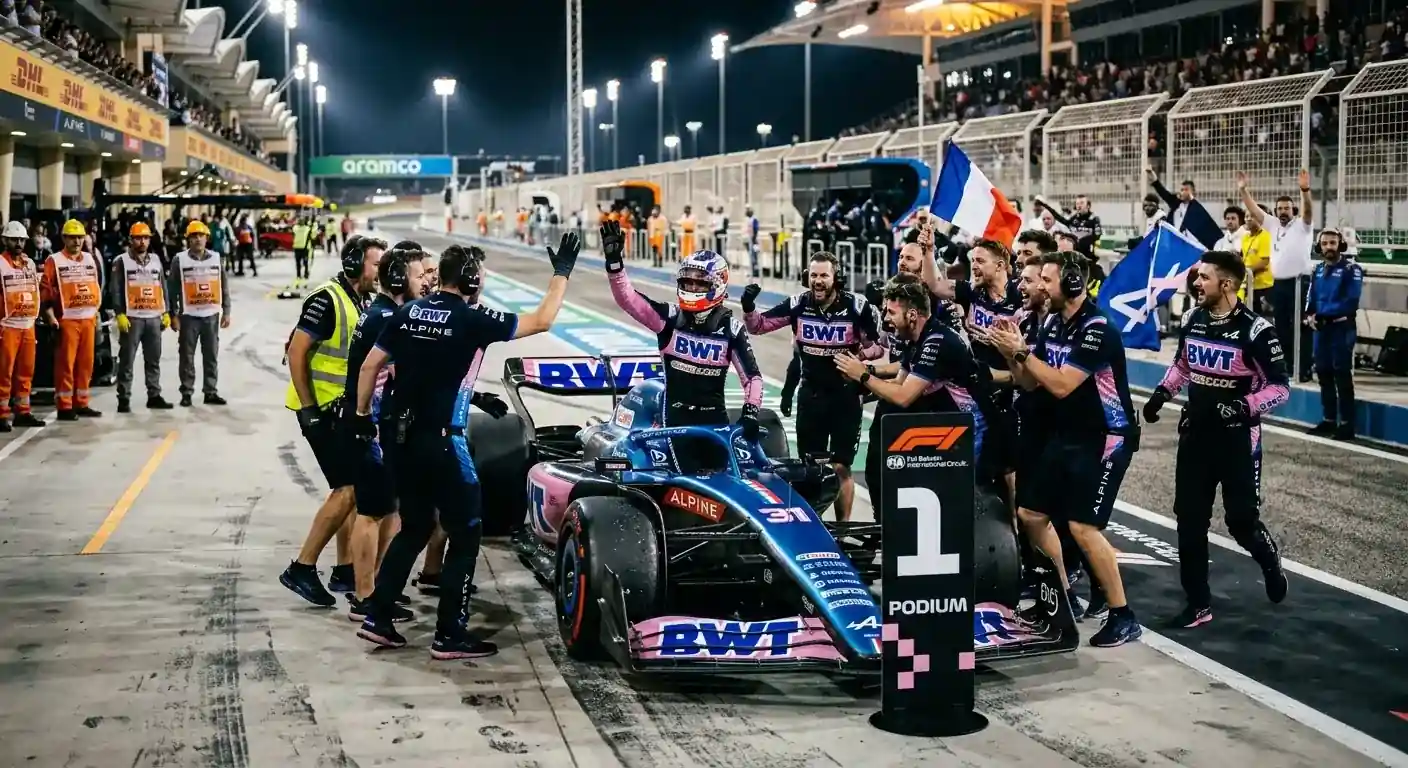
The each-way option wins when the driver actually takes the race – the win leg pays out in addition to the place leg, which the standalone podium bet doesn’t capture. If you believe the driver has a realistic shot at winning, each-way is the better structure because it captures both outcomes. If your analysis suggests the driver is more likely to finish second or third than first – which is the case for most midfield selections – the podium finish bet is more capital-efficient.
I use a straightforward rule: if I assess the driver’s win probability at above 10%, I go each-way to capture the upside. If my assessed win probability is below 10% but the podium probability is above 25%, I take the podium finish bet. This rule matches the mathematical breakpoint where the capital efficiency of the standalone podium bet exceeds the potential upside of the each-way structure.
Midfield Drivers and the Podium Long-Shot Angle
The podium market’s sweet spot – where the value concentrates – is on midfield drivers priced at 5/1 and above for a top-three finish. These are drivers in cars that aren’t expected to challenge the front-runners under normal conditions but can capitalise on chaos: safety car interventions, frontrunner retirements, rain, or strategic gambles that land perfectly.
The probability of a midfield podium varies significantly by circuit. Street circuits with high safety car rates – Jeddah, Baku, Singapore, Monaco – produce midfield podiums more frequently than any other circuit type. At these venues, the probability of at least one non-top-team driver finishing on the podium is historically above 35%. The market often underprices this because the pre-race odds are set off dry-weather, incident-free expectations that don’t materialise at these circuits.
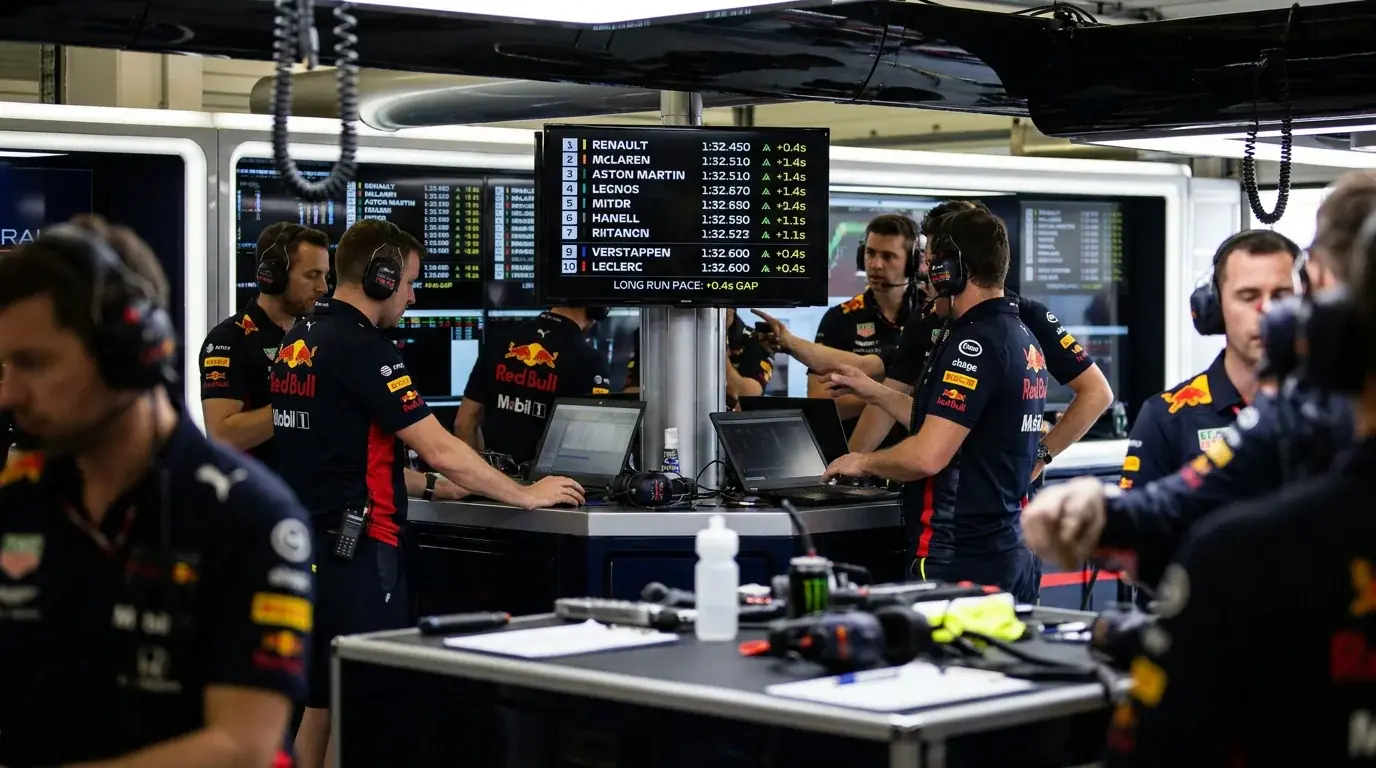
I look for three signals when identifying midfield podium value. First, strong practice pace relative to the car’s expected performance: if a midfield team is within four tenths of the leaders in FP2 long runs at a circuit where they’ve historically struggled, the car has found something. Second, a circuit with high disruption potential – the safety car and weather variables I mentioned. Third, the driver’s personal podium record: some drivers consistently convert opportunities when they arise, while others lose positions under pressure. The combination of these three factors narrows the 20-driver field to one or two realistic midfield podium candidates per race.
Season-long podium betting can function as a strategy in its own right. I allocate a fixed portion of my bank to midfield podium selections at every race, treating it as a high-strike-rate, moderate-return portfolio within my broader F1 betting approach. The each-way alternative captures similar value in a different structure, and the two approaches complement each other when used on different types of selections – each-way on longer-priced outsiders, standalone podium on the 4/1 to 8/1 range where capital efficiency matters most.
Is a podium finish bet the same as each-way top 3 in F1?
No. A podium finish bet is a single wager at a single price on a driver finishing in the top three. Each-way is two bets – one on the win and one on the place – at double the unit stake. The payout structures differ, and in many cases, the standalone podium bet is more capital-efficient for drivers you don’t expect to win outright.
What odds can I expect on a midfield driver for a podium finish?
Midfield drivers are typically priced between 4/1 and 14/1 for a podium finish at most Grand Prix events. The exact price depends on the circuit, the team’s recent form, and the competitive gap to the frontrunners. Street circuits and wet-weather races tend to compress these odds because the probability of a midfield podium increases.
Do post-race penalties affect podium finish bet settlements?
Yes. Podium finish bets are settled on the official FIA classification, which includes any time penalties, disqualifications, or position changes applied after the race. If a driver crosses the line in fourth but is promoted to third by a penalty to another car, the podium bet wins. The on-track finishing order is not necessarily the settlement order.
Written by the editors at f1 Betting.