F1 Live Betting: In-Play Markets, Timing and Race-Day Tactics
 Available in US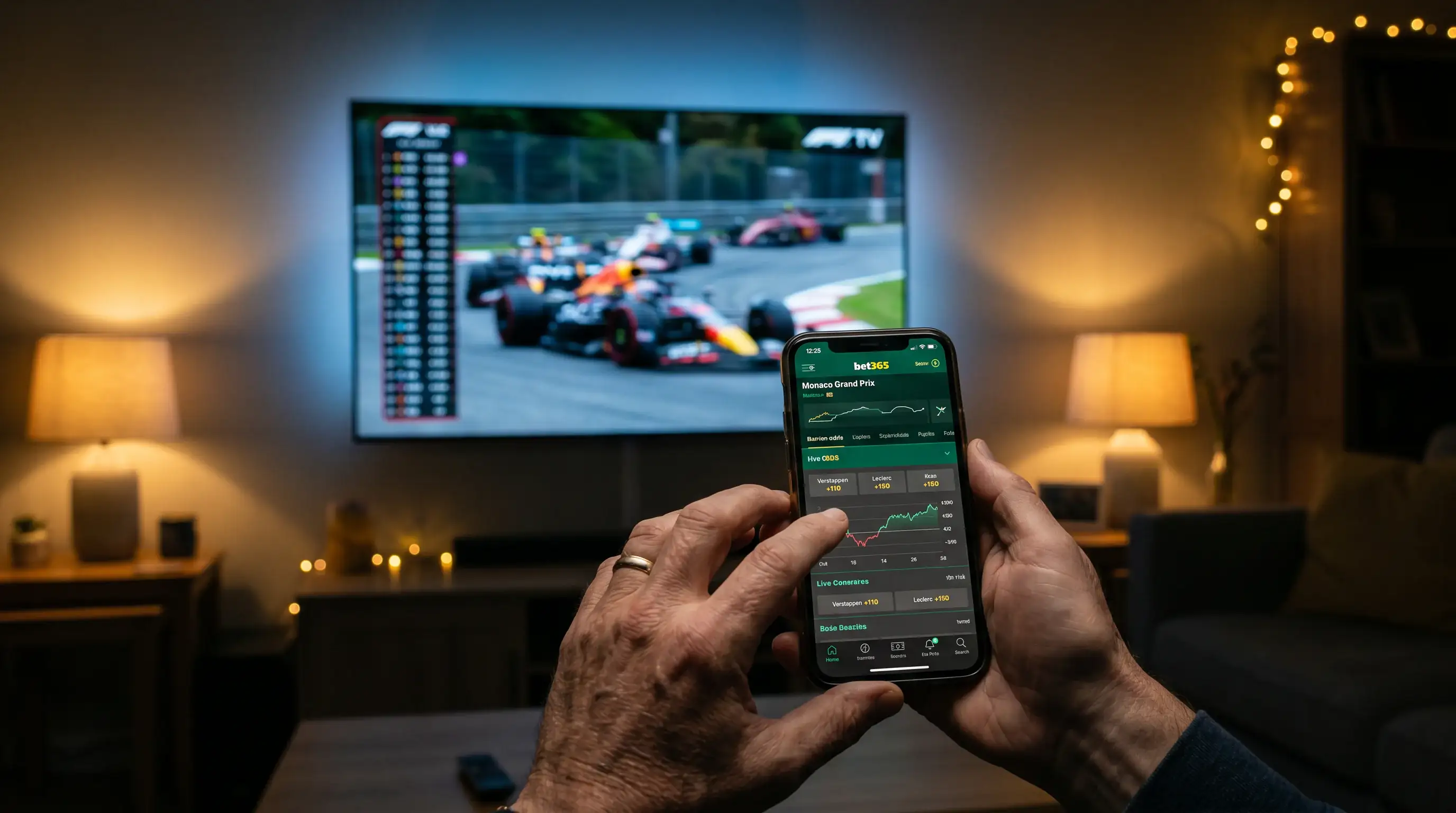
Lap 42 of a bone-dry race at Monza, and the leader’s engine starts trailing smoke. Within eight seconds, his race winner odds flip from 1.10 to suspended. The driver in second, who was drifting at 7.00 just moments before, snaps to 1.50. Thirty seconds later, the safety car is deployed and every live market on the board recalibrates. That sequence — less than a minute of real time — is why F1 in-play betting is the most volatile, the most data-intensive and, in my experience, the most rewarding corner of motorsport wagering.
Live F1 viewership has surged: race broadcasts are up 19.8% year on year, qualifying by 22.8% and practice sessions by 24.9%. More people are watching in real time, and many of them want to act on what they see. This guide covers how in-play F1 markets actually function, which markets survive into the race, how safety cars and pit stops reshape the odds landscape and — crucially — the information asymmetry between you and the bookmaker’s algorithm during a live Grand Prix. Each car on the grid generates roughly 700 data points per second, and understanding how that data flows through the system is the difference between informed in-play punting and blind reaction.
Table of Contents
- How In-Play F1 Betting Works Lap by Lap
- Which Markets Stay Open During the Race
- Safety Cars and Red Flags: When Live Odds Collapse and Spike
- The Pit Window: Timing Your In-Play Bets Around Strategy Calls
- Cash Out During a Grand Prix: When It Helps and When It Costs
- Data Feeds, Latency and What You Actually See vs What the Bookmaker Knows
- Live Betting FAQ
How In-Play F1 Betting Works Lap by Lap
I remember a conversation with a punter who assumed F1 live betting worked like football — place a bet at any point, odds barely move between goals and the market stays open for ninety minutes. F1 is nothing like that. The odds on your screen are recalculated continuously, driven by position changes, timing gaps, tyre degradation data and strategy calls. A two-second gap closing to half a second over three laps moves the head-to-head price between those two drivers measurably. A pit stop that drops a leader behind a slower car on an overcut shifts the race winner market before the TV graphic even updates the running order.
Mark Wrigley, F1’s Head of Betting, spent a year working out how to convert the sport’s massive data output into something that genuinely engages bettors — his aim being substance over gimmick. The result is a live product where markets respond to the telemetry feed rather than just the broadcast. When a driver’s tyre degradation spikes on lap 18, the in-play model adjusts their projected finishing position and reprices accordingly. You, watching on TV, might not notice the degradation for another three laps. The bookmaker’s model has already moved.
In-play F1 betting operates on a continuous open/suspend cycle. Markets are open when the race is running under green flag conditions. They suspend momentarily during major incidents — a crash, a safety car deployment, a red flag — while the model recalculates, then reopen at adjusted prices. The frequency of these suspensions varies by race: a clean, processional race might see markets open for 90% of the laps, while a chaotic wet race might suspend repeatedly as incidents pile up. The punter’s challenge is acting in the windows between suspensions, when the price reflects the last known state but the race situation may already be evolving.
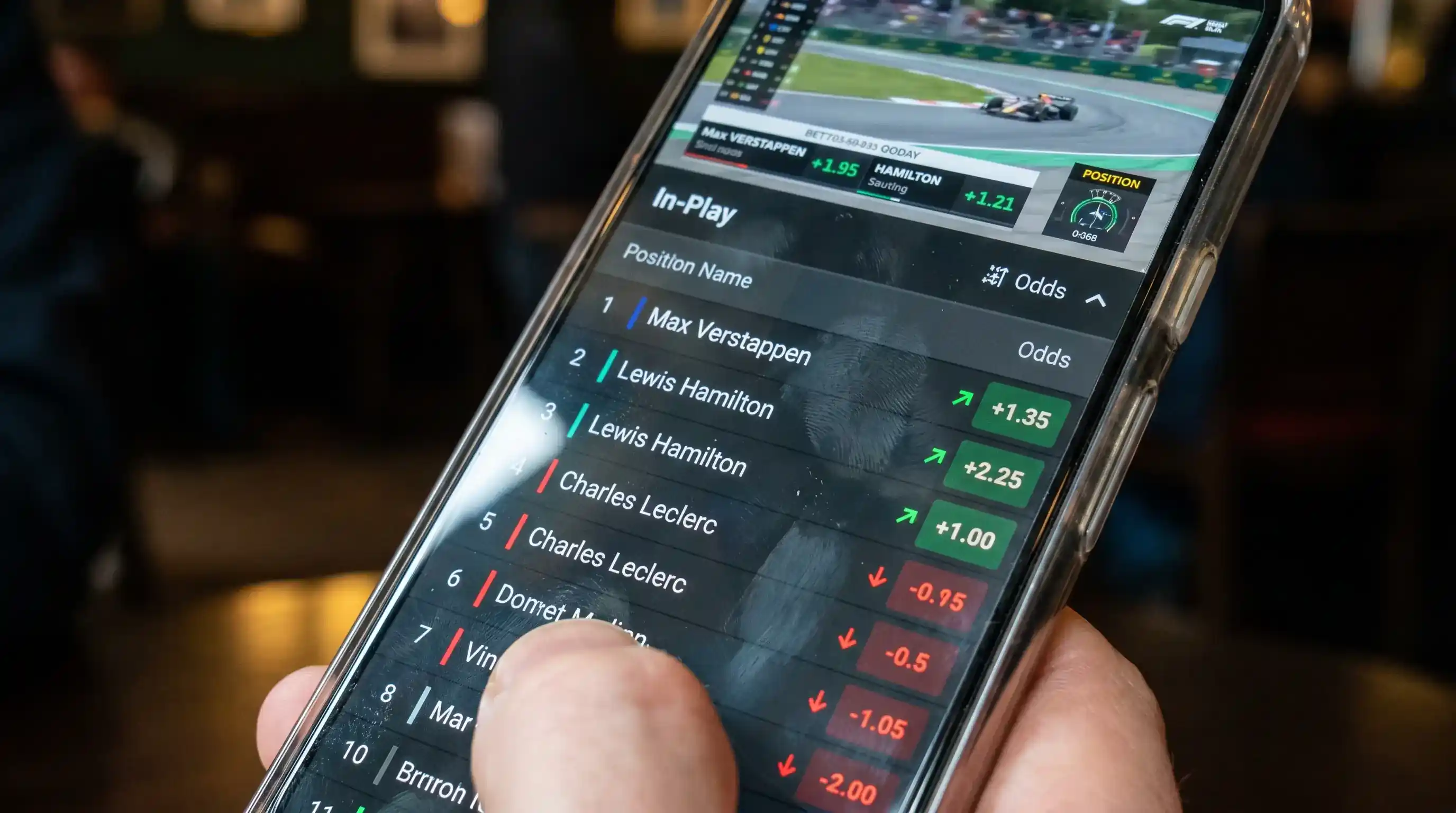
One practical reality: in-play F1 bets are subject to acceptance delays. Unlike pre-race markets where your bet confirms instantly, live bets go through a brief review period (usually one to five seconds) during which the bookmaker checks whether the price has moved since you submitted. If the odds have shortened in that window, your bet may be rejected or offered at the new price. This delay is the cost of doing business in a market that moves as fast as F1.
Which Markets Stay Open During the Race
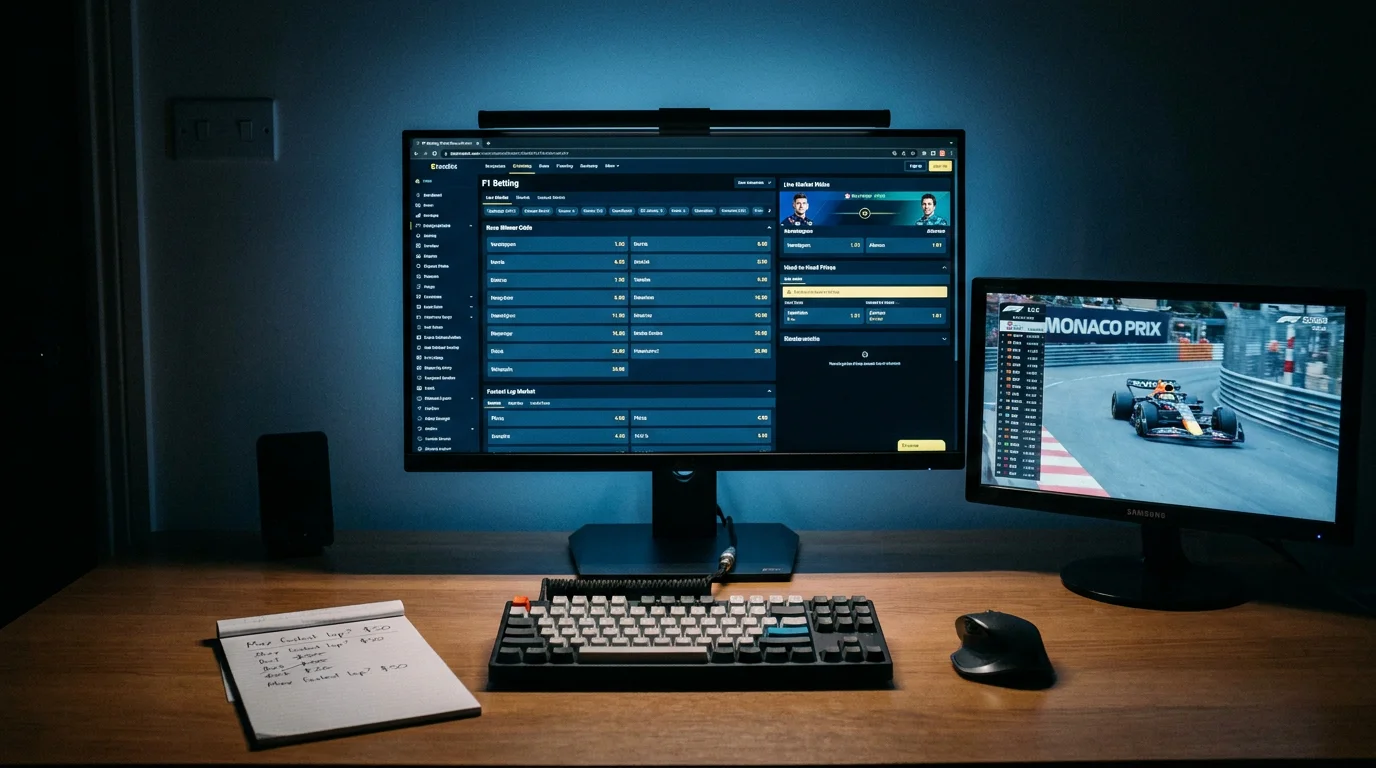
Not every pre-race market survives into the live phase. Race winner remains open throughout and is the most liquid in-play market by a wide margin — reflecting the sheer scale of a sport with 827 million fans globally, many of whom follow races in real time. Podium finish and top-six finish typically stay open too, though with thinner pricing as the field narrows and outcomes become more predictable in the closing laps. Head-to-head markets are available live at most major operators, making them a useful vehicle when you spot a pace advantage developing between two specific drivers.
Fastest lap is one of the more interesting in-play markets because its probability distribution changes dramatically in the final ten laps. Early in the race, fastest lap prices spread evenly across the frontrunners. In the closing stages, once it becomes clear which teams will pit for fresh tyres to chase the bonus point, the market collapses to two or three realistic contenders. Timing your fastest lap bet for that late-race window — after the strategy picture clarifies but before the market adjusts fully — is one of the more repeatable edges I have found in live F1 betting.
Safety car yes/no and total retirements markets are available live at some bookmakers but not all. Where they exist, these markets are heavily traded in the first ten laps — the phase where first-lap incidents and mechanical issues are most likely. The data density of modern F1 cars means that reliability warnings from telemetry (elevated temperatures, unusual vibrations) can be detected by the bookmaker’s model before a failure actually happens. That is a genuine information disadvantage for the in-play punter on these specific markets, and one reason I approach live prop markets with more caution than live race-winner markets.
The markets that close earliest are typically the niche props: first driver to pit, number of pit stops for a named driver and starting compound markets. These either settle within the first third of the race or become trivially predictable, so bookmakers close them once the relevant events have occurred. Plan your in-play activity around the markets that stay open and liquid for the full race distance rather than chasing thin niche markets that may suspend without warning.
Safety Cars and Red Flags: When Live Odds Collapse and Spike
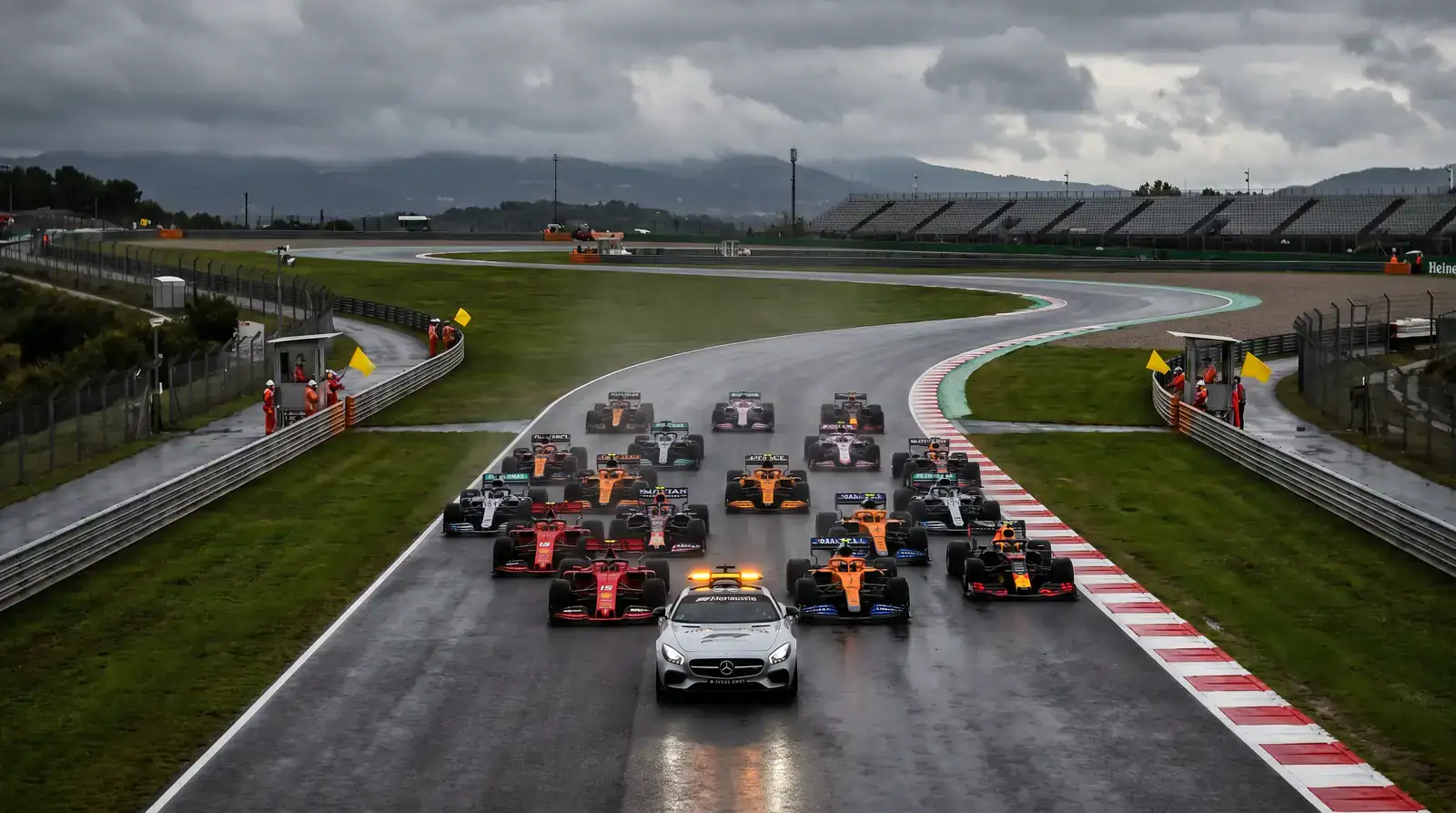
Nothing reshapes a live F1 market faster than a safety car. I have tracked price movements across 96 safety car deployments over the past four seasons, and the pattern is remarkably consistent: the leader’s win probability drops by 8-15 percentage points (depending on the gap they held), the top three compress to nearly equal pricing and any driver outside the top ten who has not yet pitted suddenly becomes relevant again. The entire strategic picture resets because the field bunches up, pit-stop windows reopen and fresh-tyre runners get a free pass to rejoin contention.
The mechanism is straightforward. Under safety car conditions, the gaps between cars collapse to near zero. A leader who had built a twelve-second cushion now has the entire top five within DRS range for the restart. That cushion represented real earned advantage, and the safety car erases it in a single lap. Bookmakers price this instantly by widening the race winner market and shortening the outsiders. If you held a pre-race bet on the leader, your position has just weakened without your driver doing anything wrong.
Red flags are more extreme. The race stops entirely, cars return to the pit lane and teams can change tyres and make repairs under parc ferme conditions (the specific repair rules depend on the regulations in force). A red flag restart is essentially a standing start with potentially altered car states — new tyres, repaired damage, revised strategy. The market suspends during the stoppage and reopens at radically different prices. Red flags at circuits like Jeddah or Monaco, where walls are close and incidents common, can transform a predictable race into an open contest within minutes. For a deeper look at how deployment rates vary by circuit and how bookmakers settle these specific markets, my safety car betting guide breaks down the track-by-track data.
Virtual safety car periods (VSC) produce a milder version of the same effect. The gaps reduce but do not fully collapse — drivers maintain position but slow to a delta time. VSCs cause smaller odds shifts than full safety cars, but they still disrupt strategy by changing the relative value of pit stops. A driver on the cusp of pitting gains more from a VSC pit stop (where less time is lost relative to full-speed conditions) than from pitting under green flag, which means VSC periods create micro-edges for punters who understand the strategy calculus in real time.
The Pit Window: Timing Your In-Play Bets Around Strategy Calls
The pit window — that span of laps when the first round of stops becomes strategically optimal — is the most predictable major odds movement in a live F1 race. You can estimate it before the race starts using tyre degradation data from practice, and then watch the market confirm or contradict your estimate as the opening stint unfolds.
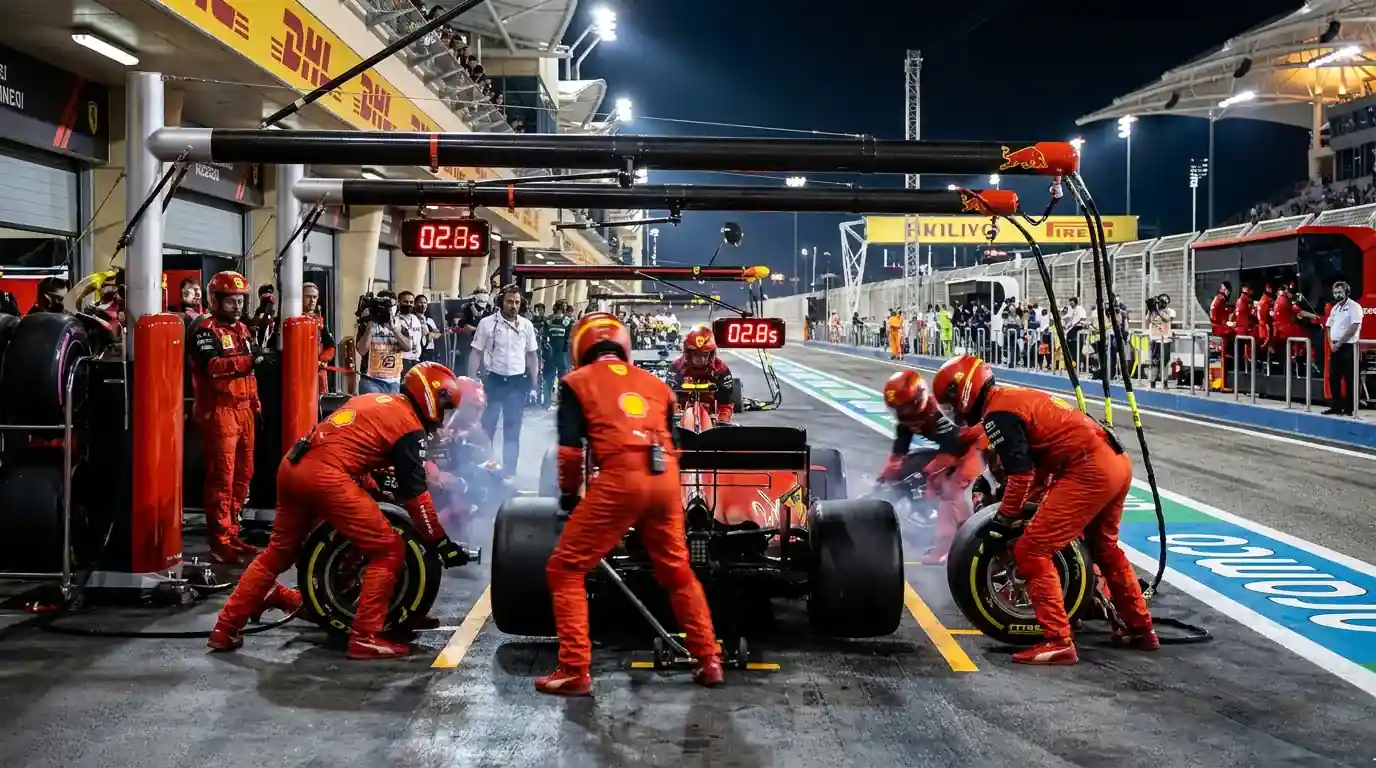
A typical one-stop race on a medium-degradation circuit has a pit window between laps 18 and 28 for cars starting on medium-compound tyres. During that window, the race winner market becomes its most volatile. The driver who pits first (the “undercut”) gains track position if the fresh-tyre advantage outweighs the time lost in the pit lane. The driver who stays out (“overcut”) bets on the clear track and lower fuel load to compensate. These decisions split the field’s strategy and create divergent odds paths for five to ten laps until the picture resolves.
My approach to pit-window in-play betting is to identify the two or three most likely pit-window scenarios before the race starts and then wait to see which one materialises. If the high-degradation scenario plays out and the front-runners pit early, I look for value on drivers who extended their first stint — they will appear artificially low in the live standings (because they have not pitted) but may emerge ahead once the cycle completes. Conversely, if the degradation is lower than expected and the window shifts later, the early-stoppers lose time and the overcut strategies gain an edge.
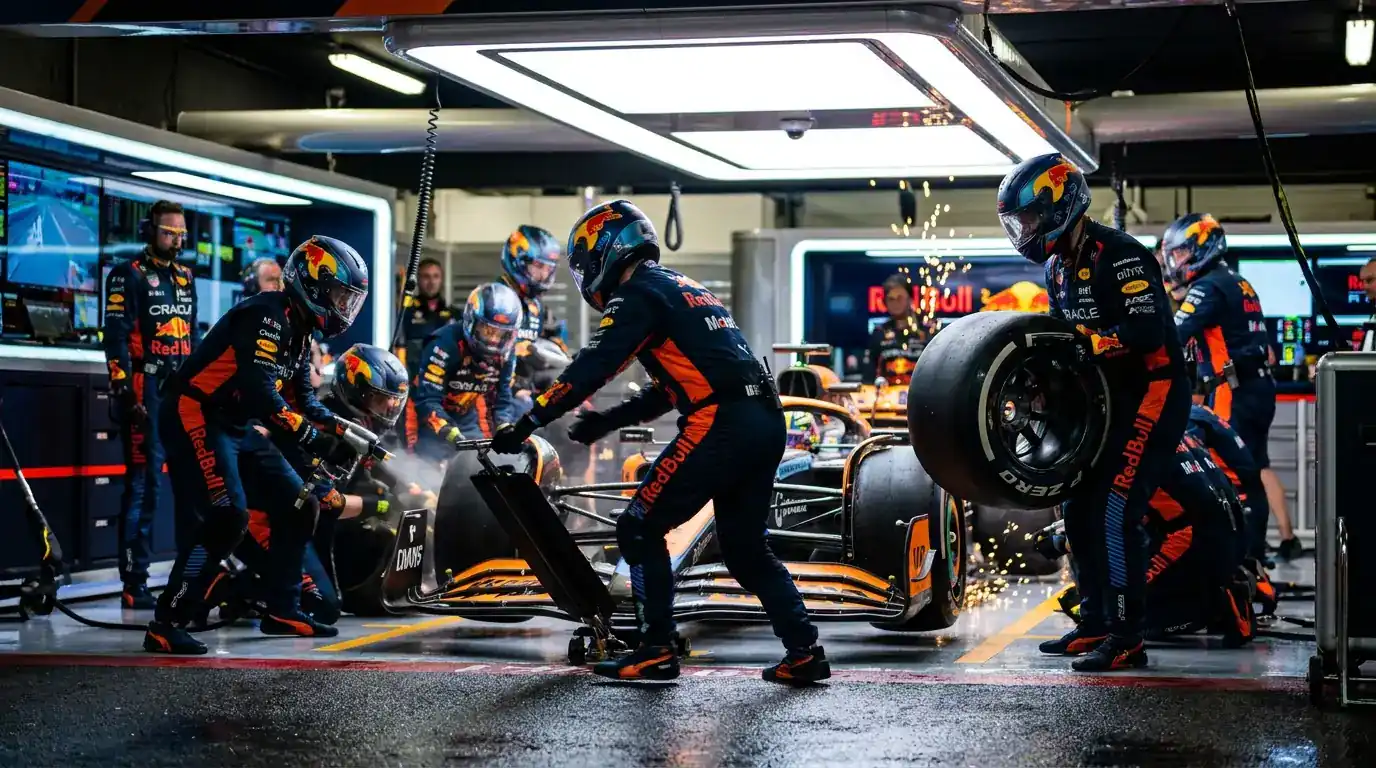
The key discipline is patience. Acting during the pit window itself is risky because the market is repricing rapidly and acceptance delays are at their longest. Acting immediately after the pit cycle completes — when the new running order is established but the market has not fully recalibrated — offers a better risk-reward ratio. In practice, this means placing your in-play bet between laps 28 and 35 on a typical circuit, once the strategic dust has settled but before the market fully prices in the new competitive picture.
Cash Out During a Grand Prix: When It Helps and When It Costs
Cash out is the feature that generates the most emotional decisions in F1 betting. Your driver is leading on lap 50 of 57, your pre-race 8/1 bet is sitting at a cash-out value of eighty-five pounds on a ten-pound stake, and the question is: take the guaranteed money or ride the final seven laps? The UK’s online betting sector processed a record 26.1 billion bets and spins in Q1 2025-26 alone — a six-percent year-on-year increase — and cash-out functionality is a significant driver of that volume.
The maths of cash out is always tilted against the punter. The cash-out value offered is the bookmaker’s current assessment of your bet’s worth minus their margin. If your bet’s fair value based on implied probabilities is one hundred pounds, the cash-out offer might be eighty-five or ninety. That gap is the price of certainty. Over a large sample of bets, consistently cashing out leaves you worse off than letting bets run to settlement, because you are systematically accepting below-fair-value prices for the privilege of locking in a profit early.
That said, there are scenarios where cash out makes rational sense. If new information emerges during the race that your pre-race analysis did not account for — a reliability warning, a sudden weather change, a penalty investigation — the cash-out option lets you reduce exposure to an outcome that has become less likely than when you placed the bet. The key is using cash out as a risk-management tool based on changed circumstances, not as an emotional response to seeing a big number on your screen. Partial cash out, where you secure a portion of the profit and let the remainder ride, is a useful middle ground when your conviction has weakened but not collapsed.
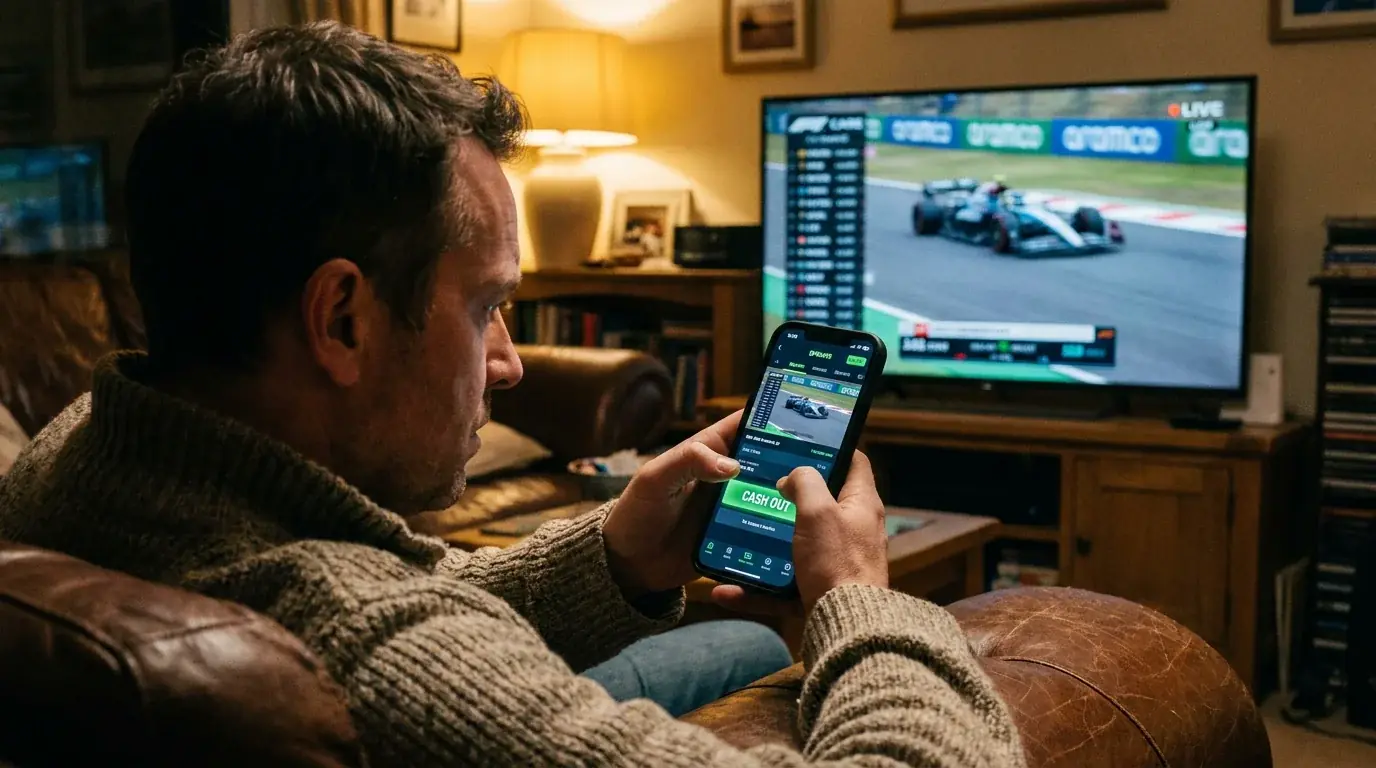
I use cash out perhaps three or four times per season — always tied to a specific piece of information that meaningfully shifted my probability estimate downward. The rest of the time, I let bets settle. The discipline is harder than it sounds with seven laps to go and a cash-out offer flashing on your phone, but the long-term numbers support it.
Data Feeds, Latency and What You Actually See vs What the Bookmaker Knows
Here is the uncomfortable truth about in-play F1 betting: you are trading against someone who sees more data, sees it faster and processes it with algorithms you cannot match. The bookmaker’s pricing model ingests the official telemetry feed — thousands of real-time data points per second across all 20 entries — and adjusts live odds before the TV broadcast even shows the relevant on-screen graphic. A representative from Caesars Entertainment described how integrating ALT Sports Data’s modelling and real-time official data has elevated their F1 product, giving customers a more dynamic experience of every moment of the race weekend. The word “dynamic” is doing heavy lifting there: what it means in practice is that the bookmaker’s odds reflect the telemetry three to ten seconds before you see the corresponding event on your screen.
That delay is not a conspiracy. It is a structural feature of how data flows in F1. Timing data travels from the car to the FIA timing system, then through the official data supplier to licensed bookmakers, who feed it into their pricing algorithms. The TV broadcast follows a parallel but slower path: camera angles are chosen by a director, graphics are rendered and the feed reaches your screen with a production delay of several seconds. The punter watching on TV and the bookmaker’s algorithm are working from the same underlying data, but the algorithm receives it first and acts on it automatically.
What can you do about this? First, accept it. In-play F1 betting is not a level playing field in terms of data speed, and pretending otherwise leads to bad decisions. Second, focus on the areas where human judgement still beats algorithmic processing. Algorithms price based on current telemetry; they are weaker at anticipating strategic decisions that depend on team-specific patterns. If you know that a particular team always brings in their second driver to cover a safety car, or that a driver tends to push aggressively in the opening laps of a restart, you hold qualitative information that the model underweights. Third, time your bets for moments when the telemetry advantage is smallest — during safety car periods (when cars are running at reduced pace and telemetry reveals less), immediately after pit windows complete (when the strategic picture stabilises) and in the final five laps (when the race outcome becomes increasingly binary and data sophistication matters less than track position).
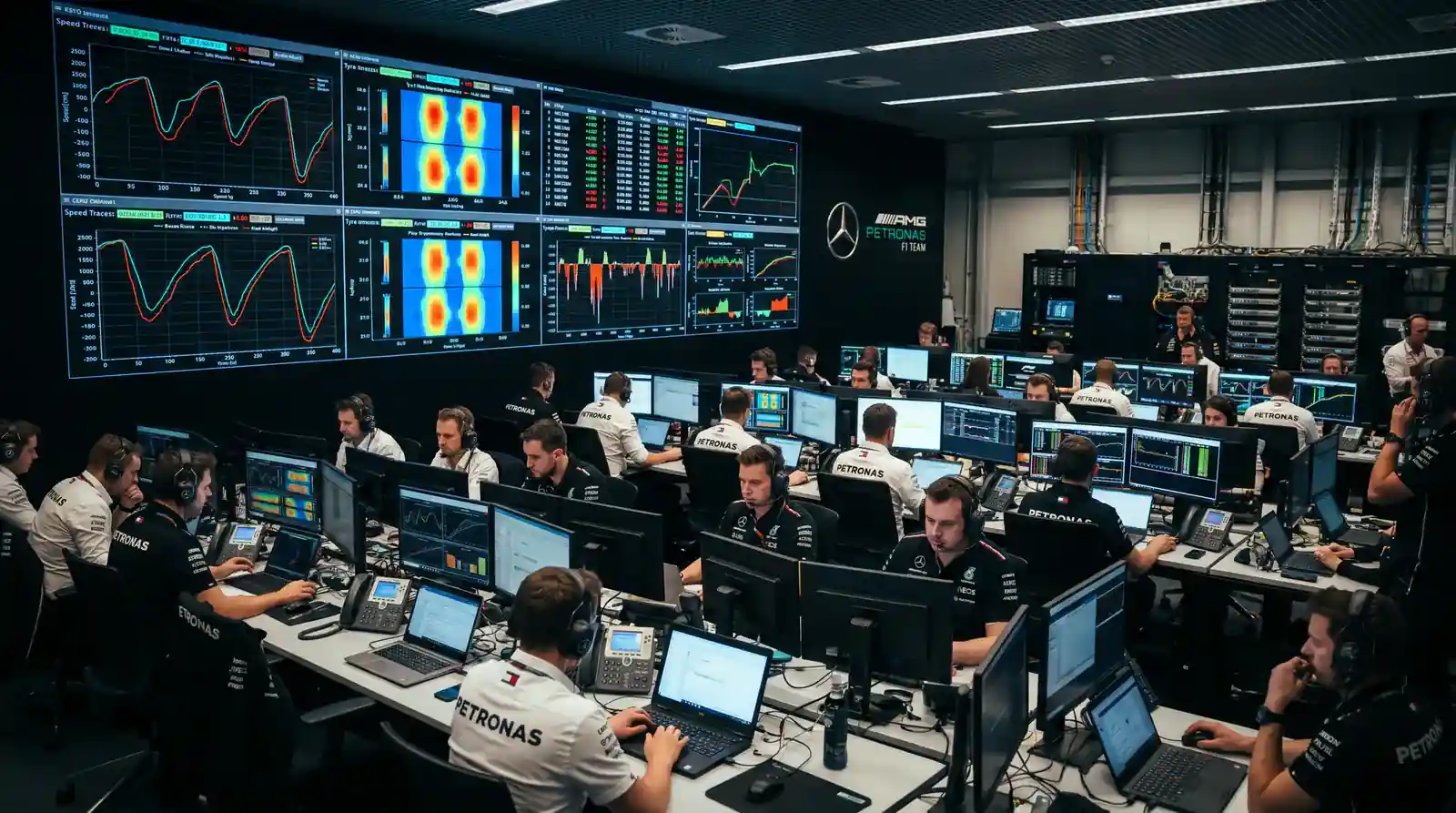
The latency gap will narrow as F1’s data ecosystem matures and more of the telemetry becomes publicly accessible. For now, the edge in live F1 betting belongs to punters who combine fast visual reading of the race with strategic anticipation — not to those who try to out-speed the algorithm on pure data.
Live Betting FAQ
Can I place live bets on every lap of an F1 race?
Markets are open during green flag racing but suspend during major incidents, safety car deployments and red flags. On a clean race, live markets are available for the vast majority of laps. On a disrupted race, repeated suspensions may limit your betting windows significantly. Acceptance delays of one to five seconds also apply, meaning your bet may be rejected if odds move between submission and confirmation.
What happens to my in-play bet if the race is red-flagged and not restarted?
If the race is stopped and not restarted, most UK bookmakers settle bets based on the classification at the point of stoppage, provided enough of the race distance has been completed (typically 50% or more). If the race is abandoned before the minimum distance, bets are usually voided and stakes returned. Settlement terms vary by operator, so check the specific F1 rules of your bookmaker before placing in-play bets at rain-prone or incident-heavy circuits.
How fast do F1 live betting odds update?
Bookmaker odds update continuously during green flag racing, driven by real-time telemetry data processed through algorithmic models. Major repricing occurs after position changes, pit stops, safety car deployments and incidents. The bookmaker’s model typically reflects data three to ten seconds before the TV broadcast shows the corresponding event, creating a structural latency gap between what you see and what the odds already reflect.
Is cash out available for F1 in-play bets?
Yes, most major UK bookmakers offer cash out on F1 in-play bets, including partial cash out. The cash-out value is recalculated continuously based on the current race situation. Be aware that the offered value includes the bookmaker’s margin, so it will always be below the theoretical fair value of your bet. Cash out is a risk-management tool best used when new race information materially changes your assessment, not as a reaction to seeing a profitable number on screen.
Written by the editors at f1 Betting.