F1 Margin of Victory Betting: Predicting Gaps at the Finish Line
 Available in US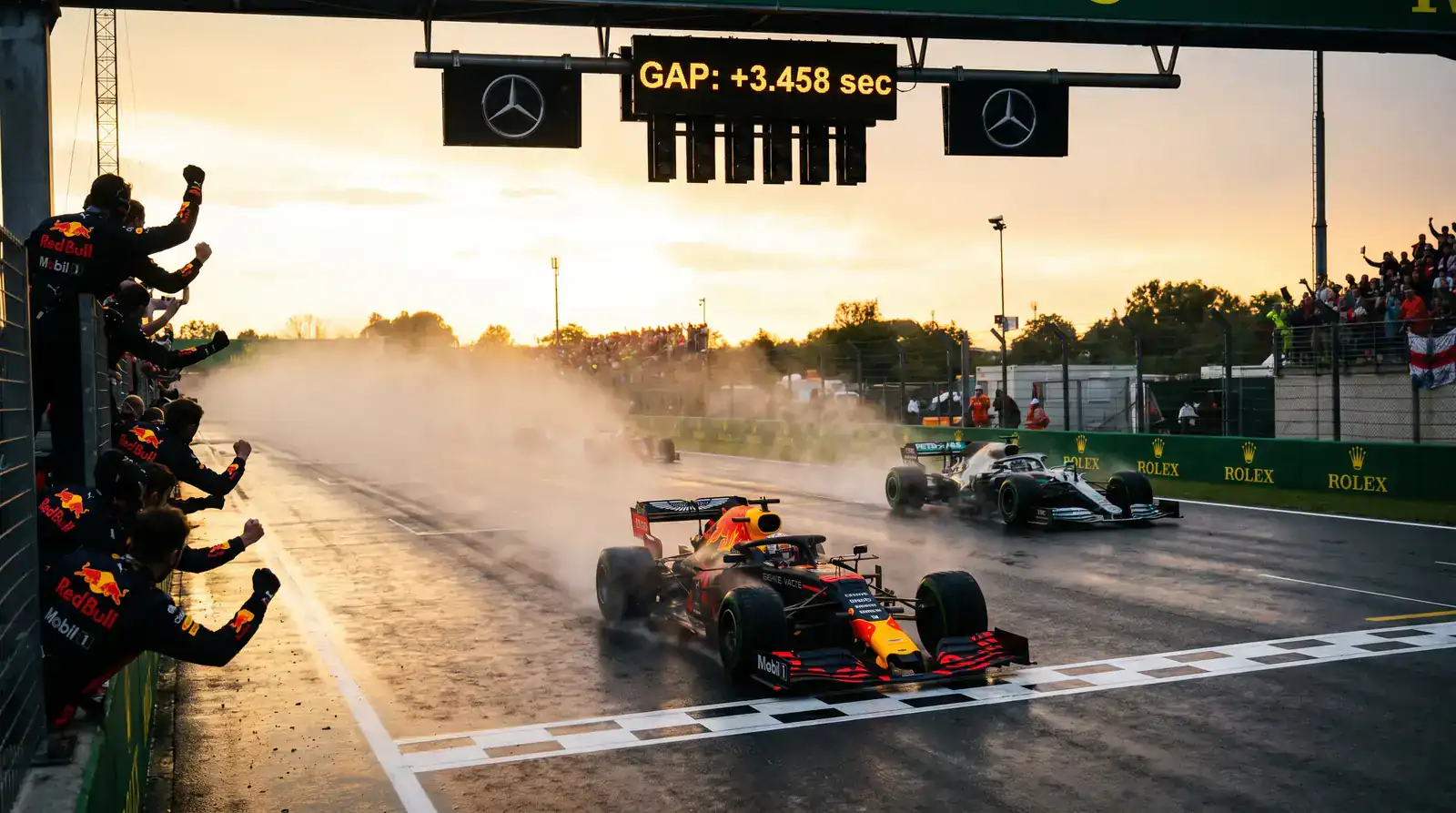
Verstappen won the 2023 British Grand Prix by 3.798 seconds. I’d taken the under on a 5.5-second winning margin at 4/5, and it landed comfortably. The interesting part was that the margin was actually closer than most people expected going into the final stint – Hamilton had clawed back two seconds in the last ten laps. Margin of victory betting forces you to think about not just who wins, but how the race unfolds from start to finish. It’s a market that rewards genuine race craft knowledge rather than simple form analysis.
The margin of victory market lets you bet on the gap between the race winner and the second-placed finisher. Bookmakers set an over/under line – typically between 2.5 and 10.5 seconds depending on the circuit and competitive dynamics – and you wager whether the actual winning gap will exceed or fall below that figure. Some operators also offer banded markets: winning margin 0-5 seconds, 5-10 seconds, 10-20 seconds, or 20 seconds and above.
What Drives the Winning Gap in Modern F1
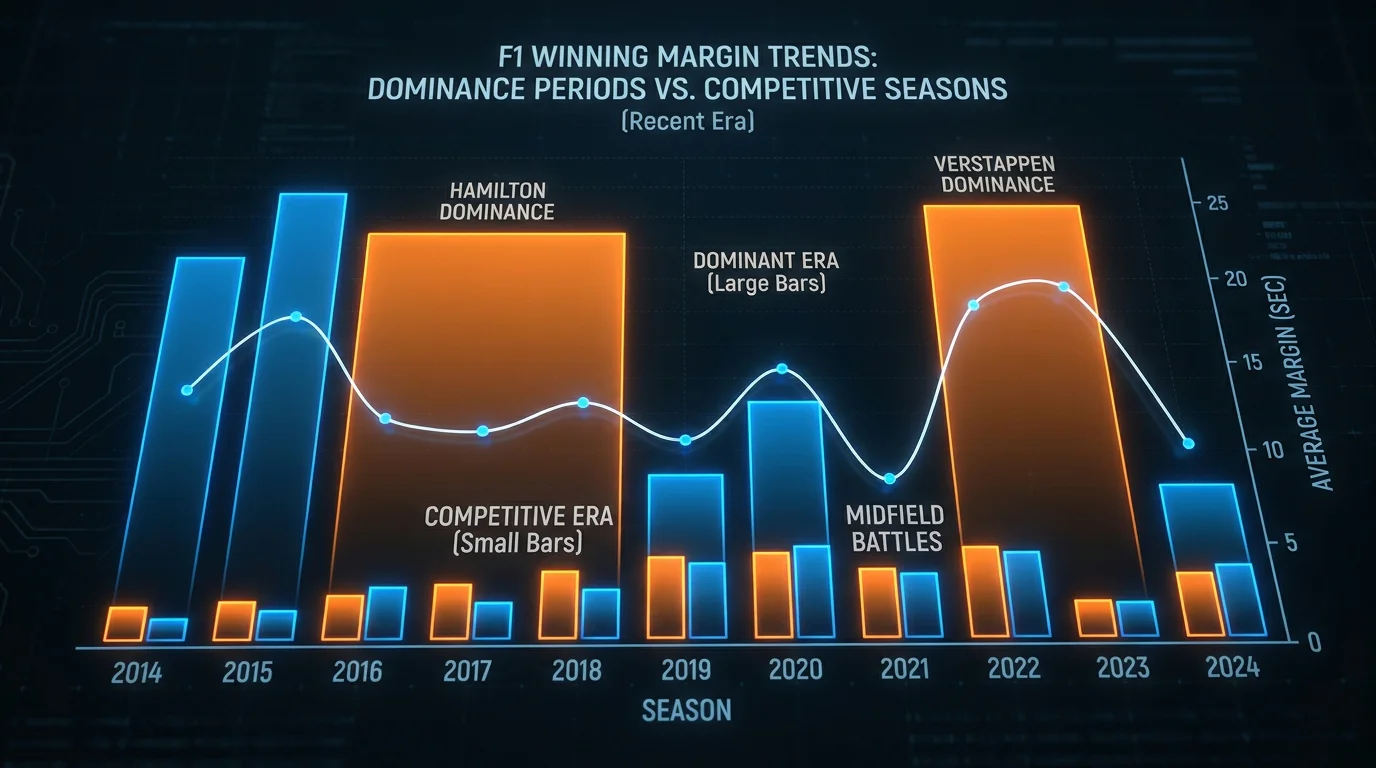
Jonny Haworth, F1’s Director of Commercial Partnerships, has talked about the “jeopardy” that the 2026 regulation changes will inject into the sport. That jeopardy directly impacts margin of victory markets because closer competition means tighter finishing gaps. The trend over the past decade has been toward larger margins during dominant eras (Verstappen 2023, Hamilton 2020) and tighter margins during competitive seasons. Understanding where the current season sits on that spectrum is the starting point for margin of victory analysis.
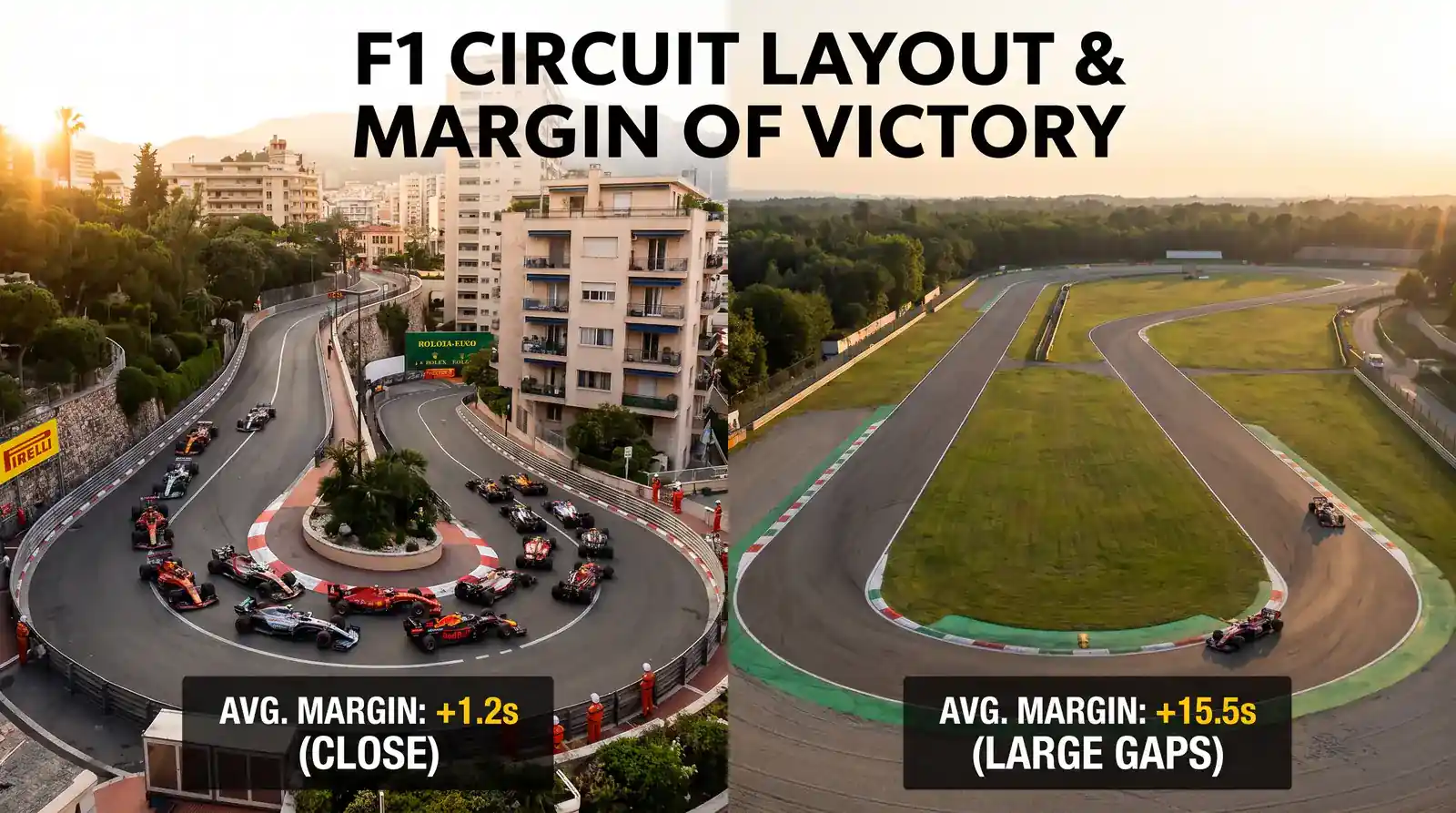
Three factors dominate the winning margin at any given race: car performance differential, circuit characteristics, and late-race incidents. A dominant car at a power-sensitive circuit can open a gap of twenty seconds or more – Verstappen at Spa in 2023 won by over twenty-two seconds. The same car at Monaco, where track position matters more than outright pace, produces a much tighter margin because there’s nowhere to build the gap. F1 attendance hit 6.7 million across the 2025 season, and the fans at circuits like Spa witness fundamentally different racing dynamics than those at tight street venues.
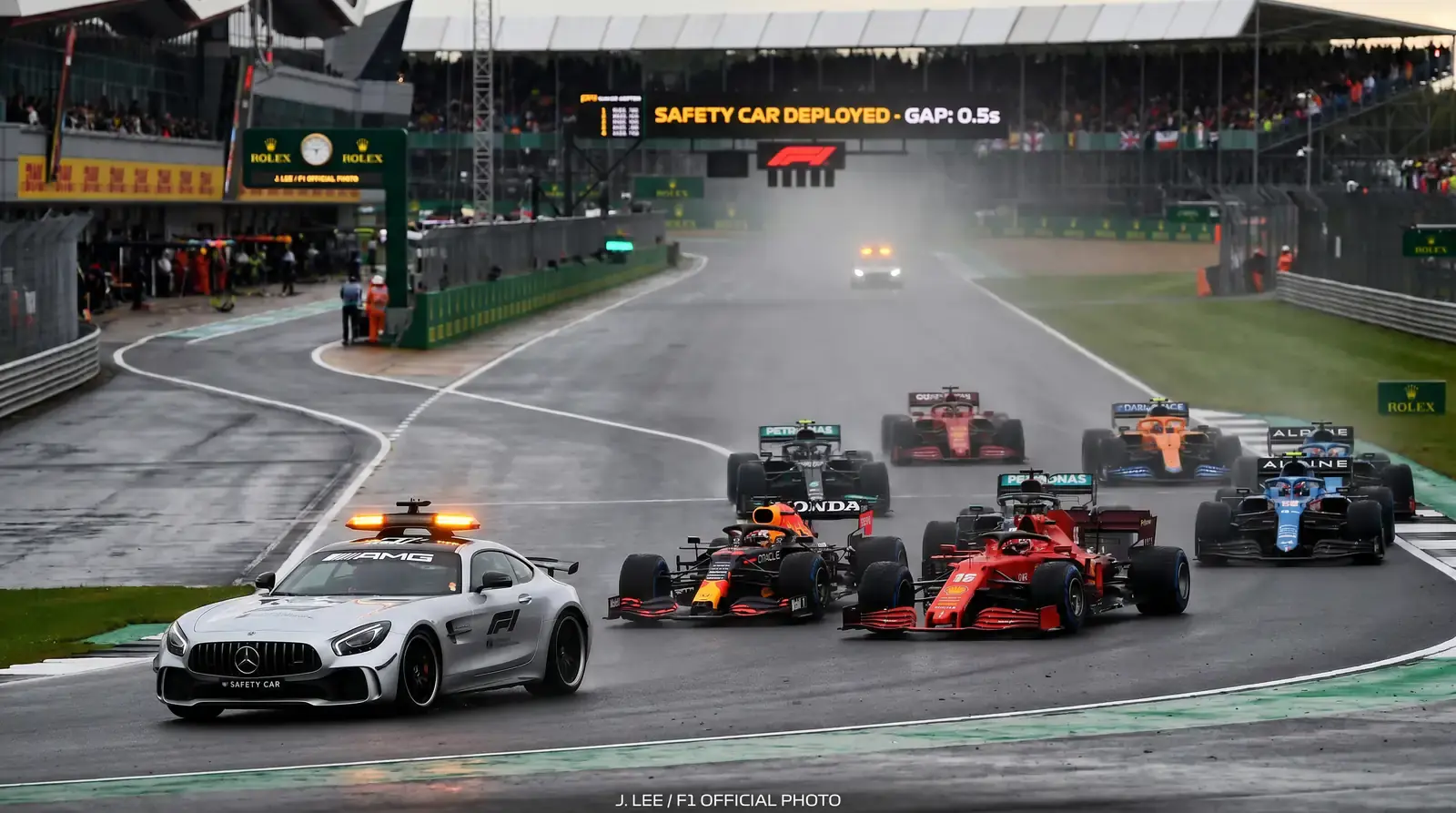
Late-race safety cars compress the field and reset the margin to near zero. A driver leading by fifteen seconds with ten laps remaining can see that gap erased in a single safety car period, making the actual winning margin just a few seconds or even tenths. Safety car probability is therefore the most important external variable in margin of victory betting – a market where you’d otherwise predict a large gap becomes an under bet when safety car likelihood is high.
Circuit-by-Circuit Margin Patterns
I maintain a circuit database tracking the average winning margin at each Grand Prix venue over the past five seasons. The patterns are remarkably consistent. High-speed circuits with clear performance differentiation – Spa, Monza, Bahrain – produce average winning margins of 8-12 seconds. Street circuits and low-speed venues – Monaco, Singapore, Hungary – average 3-6 seconds. Mixed circuits fall in between.
These averages give you a baseline for evaluating the bookmaker’s over/under line. If the average winning margin at Monza over the past five years is 9.5 seconds and the bookmaker sets the line at 7.5 seconds, the over looks attractive unless there’s a specific reason this year’s race will be tighter – perhaps two teams are closely matched for the win rather than one dominant outfit. Conversely, if Monaco’s average is 4.2 seconds and the line is set at 5.5, the under has historical backing.

The 2026 regulation changes add uncertainty to these historical baselines. New aerodynamic rules and engine formula will shuffle the competitive order, which may either tighten or widen the typical margins at familiar circuits. Early-season races in a new regulation cycle tend to produce wider margins as one team nails the regulations better than others. By mid-season, the field converges. I weight the early-season margin data less heavily when setting expectations for the second half of the calendar.
Live Margin Betting and Safety Car Dynamics
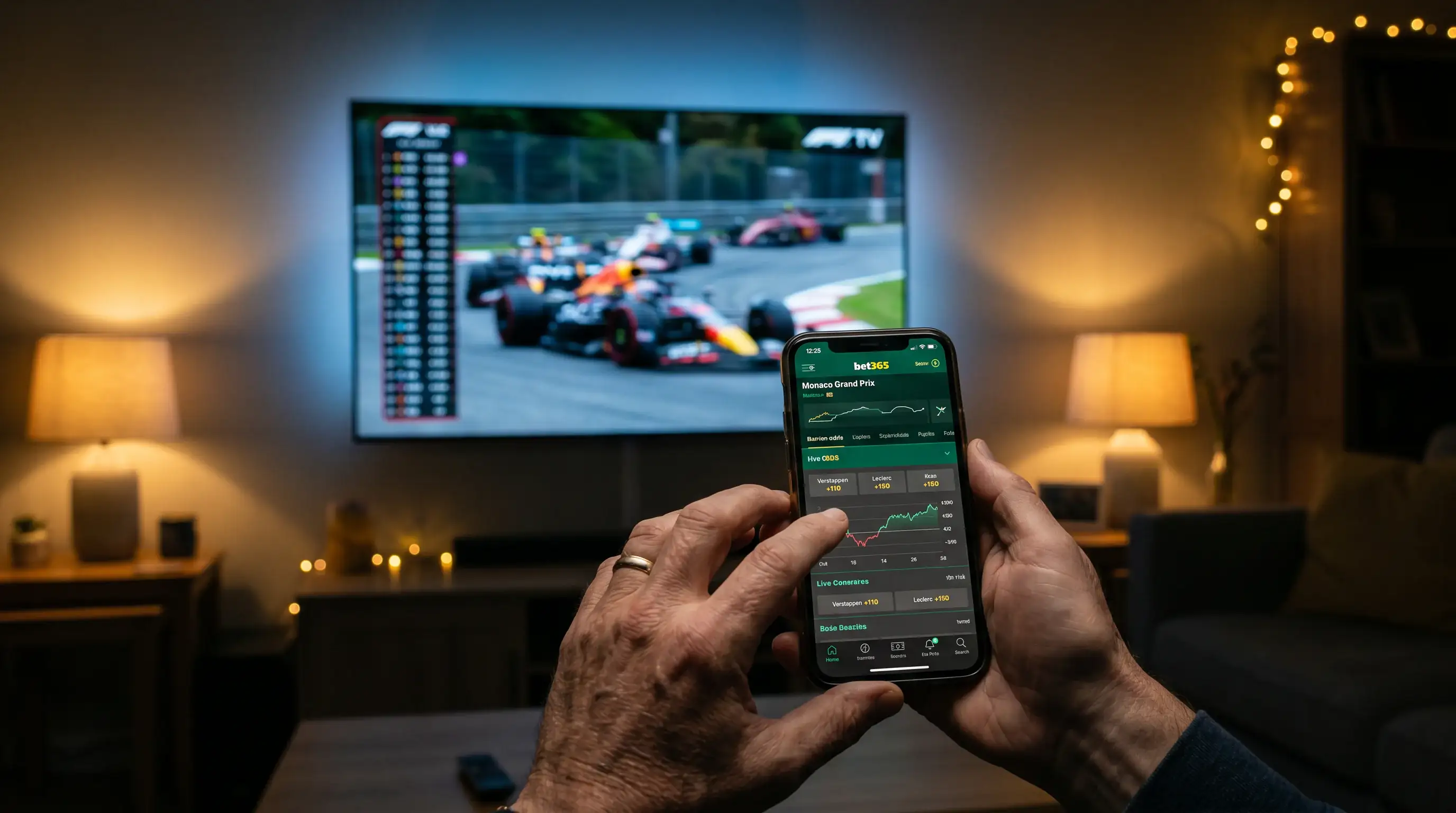
Where margin of victory betting gets tactically interesting is in-play. The live gap between the leader and second place is broadcast in real time, and the bookmaker adjusts the over/under line as the race progresses. If the leader builds a ten-second gap by lap twenty, the line shifts upward. If a safety car compresses the field at lap thirty, it drops back to near zero.
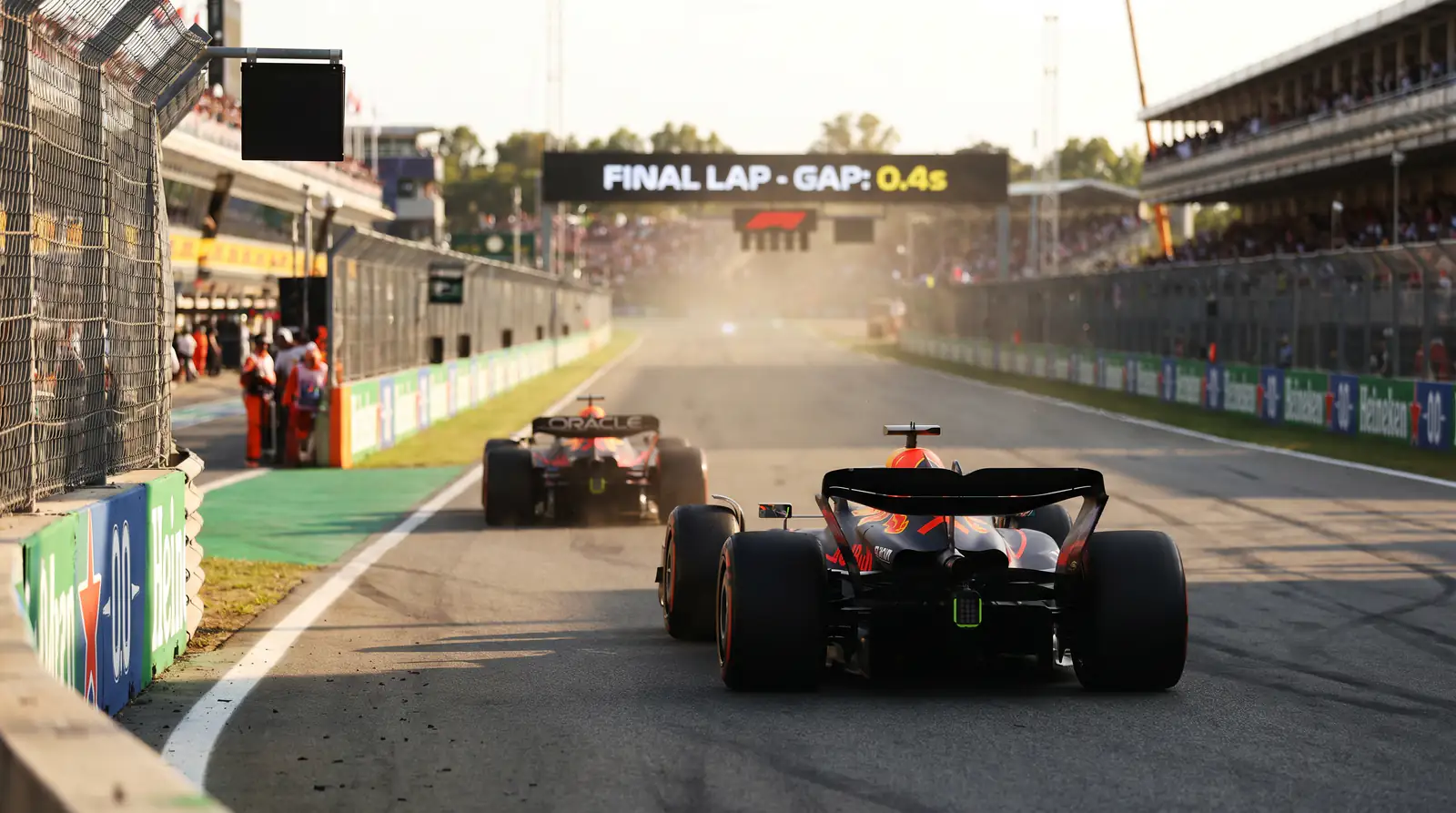
The safety car probabilities I track for each circuit feed directly into live margin betting. At circuits with historically high safety car rates – Baku, Jeddah, Monaco – I wait for a clean first stint before taking the over, because a safety car reset is likely and will compress whatever gap has been built. At circuits with low safety car rates – Bahrain, Spa, Suzuka – I take an early position on the over if the leader’s pace advantage is clear, because the gap is likely to hold through to the finish.
The pre-race market is often less informative than the live market for margins. Pre-race, the bookmaker prices the line based on season-long performance differentials and circuit history. Once the race starts, the live data – actual tyre degradation, actual pace gaps, actual safety car events – provides far more accurate information. I’ve found consistent value in waiting until the first pit stop window (laps 15-20) before entering the margin of victory market, when the tyre performance and strategy picture is clear enough to make an informed assessment.
Banded Margins and Lapped Traffic
The banded margin markets – 0-5 seconds, 5-10 seconds, and so on – offer a different risk-reward profile than over/under. The bands pay longer odds because you’re predicting a narrower range. A 0-5 second band at 3/1 requires both a close finish and no late-race safety car interference. A 20+ second band at 8/1 requires one team’s dominance to go unchecked for the entire race distance.
Lapped traffic is the overlooked variable in tight margin predictions. When the leaders are close together and both encounter lapped cars, the driver behind often loses more time than the leader because the blue-flagged car moves aside for the leader first, then may obstruct the chaser. In the final stint, a cluster of lapped cars can add two to three seconds to the winning margin purely through traffic effects. I factor this into my margin predictions by noting how many cars are likely to be a lap behind by the closing stages – a function of the pace gap between the top teams and the rest of the field.
What is the typical winning margin in a modern F1 race?
The average winning margin varies significantly by circuit. High-speed tracks like Spa and Monza average 8-12 seconds, while street circuits like Monaco average 3-6 seconds. Safety car deployments, competitive balance, and tyre strategy all influence the gap at any individual race.
How does a safety car affect margin of victory bets?
A safety car compresses the entire field, resetting the gap between the leader and second place to approximately one second. This dramatically reduces the final winning margin regardless of how large the gap was before the safety car period. Circuits with high safety car probability tend to produce tighter margins.
Prepared by the f1 Betting editorial staff.