F1 Weather Impact on Betting: How Rain, Wind and Temperature Reshape Odds
 Available in US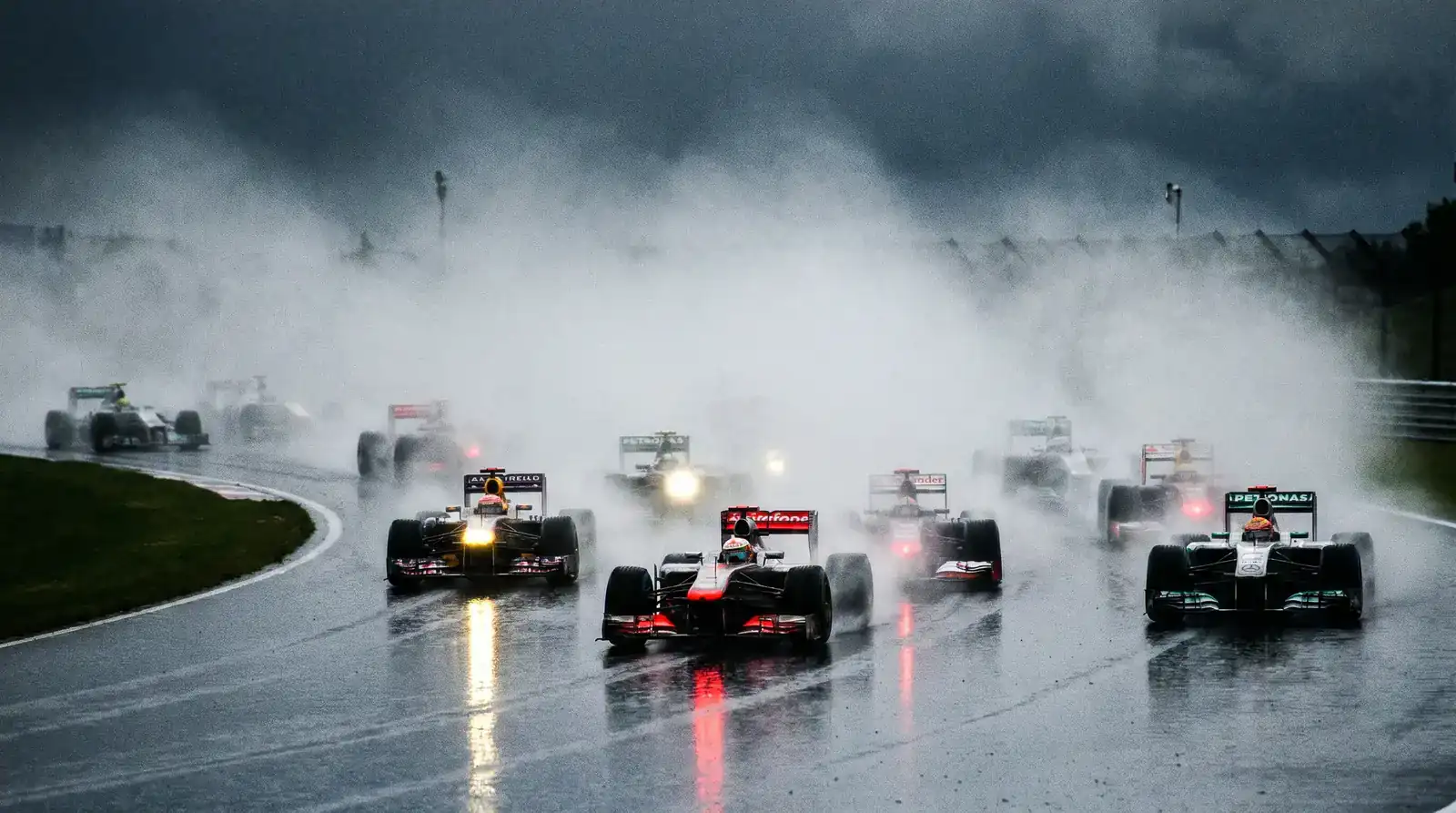
Imola 2024. A thunderstorm appeared on the radar 90 minutes before the race, and the odds market didn’t flinch. I backed a midfield driver at 16/1 for a podium finish because his wet-weather record was outstanding and the market was still priced for dry conditions. The rain arrived on lap 12. He finished second. That single bet delivered more profit than my previous six races combined – and it was available because weather creates a delay between forecast data and odds adjustment that disciplined punters can exploit.
Weather is the most powerful exogenous variable in F1 betting. Rain transforms a procession into chaos, wind alters aerodynamic performance and cornering speeds, and temperature changes tyre behaviour in ways that reshape pit strategy. Each F1 car generates roughly 700 data points per second, but none of that telemetry matters as much as the forecast when conditions are about to change. The punter who acts on weather data faster than the bookmaker adjusts the odds holds the sharpest edge available on any given race weekend.
When Rain Arrives: Odds Volatility and Market Suspension
Rain does three things to F1 betting markets simultaneously. It compresses the performance gap between teams, increases the probability of safety car deployments, and introduces tyre choice decisions that can make or break a race strategy. The cumulative effect is a massive increase in result uncertainty – which is precisely what drives odds volatility.
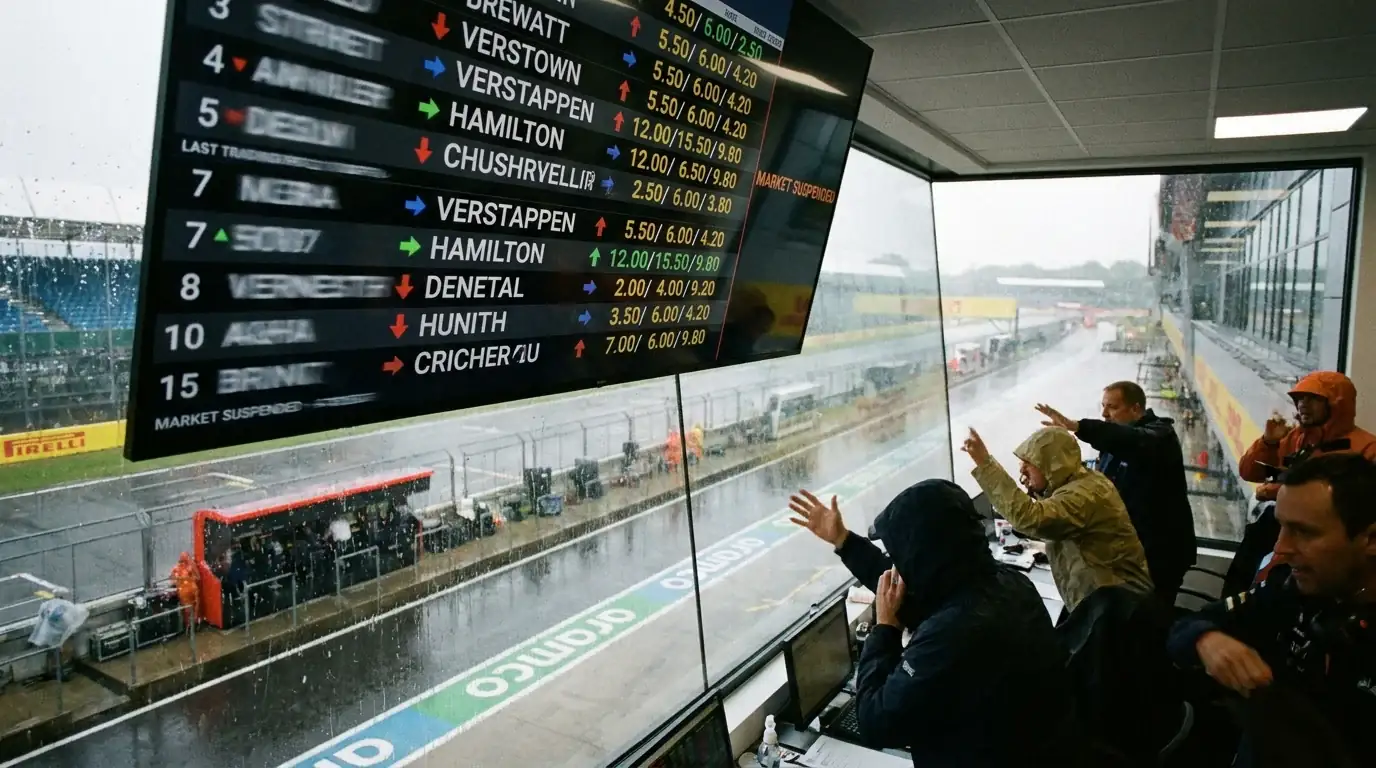
When rain is confirmed during a race, bookmakers may temporarily suspend in-play markets. The suspension typically lasts one to three minutes while the trading team recalculates the odds based on the changed conditions. During this suspension window, you can’t place new bets, but any open positions continue. The resumption odds are often dramatically different from the pre-rain prices: a race leader on slick tyres who hasn’t pitted for intermediates might drift from 1/3 to 3/1 within seconds because their advantage has evaporated.
The pre-rain window – the 30-60 minutes before expected rainfall – is where I concentrate my weather-related betting activity. I check real-time radar and satellite imagery for the circuit location, compare it against the hourly forecast, and assess the probability and timing of rain arriving during the race window. If rain is likely within the first half of the race, I back drivers with strong wet-weather records at prices that still reflect dry expectations. If rain is expected only in the final laps, the impact is smaller because pit stops for wet tyres late in the race are less strategically disruptive.
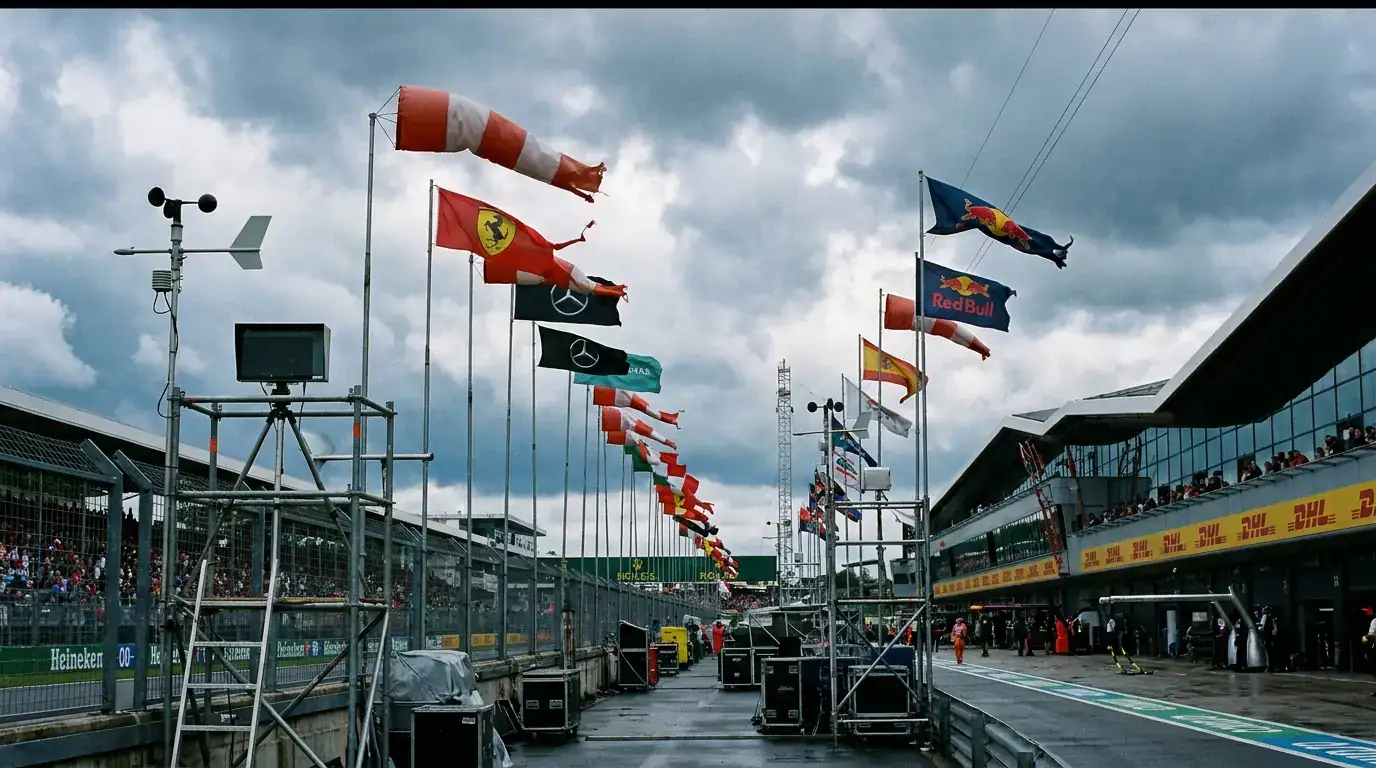
Ambient Temperature, Track Temperature and Wind Direction
Average viewership per Grand Prix reached 76.1 million in 2025, and the global broadcast audience is increasingly attuned to the impact of conditions on race outcomes. But while rain gets all the attention, temperature and wind are the subtle weather variables that consistently move outcomes without triggering the same market reaction.
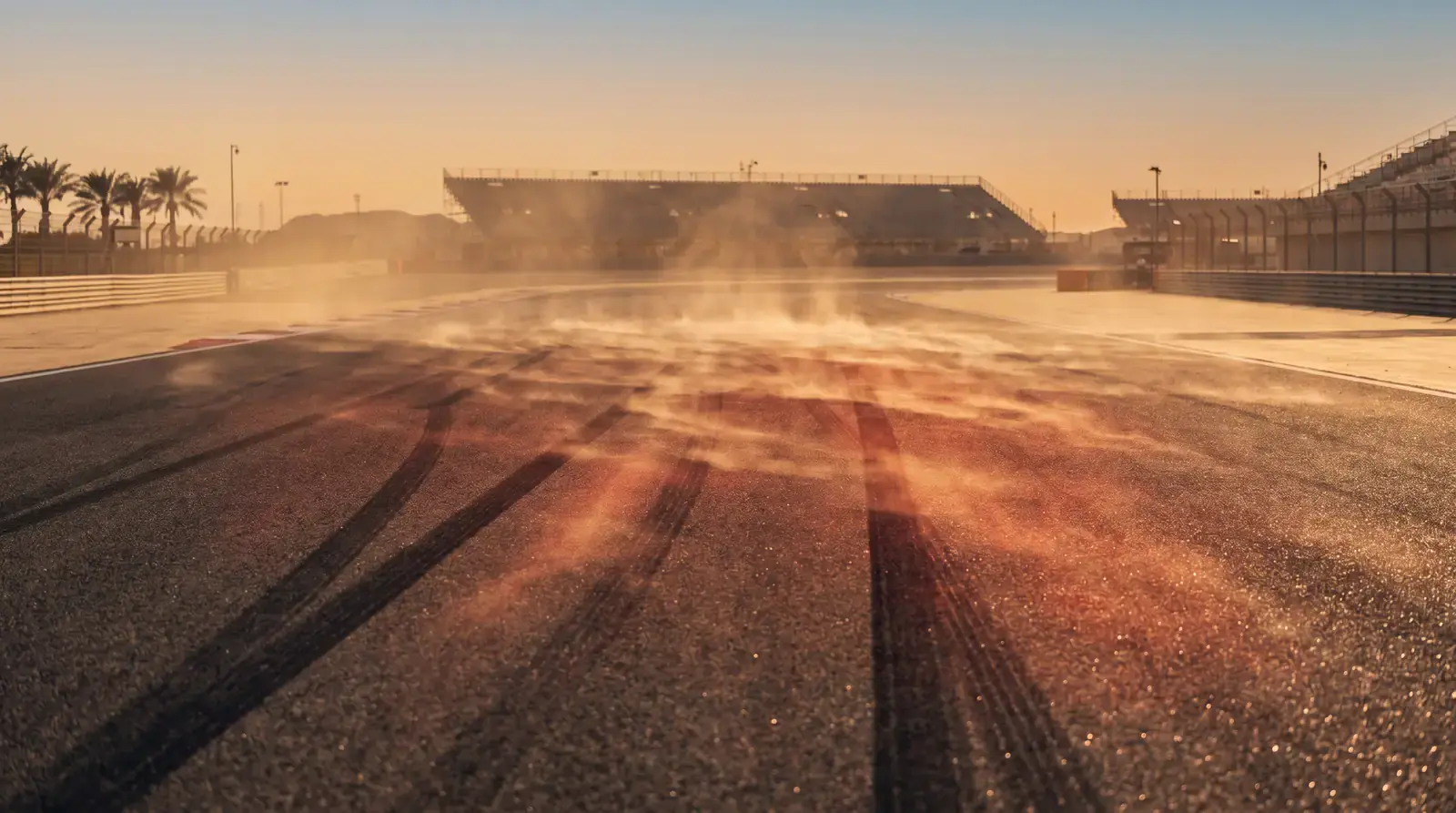
Track surface temperature directly affects tyre degradation. The tyre compounds Pirelli supplies are designed to operate within specific temperature windows. When the track temperature exceeds the upper end of a compound’s optimal range, degradation accelerates – drivers burn through their tyres faster, pit stops come earlier, and the likelihood of multi-stop strategies increases. When the track is cooler than expected, tyres last longer, one-stop strategies become viable, and the race favours drivers who can manage their pace over a long stint.
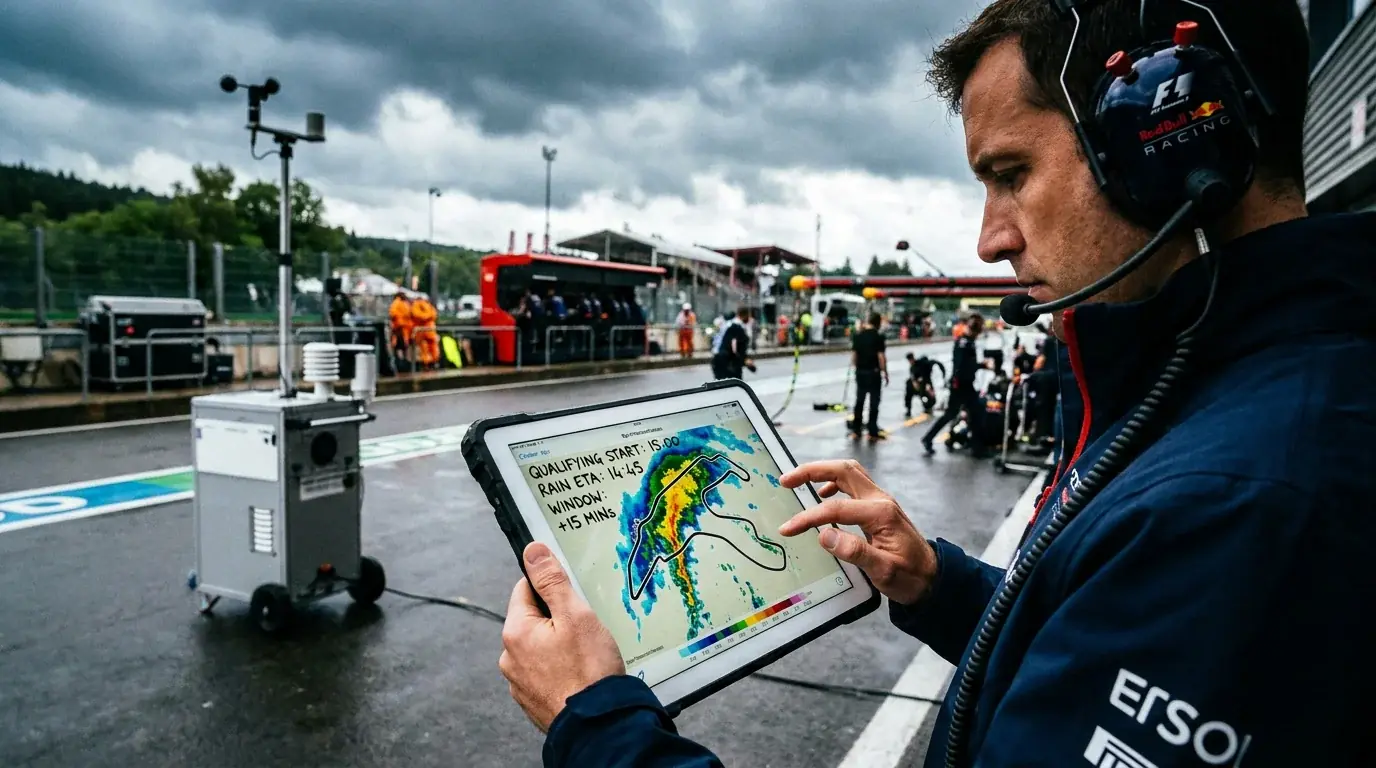
The practical implication: if the race-day temperature forecast is significantly different from the conditions during practice sessions, the tyre degradation data from Friday becomes unreliable. I cross-reference the race-day temperature forecast against the FP2 temperature to assess how much the practice data can be trusted. A difference of ten degrees Celsius or more makes the Friday long-run data substantially less predictive and increases the value of “over” bets on total pit stops.
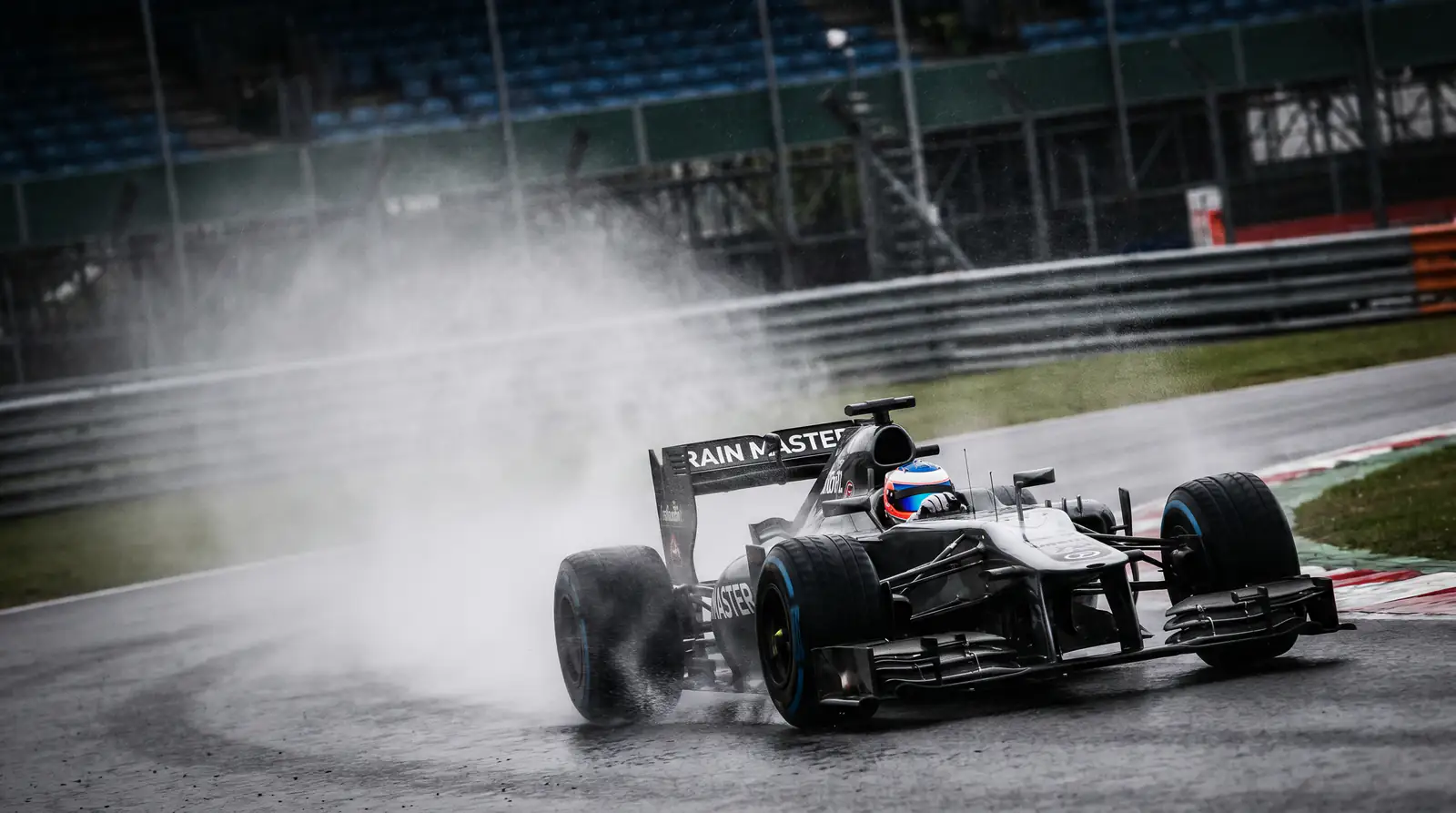
Wind direction matters more than most punters realise. A headwind on the longest straight reduces top speed, which changes overtaking probability. A crosswind in high-speed corners can destabilise certain car designs more than others, depending on their aerodynamic philosophy. I track wind forecasts for the specific corners where overtaking typically occurs and assess whether the expected conditions favour the cars that are strong in those sections or disadvantage them.
Weather Forecasting Sources and Timing Your Pre-Race Bets
Jonny Haworth, F1’s Director of Commercial Partnerships, described the 2026 season as one that would generate enormous jeopardy on track – and weather is one of the biggest sources of that jeopardy. The regulation changes for 2026 add a layer of uncertainty to how different cars will perform in changing conditions, making weather-informed betting even more relevant.
I use three weather data sources for every race weekend. The first is a standard meteorological forecast service for the circuit’s geographic location – hourly temperature, precipitation probability, and wind speed. The second is a real-time radar service that shows precipitation cells moving toward the circuit, which gives a 30-60 minute advance view of incoming rain. The third is the circuit’s own microclimate history – some venues, like Spa-Francorchamps, have microclimates where rain can fall on one sector of the circuit while the rest remains dry, which creates uniquely chaotic race conditions.
The timing of my weather-informed bets follows a strict sequence. On Thursday and Friday, I identify which drivers have the strongest wet-weather records and note their current market prices under dry expectations. On Saturday morning, I check the Sunday forecast in detail. If rain is probable during the race window, I place my weather bets before the bookmaker adjusts the odds – which typically happens on Saturday evening once the Sunday forecast becomes more precise. If the forecast remains dry, I proceed with my standard analysis.
The discipline is in acting before the crowd. Weather forecasts become increasingly accurate as the event approaches, but the odds adjust in proportion to how many punters have seen the same forecast. A bet placed on Saturday morning based on a 60% rain probability offers better odds than the same bet placed Sunday morning when the probability has risen to 85% and the market has fully adjusted. The data-driven strategy framework I use integrates weather as one of four core variables alongside qualifying pace, tyre degradation, and circuit characteristics – but on the weekends where weather is the dominant factor, it overrides everything else in the model.
Do bookmakers suspend F1 betting markets when rain is forecast?
Bookmakers do not suspend markets based on forecasts alone. Suspension occurs during live races when rain actually arrives and the trading team needs to recalculate the odds, typically lasting one to three minutes. Pre-race markets remain open throughout the weekend regardless of the forecast, though odds may shift as rain becomes more likely.
Which F1 circuits are most affected by weather changes?
Spa-Francorchamps, Silverstone, Interlagos, Suzuka, and Montreal are historically the most weather-sensitive circuits on the F1 calendar. Street circuits like Monaco and Singapore can also be dramatically affected by rain due to the reduced grip on painted road markings and the proximity of barriers, though tropical venues have more predictable rainfall patterns.
How do I use weather forecasts to find value in F1 odds before a race?
Check the race-day forecast against the conditions during Friday practice. If rain is expected during the race but the odds still reflect dry expectations, back drivers with strong wet-weather records at their current prices. Act early – Saturday morning or early afternoon – before the bookmaker adjusts the odds for the weather change. The earlier you act relative to the forecast becoming public knowledge, the better the odds you’ll get.
Written by the editors at f1 Betting.