F1 Betting Tips: What to Check Every Race Weekend Before You Punt
 Available in US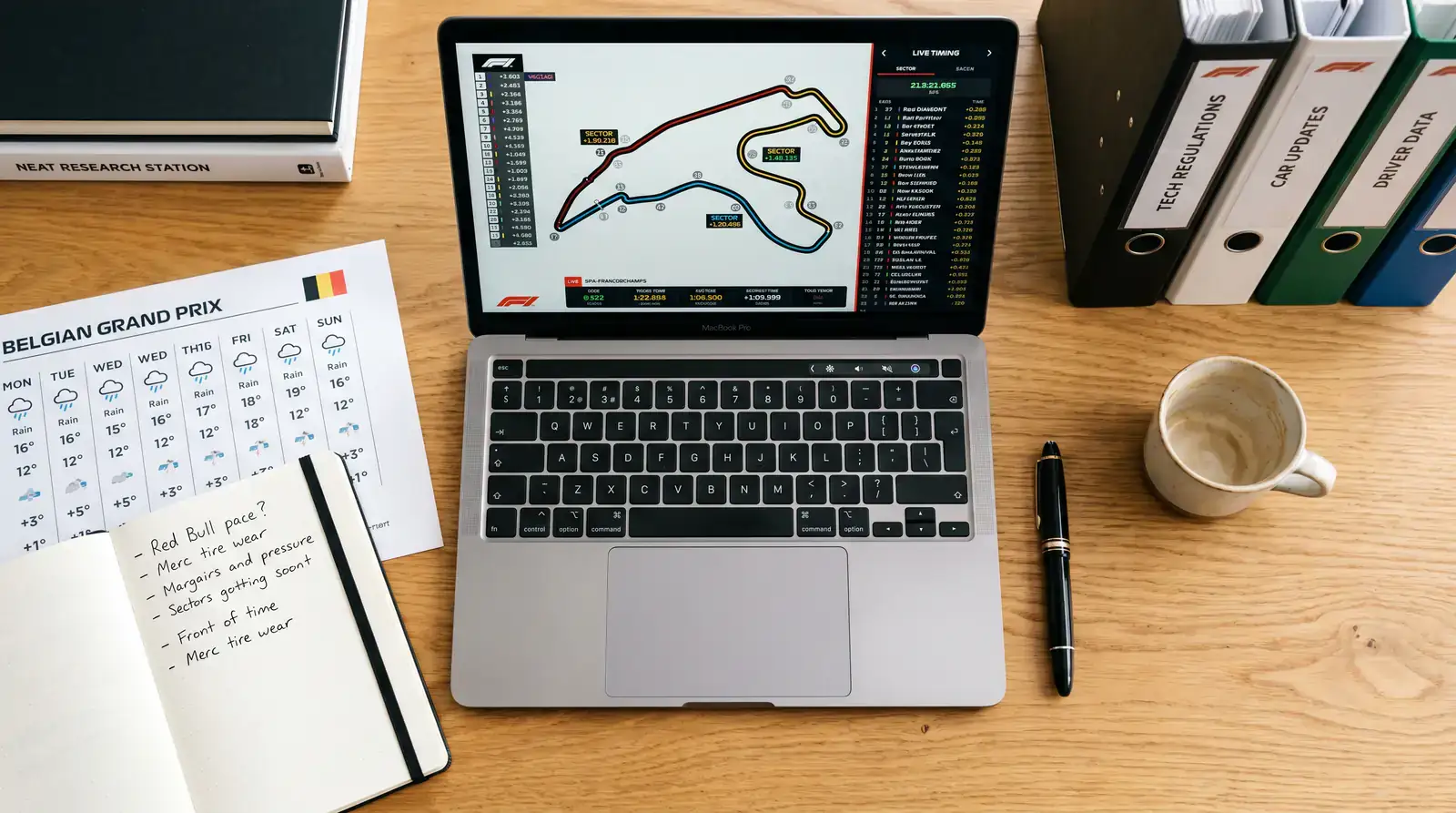
The 2024 Canadian Grand Prix taught me that a single rain shower can invalidate two days of preparation. I’d spent Wednesday and Thursday analysing practice pace, tracking sector times, building my qualifying and race-day bets around McLaren’s dry-weather advantage at the Circuit Gilles Villeneuve. Then Saturday’s qualifying session was drenched, the grid was scrambled, and my pre-built bets became worthless. Since that weekend, I’ve built weather checks into my process as a non-negotiable final step – and the overall accuracy of my race weekend analysis has improved significantly.
Twenty-eight percent of F1 fans have placed an online sports bet in the past twelve months – more than any other major sport’s fanbase. That high engagement means the F1 betting market is competitive, and generic “do your research” advice won’t give you an edge. What will give you an edge is a structured pre-race checklist that extracts maximum value from the data available at each stage of the weekend. Here’s the process I use at every round.
Before the Weekend: Historical Circuit Data and Driver Form
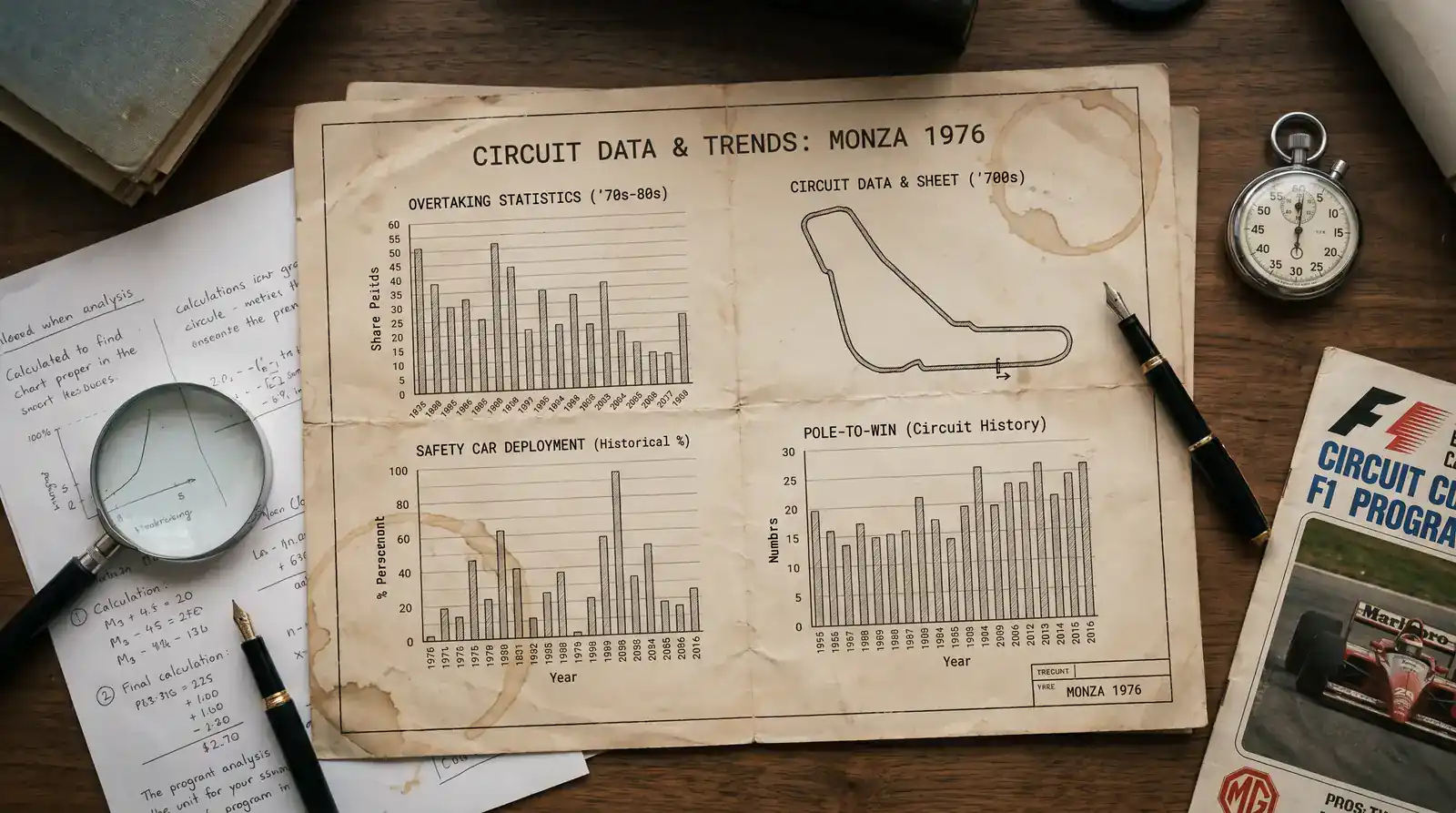
My race-weekend preparation starts on Monday, five days before Friday practice. The first thing I pull up is the circuit’s historical data: average number of overtakes per race, safety car deployment rate, one-stop vs two-stop split, and the qualifying-to-race-winner conversion rate (how often the pole-sitter wins). These numbers establish the baseline character of the circuit and tell me which markets are likely to offer the most value.
Average TV viewership per Grand Prix hit 76.1 million in 2025 – the highest since 2020 – and that growing audience has brought more money into the betting markets, making the odds more competitive but also more responsive to public sentiment. My historical data analysis serves as a counterweight to that sentiment: if the public is backing a driver because of their championship position or recent media attention, but the circuit data suggests a different profile favours someone else, there’s a gap between market price and underlying probability.

Driver form is the second input. I look at the last four races rather than the full season because F1 form evolves as teams bring upgrades and the competitive order shifts. A driver who finished eighth, sixth, fourth, and third in their last four outings is on an upward trajectory that the pre-season or early-season odds may not fully capture. I also check the driver’s personal record at the upcoming circuit – some drivers have consistent overperformance at specific tracks that persists across seasons, regardless of their machinery.
Friday and Saturday: Practice Pace, Setup Changes and Qualifying Intel
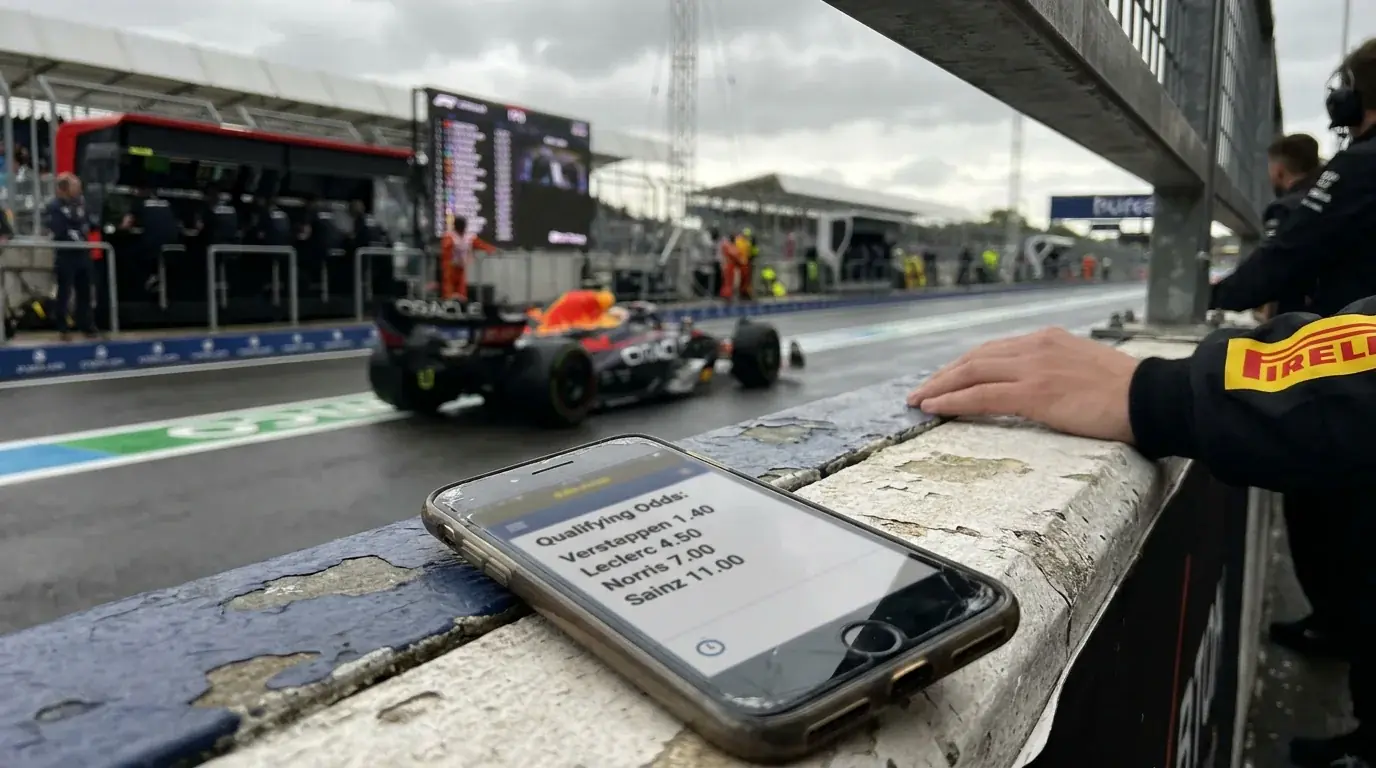
Friday practice sessions are where the real information lives. FP1 and FP2 (or the single FP session at sprint weekends) generate the data that separates informed punters from casual ones. I focus on three metrics: single-lap pace on the soft compound (qualifying simulation), long-run pace on the medium and hard compounds (race simulation), and the gap between a team’s FP1 and FP2 performance (which indicates how much setup progress they’ve made).
Mark Wrigley, F1’s Head of Betting, has described the sport’s ambition to help fans engage with the vast amounts of data F1 produces – and Friday practice is where that engagement starts for bettors. The publicly available timing data from practice sessions, combined with tyre compound information and stint lengths, gives you enough to build a crude but effective pace model for each team. I don’t need the 700-per-second telemetry data the teams have; I need the lap times, the tyre choices, and the number of laps on each stint. From those three inputs, I can estimate each team’s race pace within a few tenths of a second.
Saturday morning’s FP3 – when it exists – is my final data input before qualifying. Teams use FP3 for their qualifying preparation runs, so the lap times are more representative of true qualifying pace than anything from Friday. I use FP3 data to refine my qualifying predictions and place any remaining qualifying bets in the 30-minute window between FP3 ending and qualifying starting.

Saturday afternoon, after qualifying, I reassess my Sunday race bets. Qualifying results are the strongest single predictor of race outcomes – the correlation between grid position and finishing position is robust across all circuit types. But qualifying can produce surprises (weather, red flags, driver errors) that create mispriced race-day odds. A driver who qualified lower than their race pace suggests is the classic value bet: the market has adjusted their Sunday price based on qualifying position, but the underlying pace data says they’ll recover positions during the race.
Sunday Morning: Weather, Grid Penalties and Market Gaps
Race-day morning is about confirmation and final adjustments. The first check is weather: I review three independent forecasts for the circuit location, looking at the hourly breakdown during the race window. Rain probability above 30% shifts my approach toward drivers with strong wet-weather records and toward markets that benefit from disruption – safety car deployment, podium outsiders, and head-to-head matchups where one driver handles rain significantly better than the other.
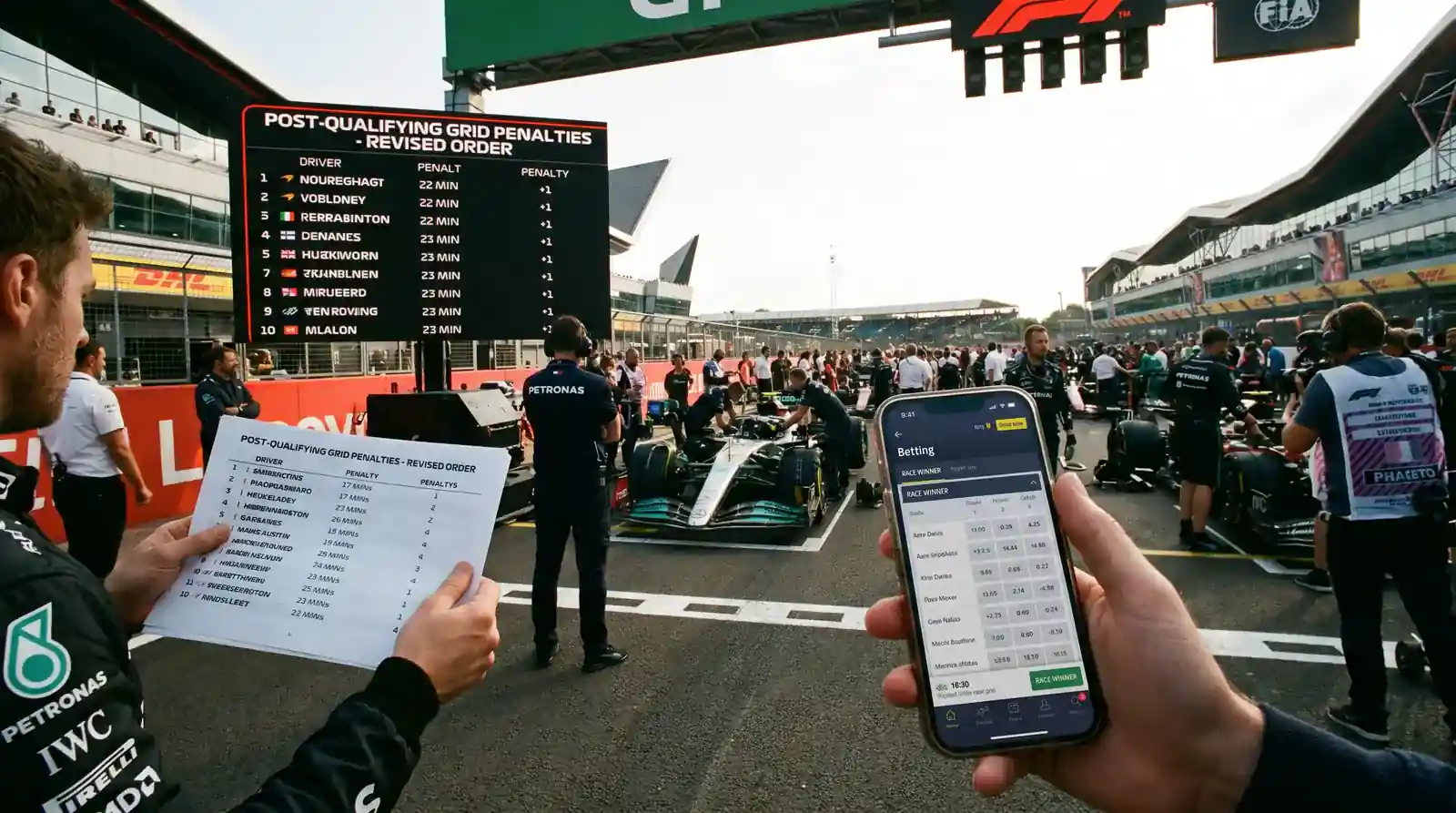
Grid penalties applied after qualifying are the second check. Engine penalties, gearbox changes, and reprimands that affect grid positions are often confirmed on Saturday evening or Sunday morning. The market adjusts for headline penalties quickly, but the second-order effects – how a penalised driver’s absence from their qualifying slot affects the drivers around them – are underpriced. If a frontrunner drops ten places, the driver who inherits their grid position gets a free promotion that the podium and top-six markets may not fully account for.
The final step is a scan for market gaps. I compare the odds across my bookmaker accounts for my intended bets and place at the best available price. I also check whether any late information – a reported mechanical issue in warm-up, a driver feeling unwell, a last-minute setup change – has emerged that might affect my selections. The deeper analytical frameworks I’ve developed over the years all funnel into this Sunday morning decision point: the structured checklist transforms a week of data analysis into a set of specific, actionable bets placed at the best possible prices.
The discipline is in the process, not in any individual bet. Some weekends, the checklist produces three or four strong selections. Others, the data doesn’t support any bets at a price I’m willing to take. Passing on a race weekend is a valid outcome of the process – and over a 24-race season, the weekends I pass on often turn out to be the ones where my analysis would have been wrong. The checklist protects your bank by ensuring every bet has a data-backed rationale before it’s placed.
What is the single most important thing to check before betting on an F1 race?
The qualifying result and its relationship to each driver’s true race pace. Qualifying position is the strongest predictor of race outcome, but discrepancies between qualifying position and practice race pace create the most consistent value opportunities in F1 betting. A driver who qualifies lower than their pace suggests is a classic value bet.
Where can I find reliable F1 practice session lap times?
The FIA publishes official timing data for all practice sessions, which is available on the Formula 1 website and app. Third-party data providers and motorsport news sites also compile practice lap times with tyre compound information and stint analysis. The data is free and publicly accessible within minutes of each session ending.
How far in advance of a race should I place my F1 bets?
It depends on the market. Outright championship bets can be placed weeks or months ahead. Race-winner and podium bets benefit from waiting until after qualifying for maximum information. Qualifying bets should be placed between FP3 and qualifying. The general principle: place each bet at the point where you have the most relevant information and the odds still offer value.
Prepared by the f1 Betting editorial staff.