F1 Betting Sites in the UK: How to Compare Bookmakers for Motorsport
 Available in US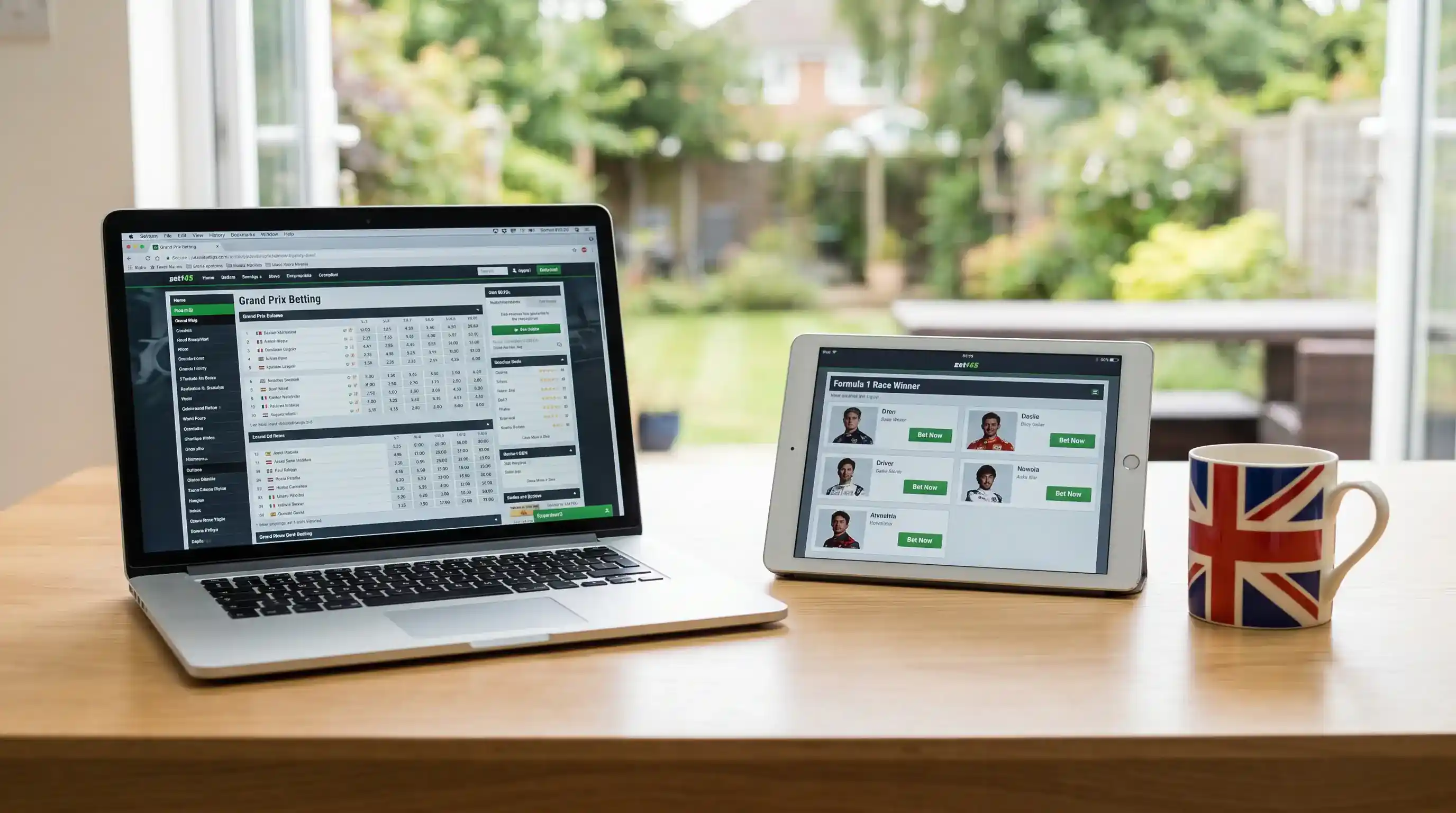
Betway became the first Official Betting Operator of Formula 1 in 2026 — a multi-year deal covering Europe, the Middle East, Africa, Canada and Mexico. That headline is worth noting not because it tells you which bookmaker to use (it does not), but because it signals something larger: the F1-betting relationship has matured from a fringe interest to a formally integrated part of the sport’s commercial ecosystem. For UK punters, this shift means more operators investing in F1-specific products, deeper markets and sharper competition for your account.
But not all betting sites are equal when it comes to motorsport. The UK’s remote gambling sector generated GGY of 7.8 billion pounds in the year to March 2025 — a 13.1% annual increase — and with 5,825 licensed betting premises still operating alongside the online market, the choice can feel overwhelming. This guide gives you a framework for evaluating F1 betting sites on criteria that actually matter: licensing, motorsport market depth, live pricing quality, promotional value, payment efficiency and mobile usability. No rankings, no “best bookmaker” verdicts. Just the tools to decide for yourself.
Table of Contents
- UKGC Licensing: The Non-Negotiable First Check
- Motorsport Market Depth: Why a Football Bookmaker May Fall Short on F1
- Live Odds Quality and F1-Specific Features
- Evaluating Welcome Bonuses and F1 Promotions
- Payment Methods, Withdrawal Speed and Limits
- Mobile App Experience for Race-Day Betting
- The Betway-F1 Partnership and What It Means for Punters
- Betting Sites FAQ
UKGC Licensing: The Non-Negotiable First Check
I will not bury this: if a betting site does not hold a UK Gambling Commission licence, close the tab. No exceptions. Every legitimate operator targeting UK customers is legally required to hold a UKGC remote operating licence, and that licence comes with obligations — responsible gambling tools, ring-fenced player funds, dispute resolution through an approved Alternative Dispute Resolution provider and compliance with the Gambling Act 2005 framework. Andrew Rhodes, the Gambling Commission’s Chief Executive, has stated that the regulatory ambition is for Britain to be the safest and fairest place to gamble in the world. Whether you agree with every regulation or not, the UKGC framework is the reason your deposits are protected and your winnings are enforceable.
Checking a licence takes thirty seconds. Go to the Gambling Commission’s public register, search for the operator name and confirm their remote licence number matches what is displayed on the betting site’s footer. If the numbers do not match, or if the site lists a Curacao, Anjouan or other offshore licence instead, you are outside UK regulatory protection. That means no access to GAMSTOP self-exclusion, no guaranteed dispute resolution and no assurance that player funds are segregated from the operator’s working capital.
The UK currently licenses hundreds of remote gambling operators, but the number of those offering meaningful F1 markets is a fraction of the total. Many smaller operators license a generic sportsbook feed that includes F1 as an afterthought — you get race winner and maybe championship outright, but nothing beyond that. The UKGC licence guarantees safety and fairness; it does not guarantee market depth. That distinction matters, because a licensed site with thin F1 coverage is safe but useless for serious motorsport punting.

Since October 2025, UK operators also pay a statutory gambling levy — a mandatory percentage of gross gambling yield funding research and treatment for gambling-related harm. This cost passes through to tighter operational margins, which some operators absorb and others offset by adjusting their pricing or promotional budgets. The levy does not directly affect your betting experience, but it has indirectly influenced how aggressively some operators compete for new accounts. Understanding this commercial dynamic helps you read promotional offers more critically — a topic I will come back to shortly.
Motorsport Market Depth: Why a Football Bookmaker May Fall Short on F1
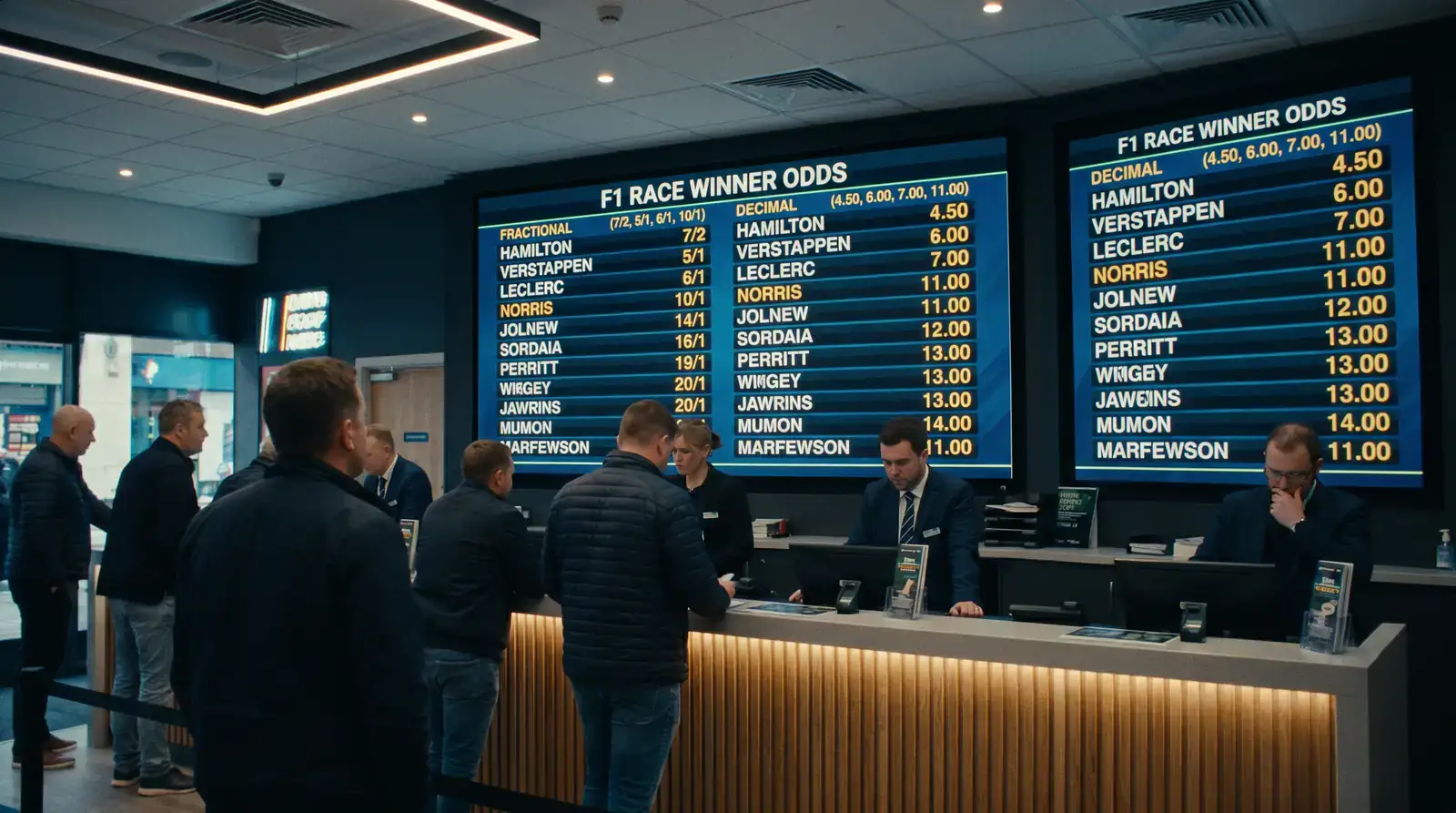
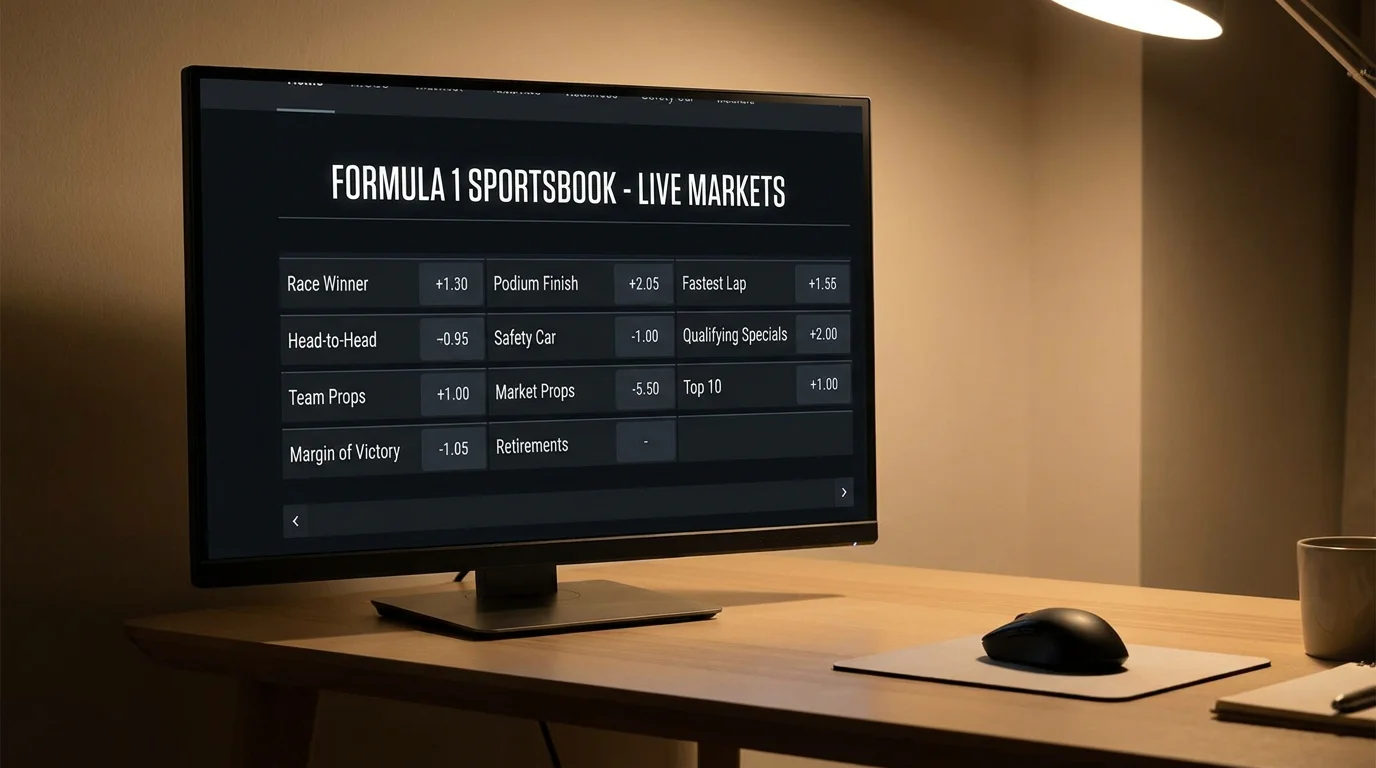
Last year I opened accounts at four different bookmakers specifically to test their F1 market coverage across the first six races of the season. The results were striking. Two of the four offered deep F1 menus — race winner, podium, fastest lap, pole position, head-to-head, qualifying matchups, safety car yes/no, total retirements and bet builder combinations. The other two offered race winner, championship outright and nothing else. Same UKGC licence, same welcome bonus tier, completely different products once you navigated to the motorsport section.
The depth gap exists because F1 market pricing requires specialist data feeds and trading expertise. A bookmaker that excels at Premier League coverage can price thousands of football markets using mature models and deep liquidity. Pricing an F1 safety car market or a qualifying head-to-head requires different data — telemetry feeds, historical circuit-specific statistics and an understanding of strategy variables that have no football equivalent. Operators who invest in that capability offer twenty-plus markets per race weekend. Operators who do not invest in it default to the handful of markets their generic sportsbook feed supports.
The practical test is simple: before the next race weekend, navigate to the F1 section of any bookmaker you are considering and count the available markets. If you see fewer than ten distinct market types (race winner, podium, fastest lap, pole position, head-to-head, qualifying markets, safety car, retirement, sprint-specific markets and bet builder), the site’s F1 coverage is shallow. That does not make it a bad bookmaker overall — it just means F1 is not a priority product for them, and your punting options will be limited accordingly.
Betway’s Official Betting Operator partnership with F1 signals where the market is heading. The deal integrates official data directly into the bookmaker’s product, which should translate into faster market updates, more granular in-play pricing and potentially new market types derived from the 700 data points per second that each car generates. Other major operators will need to match this investment or accept losing the F1 segment. For punters, competition between operators for motorsport credentials is pure upside — it means better products, more markets and sharper odds across the board.
Live Odds Quality and F1-Specific Features
A bookmaker’s pre-race odds might look competitive, but the real test comes on Sunday afternoon when the lights go out. Live odds quality in F1 is defined by three things: how quickly the market responds to race events, how many markets remain open during the race and how aggressively the operator prices in-play positions. I have seen operators where the race winner market suspends for thirty seconds after a routine pit stop — an eternity in in-play terms — while others recalibrate within five to eight seconds and reopen at sharp prices.
The speed difference comes down to data infrastructure. Operators with access to official F1 timing feeds through licensed data suppliers can price in-play markets algorithmically, updating after every sector split. Operators relying on broadcast-derived data (essentially watching the same TV feed you are) price more slowly and suspend more cautiously. You cannot always tell which category your bookmaker falls into from their marketing materials, but you can test it empirically: watch a race with two bookmaker apps open side by side and note which one reopens markets first after a pit stop, safety car or incident. The faster operator is almost certainly running a superior data feed.
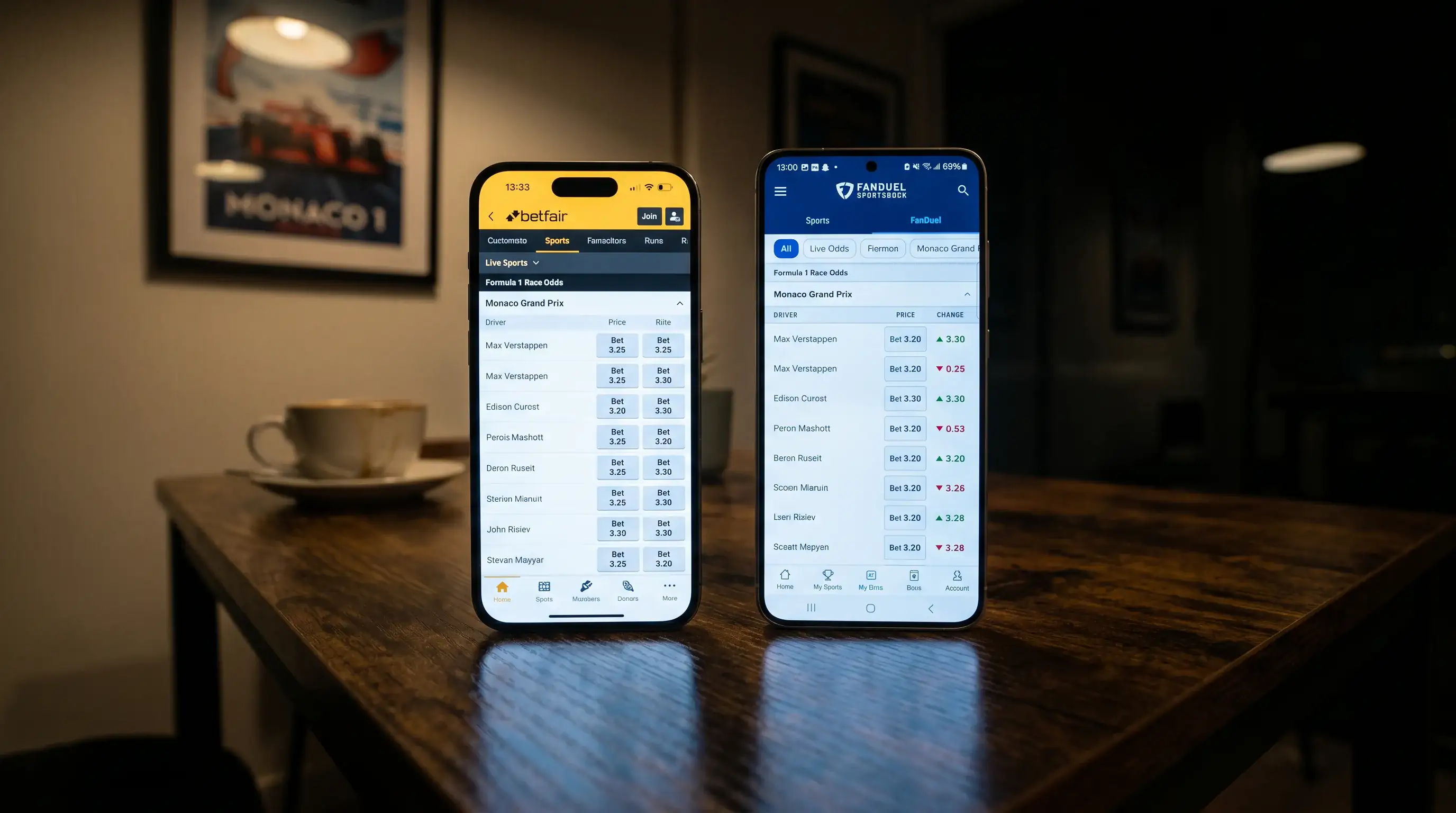
F1-specific features worth checking include live timing integration within the app (showing gap data alongside odds), push notifications for major odds movements (such as a favourite drifting before the race due to weather) and the availability of cash out and partial cash out on F1 in-play bets. Some operators also offer live streaming of F1 sessions for funded accounts, though the availability varies by race and licensing region. These features collectively determine whether your race-day experience is smooth or frustrating, and they are entirely invisible until you actually try to use them during a Grand Prix.
Evaluating Welcome Bonuses and F1 Promotions
Free bets sound free. They are not. Every welcome bonus and F1 promotional offer comes with conditions that determine whether the offer has genuine value or is a marketing wrapper around a break-even proposition. I have evaluated dozens of F1-adjacent promotions over the years, and the gap between headline generosity and actual economic value is consistently wide.
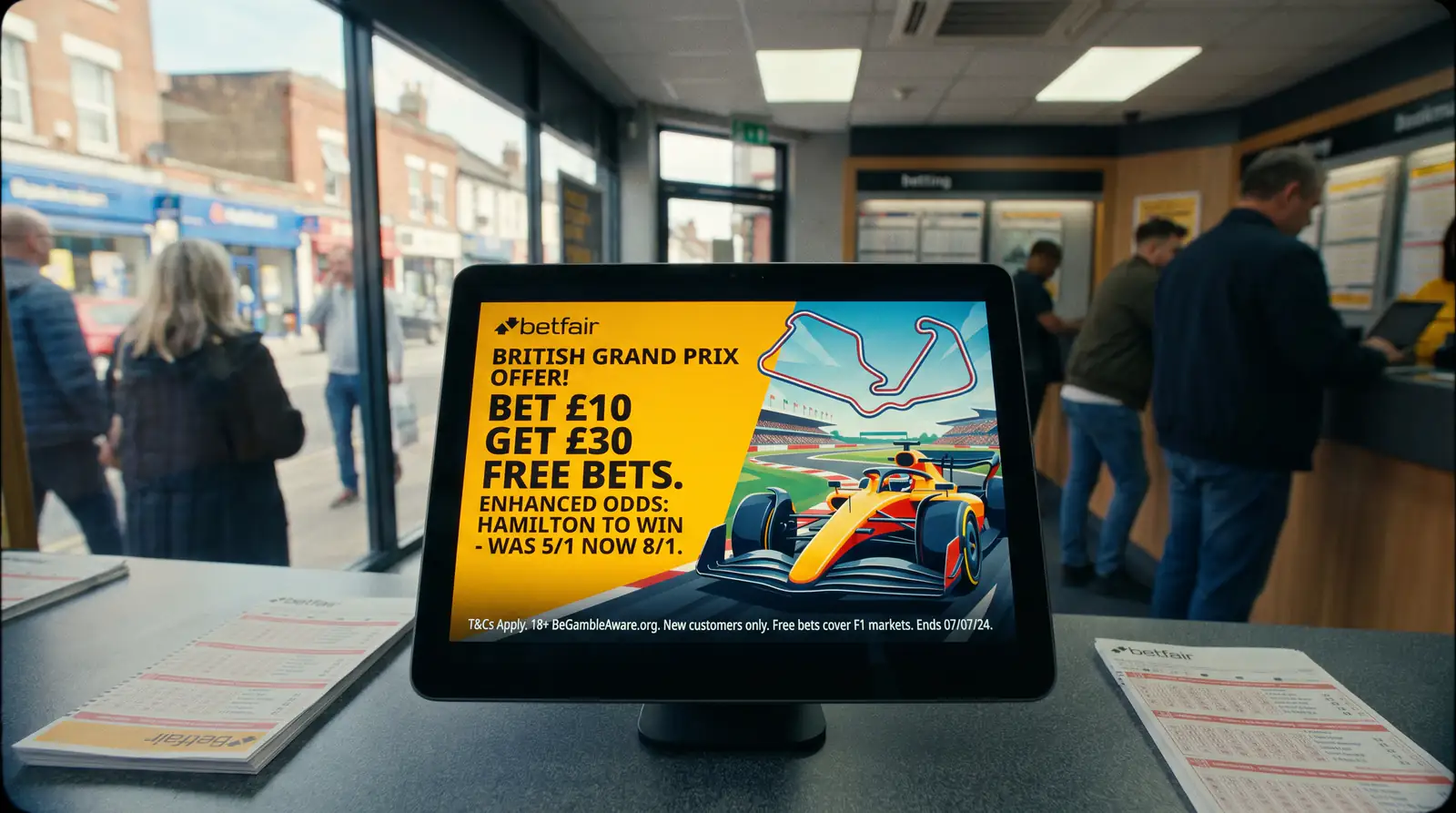
The critical variables are wagering requirements, minimum odds thresholds, market restrictions and expiry periods. A “bet ten get thirty in free bets” offer sounds generous until you discover the free bets must be used on odds of 1.50 or above, the free bet stake is not returned with winnings, the bets expire in seven days and only single bets qualify — no accumulators, no bet builders. Under those conditions, the expected value of the “thirty pounds free” is closer to twelve to fifteen pounds, depending on which markets you use them on.
F1-specific promotions tend to appear around high-profile races: enhanced odds on the race winner, money-back specials if your driver finishes second or third and acca insurance for multi-leg race-weekend bets. These race-day promotions often carry fewer restrictions than general welcome bonuses because they are designed to drive engagement during a specific event rather than lock in a long-term customer. The trade-off is that they require you to bet on a specific race at a specific time, which may not align with your analytical view of where value exists that weekend.

My approach is to evaluate every promotion against its opportunity cost. If a free bet offer requires a qualifying bet on a market where I see no value, the qualifying stake is a real loss even if the free bet subsequently wins. For a full walkthrough of how to read promotional terms critically and calculate the true expected value of F1 bonus offers, my F1 promotions guide covers every common offer structure with worked examples. The bottom line: treat bonuses as a minor supplementary benefit, not as a reason to choose a bookmaker. Market depth, odds quality and licensing status matter far more to your long-term results.
Payment Methods, Withdrawal Speed and Limits
Payment processing is the least glamorous aspect of choosing a betting site and one of the most practically important. I once waited eleven days for a withdrawal from an operator whose F1 markets were excellent but whose banking infrastructure belonged in a different decade. That experience taught me to treat payment speed as a qualifying criterion, not an afterthought.
UK-licensed operators typically support debit cards (credit cards are banned for gambling in the UK since April 2020), bank transfers, e-wallets and prepaid voucher systems. Deposit speed is near-instant across all methods. Withdrawal speed is where operators diverge. E-wallet withdrawals (PayPal, Skrill, Neteller) process within zero to twenty-four hours at most major operators. Debit card withdrawals take one to five business days depending on the bank and the operator’s internal processing queue. Bank transfers sit in a similar range but can extend further for large amounts that trigger additional compliance checks.
Minimum and maximum withdrawal limits vary. Some operators impose daily or weekly withdrawal caps that matter if you have a particularly profitable race weekend. A cap of five hundred pounds per day means a two-thousand-pound win takes four days to fully withdraw, regardless of the payment method’s processing speed. Others have no meaningful daily cap but impose minimum withdrawals of ten or twenty pounds, which can be relevant if your betting bank is modest.
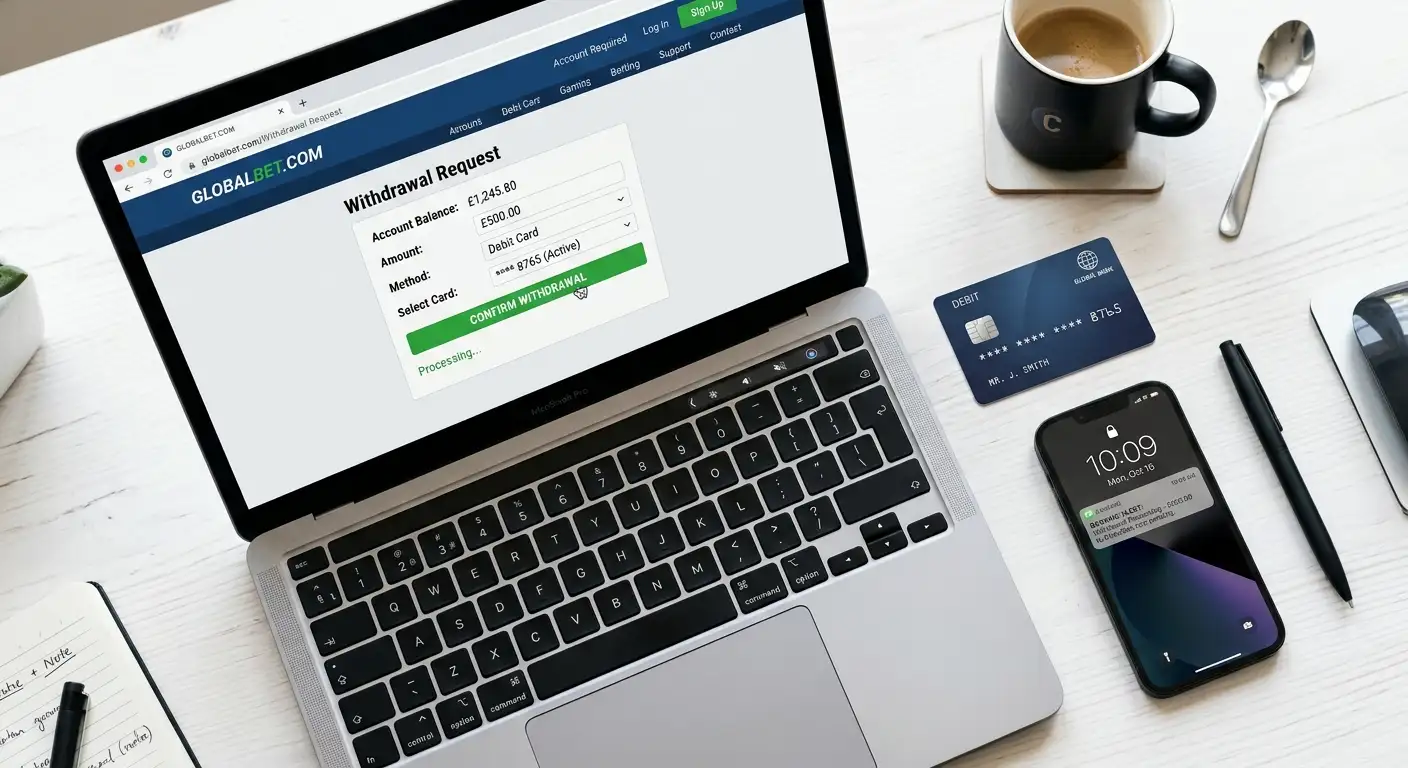
One detail that catches newer punters: identity verification must be completed before your first withdrawal, and the process can take twenty-four to seventy-two hours if documents need manual review. Complete your ID verification when you open the account — not after your first winning F1 bet when you want the money quickly. UKGC regulations require operators to verify your identity before you can withdraw, and there is no shortcut around this process.
Mobile App Experience for Race-Day Betting
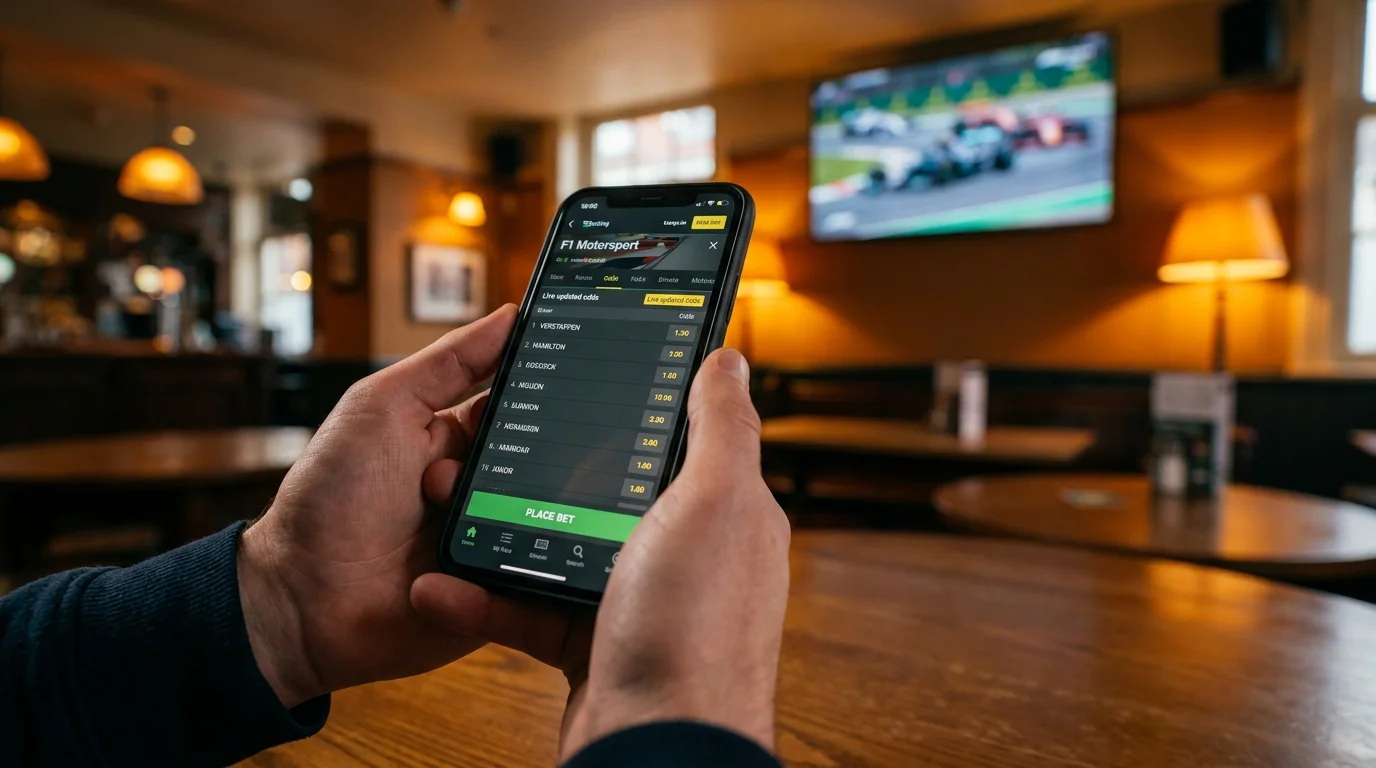
An F1 race lasts roughly ninety minutes. If you are betting in-play, you need your app to perform flawlessly for every one of those minutes — on a phone that might be connected to patchy mobile data at a trackside grandstand, a pub or a friend’s living room. Mobile app quality is not a luxury for F1 punters. It is a functional requirement.
The features that matter most for race-day mobile betting are in-play market loading speed, bet placement confirmation time, push notification reliability and the ability to navigate between multiple F1 markets without excessive scrolling or page reloads. I test these by placing small in-play bets during the opening laps of a race — the phase where the app is under most load and the market is moving fastest. If the app struggles during lap-one chaos, it will struggle at every safety car restart for the rest of the season.
Both iOS and Android apps are available from every major UK operator, though feature parity between platforms is not guaranteed. Some operators launch new features (bet builder, cash-out improvements, live data overlays) on one platform first and roll out to the other weeks later. If you are choosing between operators and mobile experience is a priority, check app store reviews filtered to the most recent month — older reviews reflect legacy versions that may have been comprehensively updated since.
One practical recommendation: enable biometric login (fingerprint or face recognition) and pre-load your bet slip preferences (default stake, odds format, confirmation settings) before race day. The seconds you save on authentication and navigation compound across a ninety-minute race with multiple betting windows. Any friction between seeing a live opportunity and confirming a bet is friction that costs you either the bet itself or a worse price.
The Betway-F1 Partnership and What It Means for Punters
The Betway-F1 deal signed in 2026 is the first official betting operator partnership in Formula 1 history. That distinction matters beyond the branding on trackside boards and broadcast graphics. The partnership gives Betway direct access to F1’s official data infrastructure — the same telemetry and timing data that powers the sport’s own analytics, race strategy tools and fan-facing statistical products.
F1’s corporate statement on the partnership framed it in terms of data: the sport is built on strategy and millions of data points, and the new partnership is designed to unlock innovative engagement for eligible audiences through metrics that are accurate, consistent and official. The emphasis on “official” data is deliberate. Until this deal, bookmakers relied on third-party data feeds of varying quality and latency. An official data supply means faster, more accurate and more granular inputs for pricing models — which should translate into sharper in-play odds and potentially new market types that were not possible with the previous data infrastructure.
What does this mean for you as a punter? In the short term, expect Betway’s F1 product to expand with exclusive markets and data-driven features that other operators cannot immediately replicate. In the medium term, the competitive response from rival bookmakers will push the entire market upward in quality — operators who want to retain their F1 customer base will need to invest in comparable data partnerships, either with F1 directly or through licensed aggregators like OpenBet’s trading system. The rising tide of data-driven pricing is good for informed punters because it narrows the gap between the bookmaker’s model and publicly available information, making analytical skill a more effective edge.
The caution is that an official partnership does not make Betway the default choice for every F1 punter. Data access improves pricing; it does not guarantee the best odds on every market at every race. Other operators may compete on margin (accepting lower overrounds to attract volume), on promotional generosity or on breadth of non-F1 markets that matter if you bet across multiple sports. Evaluate the Betway-F1 product on the same criteria as any other operator — licensing, market depth, live quality, payment efficiency and mobile experience — and let the data-driven improvements speak through the actual odds on your screen rather than through marketing materials.
Betting Sites FAQ
Do all UK bookmakers offer F1 betting markets?
Most UKGC-licensed bookmakers offer at least basic F1 markets (race winner and championship outright), but the depth varies enormously. Many smaller operators licence a generic sportsbook feed that includes only a handful of motorsport markets. For serious F1 punting, check whether the site offers ten or more distinct market types per race weekend — including head-to-heads, qualifying markets, safety car props and bet builder functionality.
What makes a bookmaker good specifically for F1 rather than general sports?
Three things separate a strong F1 bookmaker from a generic sportsbook: motorsport market depth (20-plus markets per race weekend), live in-play pricing quality (fast reopening after incidents, sharp odds with low overround) and F1-specific promotions (enhanced odds for Grand Prix weekends, race-day money-back offers). The data feed powering the in-play product matters most — operators with access to official F1 timing data price live markets faster and more accurately.
How do I know if an F1 betting site is UKGC licensed?
Every UKGC-licensed operator displays their licence number in the website footer. You can verify this number on the Gambling Commission’s public register at the official UKGC website. Search for the operator name and confirm the remote licence number matches. If a site displays only an offshore licence (Curacao, Anjouan, etc.) without a UKGC remote licence, it is not authorised to serve UK customers and your funds are not protected under UK regulations.
Can I use the same account for F1 live betting and pre-race bets?
Yes. All major UK bookmakers allow both pre-race and in-play bets from the same account. Your balance, promotional offers and cash-out functionality carry across both modes. The only distinction is that in-play bets may be subject to acceptance delays of one to five seconds while the bookmaker confirms the odds have not moved since your submission, whereas pre-race bets confirm instantly at the displayed price.
Published by the f1 Betting team.